
Warehouse cleaning is the scheduled removal of dust, debris, spills, and contaminants from storage, distribution, and fulfillment facilities. It covers dock areas, forklift aisles, racking systems, packing stations, equipment zones, and employee spaces. Office janitorial work centers on desks and restrooms. Warehouse cleaning instead deals with large concrete floors, heavy equipment traffic, palletized goods, and operations that often run around the clock. In metro Atlanta, one of the Southeast’s largest logistics hubs, consistent warehouse cleaning directly affects worker safety, inventory condition, and how quickly goods move through a building.
What Warehouse Cleaning Covers
A warehouse janitorial service is defined by scale, surface type, and operational constraints. The table below shows how it differs from standard office cleaning.
| Factor | Office Cleaning | Warehouse Cleaning |
| Primary floor surface | Carpet, tile, LVT | Sealed or bare concrete |
| Main soil types | Dust, food debris, fingerprints | Tire marks, oil, hydraulic fluid, cardboard dust, pallet debris |
| Equipment | Upright vacuums, mops | Ride-on scrubbers, walk-behind sweepers, HEPA vacuums |
| Scheduling | After business hours | Between shifts, by zone, or alongside live operations |
| Safety focus | General hygiene | Slip hazards, clear egress routes, forklift lane visibility |
Why Atlanta’s Warehouse Market Creates Specific Cleaning Demands
Metro Atlanta’s industrial footprint follows its interstate system. Distribution and fulfillment facilities cluster along:
- the I-285 perimeter
- Fulton Industrial Boulevard in southwest Atlanta
- the I-75 corridor south into Henry County (McDonough, Locust Grove)
- the I-85 corridor through Gwinnett County
- the I-20 corridor west toward Douglas County (Lithia Springs)
- the areas surrounding Hartsfield-Jackson Atlanta International Airport, where air cargo operations add volume
Two regional conditions shape cleaning needs in these facilities:
- Seasonal pollen and red clay dust: Atlanta’s spring pollen season and Georgia’s red clay soil are tracked in through dock doors. That debris settles on racking, product packaging, and floors, and open dock doors during peak shipping periods accelerate the buildup.
- Heat and humidity: Georgia summers raise moisture levels inside large, partially conditioned buildings. Combined with dust, humidity creates slick films on concrete and increases restroom and break room sanitation demands.
Facilities seeking commercial cleaning services in Atlanta often find that these regional factors call for a cleaning scope built around specific zones, not a generic checklist.
Zone-by-Zone: Where Warehouse Dirt Builds Up
Different areas of a warehouse accumulate different soils and carry different risks. Industrial cleaning service providers typically divide a facility into zones and assign each one its own tasks and frequency.
| Zone | Common Soil | Primary Risk | Typical Cleaning Frequency |
| Loading docks | Tracked-in debris, water, pollen, shrink wrap | Slips, trip hazards near trailers | Daily |
| Forklift aisles | Tire marks, fluid drips, dust | Slips, reduced lane visibility | Daily to several times weekly |
| Racking and shelving bases | Dust, pallet fragments, cardboard | Fire load, pest harborage, product contamination | Weekly to monthly |
| Packing and staging | Cardboard dust, tape, labels | Trip hazards, dust on outbound product | Daily |
| Battery charging and maintenance | Oil, grease, electrolyte residue | Slips, chemical exposure | Daily spot cleaning, scheduled degreasing |
| Restrooms and break rooms | Germs, food waste, moisture | Illness transmission | Daily |
| Offices and shipping desks | Dust, high-touch surfaces | Germ transfer at shared workstations | Daily to several times weekly |
Frequencies reflect general industry practice and vary by throughput, product type, and building size.
Loading Docks
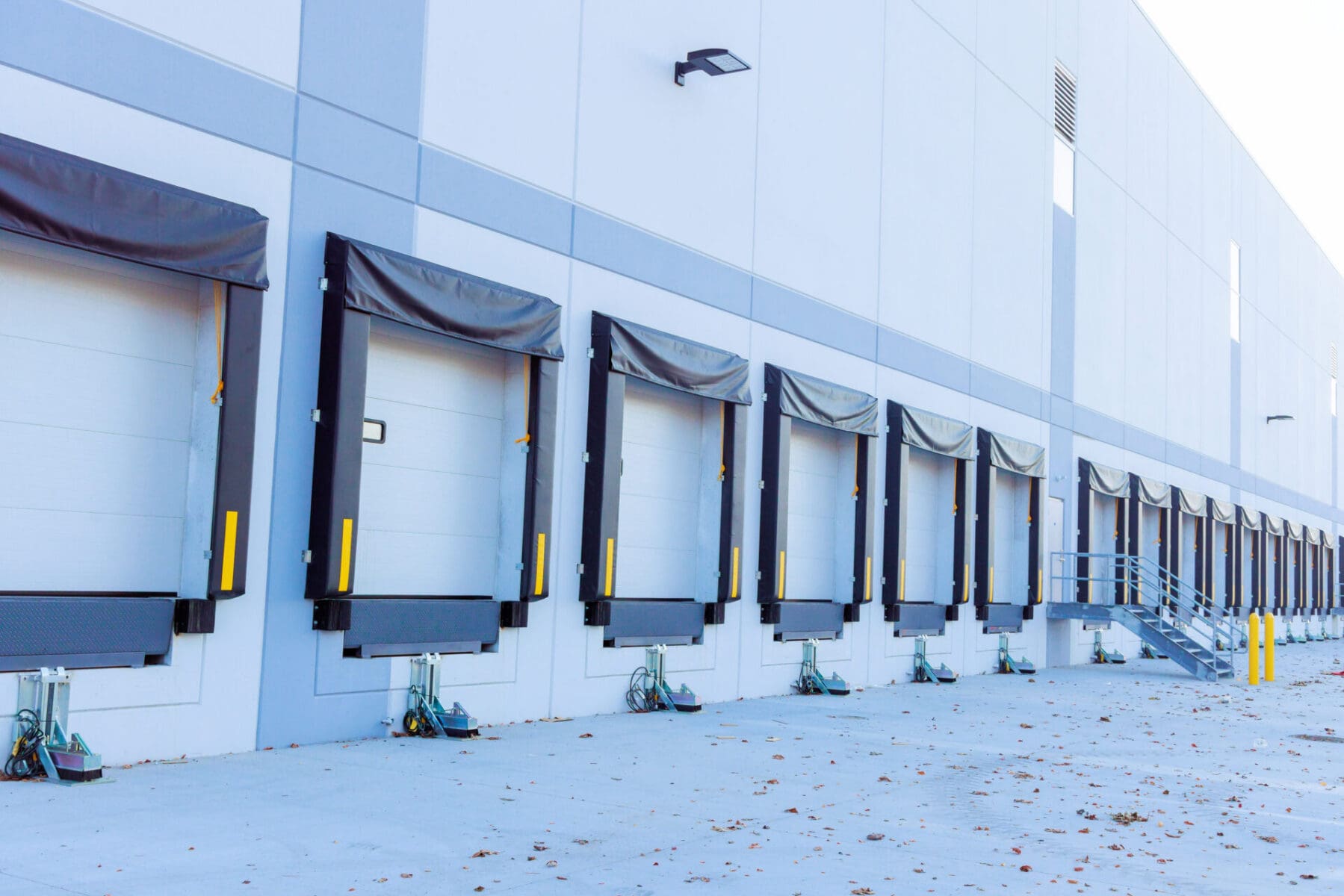
Loading docks are the main entry point for outside contaminants. Water, leaves, pollen, and packaging waste collect around dock plates, levelers, and trailer gaps. Keeping these areas swept and dry supports safe loading and unloading.
Forklift Aisles and Traffic Lanes
Forklift and pallet jack traffic leaves tire marks and occasional hydraulic or oil drips. Automated scrubbers clean and dry concrete in a single pass, which reduces slip risk and keeps painted lane markings visible.
Racking Systems and Hard-to-Reach Areas
Dust and debris accumulate under bottom-level racking and behind stored inventory. Left unaddressed, this buildup can attract pests, contaminate packaging, and add combustible material to a facility.
Battery Charging and Maintenance Areas
Equipment maintenance areas require degreasers suited to the soil and the surface. Cleaning these zones on a set schedule keeps oil and residue from spreading into adjacent traffic lanes.
Employee Spaces
Break rooms, locker rooms, restrooms, and shipping offices concentrate high-touch surfaces. These areas follow sanitation and disinfection protocols closer to those used in commercial office environments.
How Warehouse Cleaning Supports Safety and Compliance
The Occupational Safety and Health Administration’s walking-working surfaces standard (29 CFR 1910.22) requires workplaces to be kept clean, orderly, and sanitary. It also requires floors to be kept free of hazards such as spills and debris, and as dry as possible.
Consistent warehouse cleaning supports these requirements in several ways:
- Reducing slip, trip, and fall exposure: prompt cleanup of fluids, water, and loose packaging on walking surfaces.
- Keeping egress routes clear: exits, aisles, and emergency equipment access stay free of debris and stray materials.
- Limiting dust accumulation: less buildup on racking, lighting, and equipment.
- Supporting product integrity: goods and outbound packaging stay free of visible dust, which matters for food-grade, retail, and e-commerce fulfillment.
Equipment and Methods Used in Warehouse Cleaning Services
Warehouse cleaning services rely on equipment and products designed for large industrial spaces:
- Ride-on and walk-behind auto scrubbers: scrub and dry concrete floors in one pass.
- Industrial sweepers: collect loose debris across wide aisles and dock areas.
- HEPA-filtered vacuums: capture fine dust from racking, ledges, and equipment.
- Degreasers and neutral floor cleaners: matched to the soil type and the floor sealant.
- Color-coded microfiber systems: keep restroom tools separate from break room and office tools to reduce cross-contamination.
Sanitizing and disinfecting are distinct processes:
- Sanitizing reduces microorganisms on a surface to levels considered safe.
- Disinfecting uses an EPA-registered product, applied according to its label, to kill specified microorganisms. Label instructions include required surface contact time (dwell time).
High-touch points in employee areas, such as door handles, time clocks, scanner handles, and break room counters, typically receive disinfection. General surfaces receive routine cleaning and sanitizing.
Scheduling Warehouse Cleaning Around 24/7 Operations
Many Atlanta distribution centers operate across multiple shifts, which limits windows for full-facility cleaning. Common scheduling approaches include:
- Shift-gap cleaning: concentrating floor care in transition windows between shifts.
- Zone rotation: cleaning sections of the warehouse on a rotating schedule so operations continue in other areas.
- Day porter coverage: assigning daytime support for restrooms, break rooms, and spill response during active operations.
- Periodic deep cleaning: scheduling high-level dusting, racking cleaning, and floor restoration during low-volume periods.
How JAN-PRO Cleaning & Disinfecting in Atlanta Approaches Warehouse Cleaning
JAN-PRO Cleaning & Disinfecting in Atlanta approaches warehouse cleaning as a zone-based program rather than a uniform task list. The process typically includes:
- Facility walkthrough: identifying zones, traffic patterns, floor surfaces, and operating hours.
- Scope development: defining tasks and frequencies for each zone, from dock areas to break rooms.
- Schedule alignment: building cleaning windows around shift changes and peak shipping periods.
- Quality inspections: checking completed work against the agreed scope on a recurring basis.
Certified franchise owners deliver the cleaning, supported by the training, product standards, and operating systems of the JAN-PRO organization. More detail on this model is available in an overview of the benefits of working with a certified commercial cleaning franchise.
Frequently Asked Questions
What does warehouse cleaning include?
Warehouse cleaning includes floor sweeping and scrubbing, loading dock cleanup, dusting of racking and shelving, degreasing of maintenance areas, waste removal, and sanitation of restrooms, break rooms, and offices within the facility.
How often should a warehouse be cleaned?
Cleaning frequency depends on throughput, product type, and number of shifts. Loading docks, packing areas, and restrooms are typically cleaned daily, while racking and high-level surfaces are often cleaned weekly or monthly.
How is warehouse cleaning different from office cleaning?
Warehouse cleaning involves large concrete surfaces, forklift traffic, oil and fluid spills, and industrial equipment such as ride-on scrubbers. Office cleaning focuses on carpeted or tiled spaces, desks, and restrooms during after-hours windows.
Can a warehouse be cleaned without stopping operations?
Yes. Cleaning can be scheduled during shift transitions, rotated by zone so active areas keep running, or supported by day porter services that handle restrooms, break rooms, and spills during operating hours.
Why is warehouse cleaning important for safety?
Clean, dry, and uncluttered floors reduce slip, trip, and fall hazards, and clear aisles keep exits and emergency equipment accessible. OSHA standards require workplaces to keep walking surfaces clean, orderly, and free of hazards.
Warehouse Cleaning Support from JAN-PRO Cleaning & Disinfecting in Atlanta
Warehouses, distribution centers, and fulfillment facilities across metro Atlanta can work with JAN-PRO Cleaning & Disinfecting in Atlanta to build a cleaning program around their zones, shifts, and safety priorities. Certified franchise owners serve facilities throughout the region, from the I-285 perimeter to the industrial corridors along I-75, I-85, and I-20. Facility managers can reach JAN-PRO Cleaning & Disinfecting in Atlanta at 770-955-9822 or at the regional office, 881 Franklin Gateway SE, Suite 405, in Marietta, to discuss a warehouse cleaning scope.
About the Author
Carter James
 Carter James is Vice President of Strategy & Development, leading growth strategy, acquisitions, and multi-market expansion within a facility services platform. His background includes corporate strategy, M&A integration, and franchise development. He partners with senior leadership to drive disciplined execution, scalable operations, and long-term value through data-driven, high-accountability leadership.