You’ve noticed it again—dusty baseboards in the lobby, trash bins overflowing by mid-afternoon, restrooms that don’t smell clean by 10 a.m. You’re paying for professional service, but the results tell a different story. If your business is stuck with a Marietta commercial cleaning vendor who shows up inconsistently, rushes through tasks, or leaves you fielding tenant complaints, you’re not alone.
In our two decades serving Cobb County, we’ve walked into hundreds of facilities immediately after previous vendors were fired. The patterns are remarkably consistent: medical offices in East Cobb where patients complained about exam room cleanliness, retail centers along Roswell Road losing tenants over restroom maintenance, and office buildings near the Battery where property managers spent more time managing their cleaning company than their actual tenants.
Most facility managers don’t realize how much revenue walks out the door when clients notice grime on door handles or prospects tour a building with visible dirt in corners. The right cleaning partner eliminates these risks. The wrong one creates them.
What Poor Cleaning Is Actually Costing Your Marietta Business
Inadequate service impacts your bottom line in ways that don’t show up on your P&L until it’s too late.
For example, a 45,000-square-foot medical building in East Cobb came to us after their previous vendor’s inconsistent restroom cleaning led to negative Google reviews. Within 90 days of switching to a documented quality assurance system, their online rating improved from 3.8 to 4.6 stars—and they signed three new physician tenants who specifically cited facility cleanliness during lease negotiations.
Neglected janitorial care triggers avoidable expenses:
- Tenant turnover: Commercial tenants cite cleanliness as a top three factor in renewal decisions. Replacing a tenant costs 5–8 months of rent in downtime and leasing fees.
- Health code warnings: Restaurants and medical facilities face steep fines for sanitation failures. We’ve helped local urgent care centers recover from previous vendor mistakes that resulted in inspection citations.
- Employee productivity loss: Workers in visibly dirty environments report higher stress and take more sick days, costing businesses in lost output and morale.
- Reputation damage: 88% of consumers trust online reviews as much as personal recommendations. A single complaint mentioning dirty facilities deters new business.
- Emergency cleanup costs: Neglected routine care often leads to emergency deep-cleaning calls that run 3–5 times the price of preventive maintenance.
For a standard 20,000-square-foot office building in Marietta, the gap between consistent quality and sporadic effort can mean $15,000–$30,000 annually in hidden losses.
The Root Causes: Why So Many Cleaning Companies Fall Short
Most commercial cleaning failures stem from broken business models rather than individual worker mistakes.
Workforce Instability
High industry turnover means new crews arrive without proper training. Unseasoned cleaners fail to document building-specific needs—like conference rooms requiring daily vacuuming due to high foot traffic, or entryway mats that need extra attention when red Georgia clay gets tracked inside.
Inadequate Supervision
Many companies assign one supervisor to oversee 15 to 20 accounts. That supervisor physically inspects each location once or twice a month at best, allowing small deficiencies to linger for weeks before escalating.
Outdated Methods
Vendors using generic mops and standard chemicals spend more time pushing dirt around than removing it. Modern microfiber systems and EPA-registered disinfectants clean faster and more effectively, but require an upfront investment low-bid contractors refuse to make.
Communication Breakdowns
You email a concern, days pass without a response, and the issue persists. Without direct access to responsive account management, this cycle quickly erodes trust.
What Actually Works: Solutions That Fix the Problem at Its Source
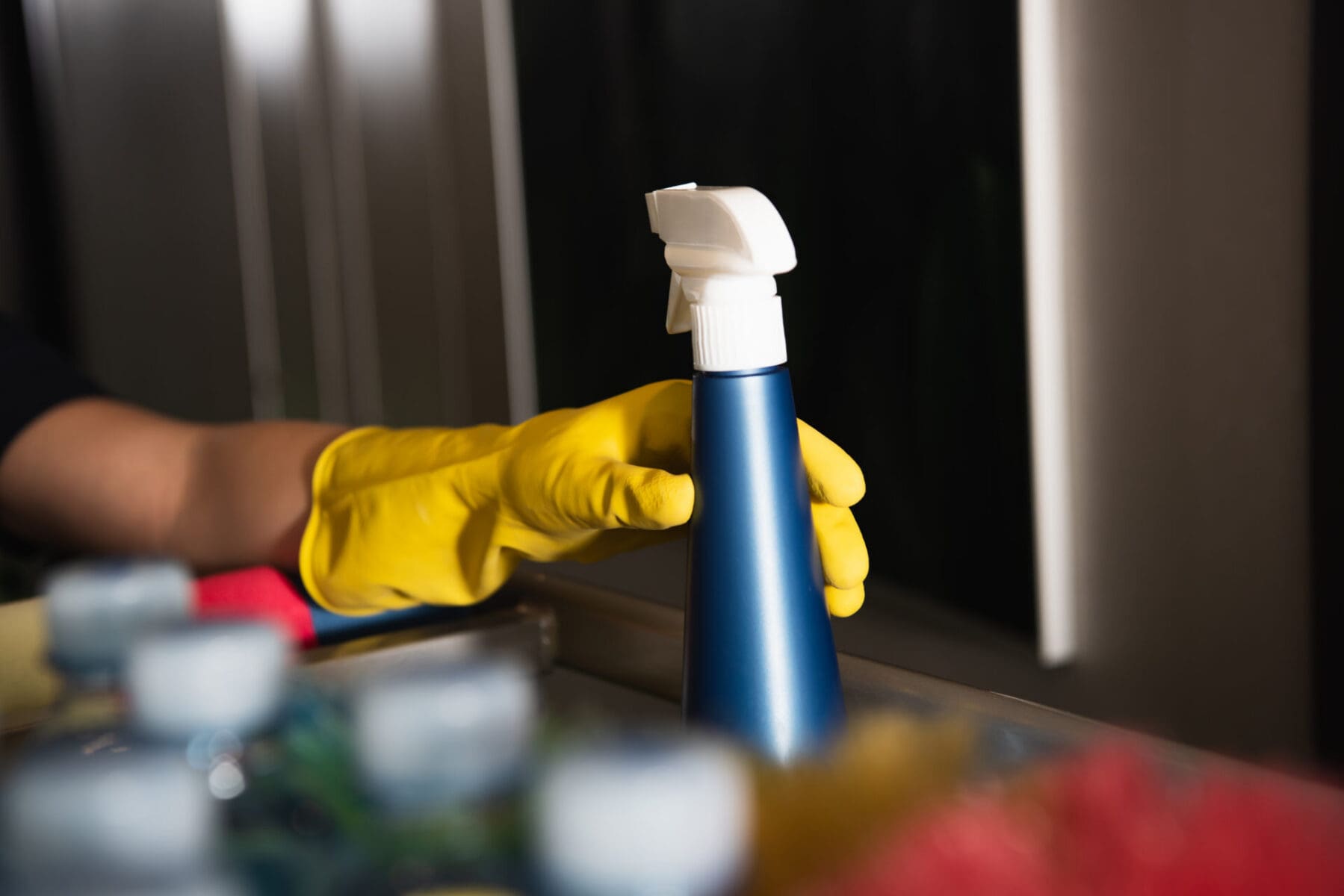
Reliable service starts with a vendor who treats your facility as a partnership. Effective commercial sanitation relies on five operational pillars:
- Structured Quality Assurance: Documented digital inspections with photographic proof, tailored to facility type (e.g., medical clinics vs. industrial warehouses).
- Franchise Model Stability: Owner-operators who have financial skin in the game deliver higher accountability than turnover-heavy corporate crews.
- Rigorous Onboarding: Requiring 10–15 hours of certified training covering OSHA compliance, bloodborne pathogens, and chemical safety before a team member steps onto your property.
- Transparent Communication: Mobile portals that allow you to submit work orders, track completion with photos, and review service reports in real time.
- Customized Schedules: Restructuring task lists based on actual foot traffic—such as focusing deep cleaning around weekend retail surges—to maximize budget efficiency.
| Service Feature | Low-Bid Vendor | Professional Partner Standard |
| Response Time to Issues | 3–5 business days | Under 5 hours with same-day resolution |
| Inspection Frequency | Monthly or less | Weekly digital audits with photo verification |
| Background Checks | Inconsistent | 100% verified through third-party screening |
| Service Reporting | Rarely provided | Real-time updates via mobile app |
| Satisfaction Guarantee | Verbal promise | Contractual guarantee with trial period |
Challenges Unique to Marietta’s Commercial Landscape
Local environmental and structural conditions demand specialized cleaning protocols:
- Red Clay Tracking: Georgia soil binds to carpet fibers quickly. Proper floor care requires targeted entrance matting protocols, increased seasonal extraction, and heavy-traffic treatment to extend carpet lifespan.
- Humidity and Mold Risk: With local humidity exceeding 70% for months at a time, restrooms and break rooms require EPA-registered antimicrobial treatments and proactive ventilation checks.
- Mixed-Use Complexity: Properties near Town Center or Roswell Road combining retail, office, and residential spaces need staggered schedules—evening service for retail, overnight care for offices, and daytime attention for residential common areas.
- Traffic Volume Fluctuations: Facilities near I-75 or the Battery experience heavy foot traffic spikes during events. Flexible scheduling allows extra entry-point cleaning during peak seasons or game days.
Warning Signs Your Current Vendor Won’t Improve
Some issues can be solved with a quick phone call; others indicate systemic failure. Consider replacing your vendor if you notice:
- Repeated Excuses: Management promises to “talk to the crew,” but the same corners are missed week after week.
- Constant Crew Rotation: Seeing new faces every few weeks means institutional knowledge about your building is constantly lost.
- Inability to Scale: Simple requests for carpet extraction, window washing, or post-construction cleanup are met with delays or excessive surcharges.
- No Documentation Trail: There are no physical or digital logs recording when service occurred or what tasks were completed.
How to Evaluate Replacement Vendors
To avoid another disappointing transition, use this vetting checklist when interviewing new contractors:
- Request Industry-Specific References: A vendor servicing your medical facility should provide references from active healthcare clients, not just general office spaces.
- Inspect Their Audit System: Ask to see a sample inspection report. Reliable providers use standardized digital checklists rather than verbal updates.
- Verify Insurance Limits: Confirm at least $1M–$2M in general liability coverage along with full workers’ compensation certificates.
- Test Response Times: Measure how quickly they respond during the sales process—slow communication during bidding guarantees worse service post-contract.
- Review Satisfaction Guarantees: Look for agreements that offer a 30-day trial period without long-term lock-in clauses.
Frequently Asked Questions
How quickly should a commercial cleaning company respond to service complaints?
Professional vendors address urgent concerns within 24 hours and immediate health or safety issues—like major spills or supply shortages—within 2 to 4 hours.
What is a reasonable timeframe for switching cleaning companies?
Most seamless transitions take 2 to 3 weeks. This timeframe allows for initial facility walkthroughs, crew assignment, key transfers, and a baseline deep clean (typically scheduled over a weekend).
How often should a commercial facility receive professional inspections?
High-traffic spaces like medical clinics and retail centers require weekly inspections. Standard office environments benefit from bi-weekly checks, while low-traffic warehouses typically require monthly audits.
What cleaning tasks should happen daily versus weekly?
Daily tasks focus on high-touch disinfection, trash removal, and restroom sanitation. Weekly tasks cover detail dusting, interior glass care, hard-floor burnishing, and deep breakroom cleaning. Plans should always be tailored to your building’s specific occupancy.
Why Marietta Businesses Choose JAN-PRO in Atlanta
Since 2001, JAN-PRO in Atlanta has provided Marietta and Cobb County businesses with reliable commercial cleaning services in Atlanta backed by a 94%+ retention rate across more than 200 local accounts.
Unlike standard cleaning services plagued by constant turnover, JAN-PRO’s certified franchisees average over three years of tenure—quadrupling the industry standard. Dedicated account managers oversee every site using digital quality assurance inspections to guarantee consistent execution tailored directly to your facility’s footprint and budget.
Whether you need to adjust your schedule or resolve an issue fast, JAN-PRO backs its service with a 4.2-hour average response time and a 30-day trial period to ensure total satisfaction.
Stop managing cleaning problems and start preventing them by calling 770-955-9822, visiting 881 Franklin Gtwy SE, or requesting a free facility assessment online today.
About the Author
Carter James
 Carter James is Vice President of Strategy & Development, leading growth strategy, acquisitions, and multi-market expansion within a facility services platform. His background includes corporate strategy, M&A integration, and franchise development. He partners with senior leadership to drive disciplined execution, scalable operations, and long-term value through data-driven, high-accountability leadership.