Atlanta’s humid subtropical climate, record-breaking pollen seasons, and densely occupied commercial buildings create indoor air quality challenges that businesses in most other cities simply don’t face to the same degree. Understanding what your HVAC system does, and what it requires to keep doing it, is not a facilities management technicality. It directly affects the health of every person who works in or visits your building.
What Is HVAC? The Basics
HVAC stands for Heating, Ventilation, and Air Conditioning. It refers to the interconnected systems that regulate temperature, humidity, and air quality within a building. For Atlanta businesses — whether you manage a corporate office in Buckhead, a medical clinic in Midtown, or a retail space in Decatur — your HVAC system is the infrastructure that makes your building habitable and your air breathable.
The three components work together but serve distinct functions:
Heating
Furnaces, boilers, or heat pumps maintain comfortable indoor temperatures during Atlanta’s winter months. While Georgia winters are mild compared to northern states, temperatures regularly drop into the 20s and 30s from December through February, requiring reliable heating for occupied commercial spaces. Heat pumps are particularly common in Atlanta commercial buildings due to their efficiency in the region’s moderate climate.
Ventilation
Ventilation is the process that circulates air between the indoors and outdoors, removing contaminants, excess moisture, odors, and stale air while introducing fresh air. This is the component most directly connected to indoor air quality — and the one most affected by Atlanta’s outdoor environment. When ventilation systems pull in outdoor air during Atlanta’s spring pollen season, they also pull in allergens that accumulate on filters, coils, and ductwork surfaces if not regularly cleaned.
Air Conditioning
Cooling systems maintain comfortable temperatures and humidity levels during Atlanta’s long, hot summers. From May through September, Atlanta regularly sees temperatures in the upper 80s and 90s with high relative humidity.
Air conditioning is not optional for occupied commercial spaces during these months — it is a basic occupant health and comfort requirement. The same cooling systems that make summer bearable also actively dehumidify indoor air, which is critical for mold prevention in Atlanta’s climate.
Commercial vs. Residential HVAC
Commercial HVAC systems are significantly larger, more complex, and more demanding than residential systems. They are engineered to handle higher occupancy loads, more diverse space configurations, and continuous operation schedules that residential systems are not designed for.
A commercial system serving a 20,000 square foot office building in Atlanta’s Perimeter Center area operates under fundamentally different demands than a home unit — and requires a correspondingly more rigorous maintenance and cleaning program.
Why Atlanta’s Climate Makes HVAC Maintenance Especially Critical
Most HVAC maintenance guides are written for generic commercial environments. Atlanta’s specific climate conditions create indoor air quality challenges that make regular HVAC cleaning more urgent here than in most American cities.
Humidity and Mold Risk
Atlanta’s combination of high humidity, frequent rainfall, and temperature fluctuations creates ideal conditions for mold growth — particularly inside HVAC systems where moisture collects on coils, in drip pans, and along ductwork surfaces.
Georgia’s warm, wet climate means indoor humidity can remain elevated even with air conditioning running, especially in older commercial buildings with less efficient systems or inadequate sealing.
The EPA recommends maintaining indoor humidity between 30 and 50 percent to prevent mold growth and suppress dust mite populations. In Atlanta summers, keeping humidity in that range without active, well-maintained humidity control is a consistent challenge. HVAC coils and drip pans that are not regularly cleaned become breeding grounds for mold and bacteria that then recirculate through the building’s air supply.
Atlanta’s Pollen Problem
Atlanta consistently ranks among the highest pollen-count cities in the United States. On March 29, 2025, the city recorded its all-time highest pollen count of 14,801 grains per cubic meter — driven by multiple tree species blooming simultaneously following an unseasonably warm February. All five of Atlanta’s highest pollen counts on record have occurred since 2020, indicating this is an escalating trend, not an anomaly.
For Atlanta businesses, this means HVAC systems are actively pulling one of the country’s heaviest allergen loads through intake filters during spring months. Filters that are not replaced on schedule during peak pollen season become overloaded, restrict airflow, reduce system efficiency, and allow allergen-laden particulates to bypass filtration and enter occupied spaces.
Employees with allergies or asthma — a significant portion of Atlanta’s workforce given the city’s pollen intensity — experience more severe symptoms in buildings with overdue HVAC maintenance.
Sealed Buildings and Pollutant Accumulation
Georgia’s energy efficiency requirements mean commercial buildings are increasingly sealed tight, which prevents natural air exchange and allows pollutants to accumulate indoors.
Research on Atlanta commercial buildings has found that indoor environments can trap pollutants at concentrations two to five times higher than outdoor air when ventilation systems are not performing optimally. A well-maintained HVAC system is the primary mechanism preventing that accumulation. A neglected one accelerates it.
Atlanta’s Diverse Commercial Building Stock
Atlanta’s commercial building inventory ranges from historic properties in Virginia-Highland and Little Five Points to modern office towers in Buckhead and the rapidly developing Midtown and Old Fourth Ward corridors.
Older Atlanta properties often have outdated HVAC systems and hidden moisture problems that create ongoing indoor air quality risks. Newer buildings may trap chemical vapors from construction materials and furnishings. The age and type of your building directly affect what your HVAC maintenance program needs to address.
Key Functions of HVAC Systems in Atlanta Commercial Spaces
1. Improving Indoor Air Quality
HVAC systems filter out dust, allergens, and airborne particles, circulating cleaner air throughout occupied spaces. In Atlanta, where outdoor allergen loads are among the highest in the country, and indoor pollutant accumulation is accelerated by sealed buildings, this filtration function is central to occupant health.
The EPA has documented a direct relationship between indoor air quality and employee productivity — when air quality improves, output increases and sick days decrease. The annual economic costs of poor indoor air quality rank in the tens of billions of dollars nationally, according to EPA estimates.
Regular HVAC cleaning maintains the filtration capacity that makes this function work. A system running on overloaded filters or contaminated coils is recirculating pollutants rather than removing them.
2. Mold Prevention
Excess moisture leads to mold growth, which poses health hazards, damages building materials, and creates liability exposure for facility operators. Atlanta’s humid subtropical climate makes this a year-round concern, not a seasonal one.
HVAC systems regulate humidity levels continuously — but only when coils, drip pans, and condensate lines are clean and unobstructed. A clogged condensate drain, for example, causes water to back up and overflow, creating a moisture source that enables rapid mold colonization in surrounding materials.
Regular coil cleaning and drain line maintenance are not optional maintenance items in Atlanta’s climate. They are the difference between a system that prevents mold and one that incubates it.
3. Odor Control
Proper ventilation and air circulation eliminate stale air, chemical fumes, and unpleasant odors that accumulate in occupied commercial spaces. A well-maintained HVAC system is essential for removing odors in workplaces — from break room cooking smells to chemical off-gassing from cleaning products and building materials.
When ventilation systems are dirty or underperforming, odors concentrate and persist. In customer-facing environments like Atlanta retail shops, hospitality venues, and medical waiting rooms, persistent odors directly affect how clients perceive your business.
4. Temperature and Comfort Consistency
Inconsistent temperatures — hot spots, cold zones, rooms that never quite reach the thermostat setting — are often symptoms of a dirty or poorly maintained HVAC system rather than equipment failure. Dirty coils reduce heat transfer efficiency.
Clogged filters restrict airflow. Both cause the system to work harder to achieve set temperatures, increasing energy consumption while delivering uneven results. Regular cleaning restores the efficiency that consistent comfort depends on.
The Business Benefits of a Well-Maintained HVAC System
For Atlanta business owners and facility managers, regular HVAC upkeep delivers returns across multiple operational areas:
- Reduced energy costs. Clean systems operate more efficiently. Dirty coils and clogged filters force the system to work harder to move the same volume of conditioned air, increasing electricity consumption. In Atlanta’s long cooling season, this inefficiency compounds quickly into significant utility costs.
- Extended equipment lifespan. Routine cleaning and inspection prevent the accelerated wear that comes from running a system under strain. HVAC equipment represents a major capital investment — extending its useful life through maintenance is significantly more cost-effective than premature replacement.
- Healthier employees, fewer sick days. The EPA’s documented relationship between indoor air quality and employee productivity is directly relevant here. Atlanta offices with clean, well-functioning HVAC systems provide the air quality conditions that support focus, reduce allergy symptoms, and lower illness-related absenteeism.
- Mold and liability risk reduction. In Atlanta’s climate, a neglected HVAC system is a mold risk. Mold remediation in commercial buildings is expensive, disruptive, and potentially subject to insurance and regulatory scrutiny. Preventive HVAC maintenance is a fraction of the cost of remediation.
- Compliance support. Georgia’s updated HVAC regulations now include tighter standards for airflow, humidity control, and filtration efficiency. Documented maintenance and cleaning records support compliance with building codes and occupant health requirements.
- Better client and customer impressions. Atlanta clients notice air quality. A stale, humid, or odorous office communicates neglect regardless of how well everything else is maintained. A fresh, comfortable environment signals professionalism before a word is spoken.
How to Choose the Right HVAC System for Your Atlanta Business
For Atlanta businesses investing in new or replacement HVAC equipment, the following factors determine which system will perform best in Georgia’s specific climate and your facility’s specific conditions:
Size and Capacity
Correct sizing is the most critical variable. An undersized unit runs continuously without reaching set temperatures during Atlanta summers. An oversized unit short-cycles — turning on and off too frequently — which prevents effective dehumidification and accelerates wear.
Both result in higher energy costs and reduced comfort. Proper sizing requires a professional load calculation based on your building’s square footage, layout, insulation, occupancy, and local climate data.
Energy Efficiency Ratings
For cooling systems in Atlanta’s climate, the Seasonal Energy Efficiency Ratio (SEER) rating is the primary efficiency measure. Higher SEER ratings mean lower operating costs over the system’s life.
Energy Star certified systems meet EPA performance standards and typically qualify for utility rebates through Georgia Power and other providers. Given Atlanta’s long cooling season, efficiency ratings have an outsized impact on annual operating costs compared to cities with shorter summers.
System Type
Split systems (separate indoor and outdoor units) are the most common commercial configuration. Packaged rooftop units are prevalent in Atlanta’s mid-size commercial buildings. Variable Refrigerant Flow (VRF) systems offer precise zone control and high efficiency for larger, more complex spaces.
Ductless mini-split systems work well for supplemental cooling or historic Atlanta buildings where ductwork installation is impractical. Each has trade-offs — consult with a licensed HVAC contractor to match system type to your space.
Zoning Capabilities
For larger commercial spaces, zoning systems provide independent temperature control in different areas. This is particularly valuable in Atlanta office buildings where south-facing offices receive significantly more solar heat load than interior or north-facing spaces. Zoning eliminates the compromise of a single thermostat trying to serve spaces with fundamentally different thermal demands.
Humidity Control
Given Atlanta’s humidity profile, dedicated humidity control capability — either through a properly sized system or supplemental dehumidification — is not optional. A system that maintains temperature but fails to control humidity creates a mold-favorable indoor environment even when occupants feel comfortable. Verify that any system under consideration includes adequate latent cooling capacity for Atlanta’s climate conditions.
Maintenance Requirements
Choose systems with straightforward maintenance access, readily available replacement parts, and local service support. An efficient system that requires proprietary parts with long lead times or limited local technician availability creates operational risk for your Atlanta facility.
Smart monitoring capabilities — remote diagnostics, filter change alerts, performance tracking — reduce the risk of deferred maintenance and catch developing issues before they become failures.
HVAC Maintenance Best Practices for Atlanta Commercial Buildings
The following practices apply to Atlanta commercial facilities of all sizes. The specific schedule should be calibrated to your building’s age, occupancy, and the intensity of local pollen and humidity conditions in your area of the metro.
Replace Air Filters on Schedule: More Frequently During Pollen Season
Standard guidance is to replace commercial HVAC filters every one to three months. In Atlanta during peak pollen season — typically March through May, when the city’s oak, pine, and cedar trees release pollen simultaneously — filters can become significantly loaded within weeks.
A visibly gray or brown filter is a system running at reduced efficiency and filtration capacity. During high-pollen months, check filters monthly and replace as needed rather than following a fixed calendar interval.
Schedule Professional Coil Cleaning Twice Annually
Evaporator and condenser coils accumulate dust, mold spores, and biological matter that degrades heat transfer efficiency and creates conditions for microbial growth. In Atlanta’s climate, coil cleaning before cooling season (typically April) and before heating season (October) is the recommended minimum. Buildings with known moisture issues, mold history, or high-occupancy environments may require more frequent service.
Inspect and Clean Drip Pans and Condensate Lines
Drip pans collect moisture removed from indoor air during the cooling process. In Atlanta’s humid summers, these pans can accumulate standing water that supports mold and bacterial growth if not regularly cleaned. Condensate drain lines should be inspected and flushed to prevent clogs that cause overflow and water damage.
Monitor Indoor Humidity Continuously
Install humidity sensors in occupied zones and monitor readings regularly. The EPA-recommended indoor humidity range of 30 to 50 percent is the target. In Atlanta summers, readings above 60 percent in occupied spaces indicate the cooling system is not adequately dehumidifying — either due to an oversized system, dirty coils, or inadequate capacity. Address the cause rather than masking symptoms with portable dehumidifiers.
Seal Air Leaks in Ductwork and Building Envelope
Leaky ductwork allows conditioned air to escape into unconditioned spaces and pulls unconditioned, humid outdoor air into the system. In Atlanta’s summer humidity, duct leaks introduce moisture directly into the air distribution system, accelerating mold risk and reducing efficiency. Periodic duct inspection and sealing is a high-return maintenance investment for Atlanta commercial buildings.
Schedule Annual Professional HVAC Inspections
A licensed HVAC technician can identify developing issues — refrigerant leaks, failing components, airflow imbalances — before they become system failures. Annual inspections also generate documentation of maintenance activity that supports building code compliance and, in the event of a mold-related liability claim, demonstrates that reasonable preventive measures were taken.
How JAN-PRO Cleaning & Disinfecting Supports HVAC Maintenance in Atlanta
JAN-PRO Cleaning & Disinfecting provides specialized commercial cleaning services in Atlanta that directly support your HVAC system’s performance and your building’s indoor air quality.
Our role in your facility’s HVAC maintenance program is as the cleaning partner who keeps the system — and the environment it serves — clean between mechanical service visits.
Ventilation System Cleaning
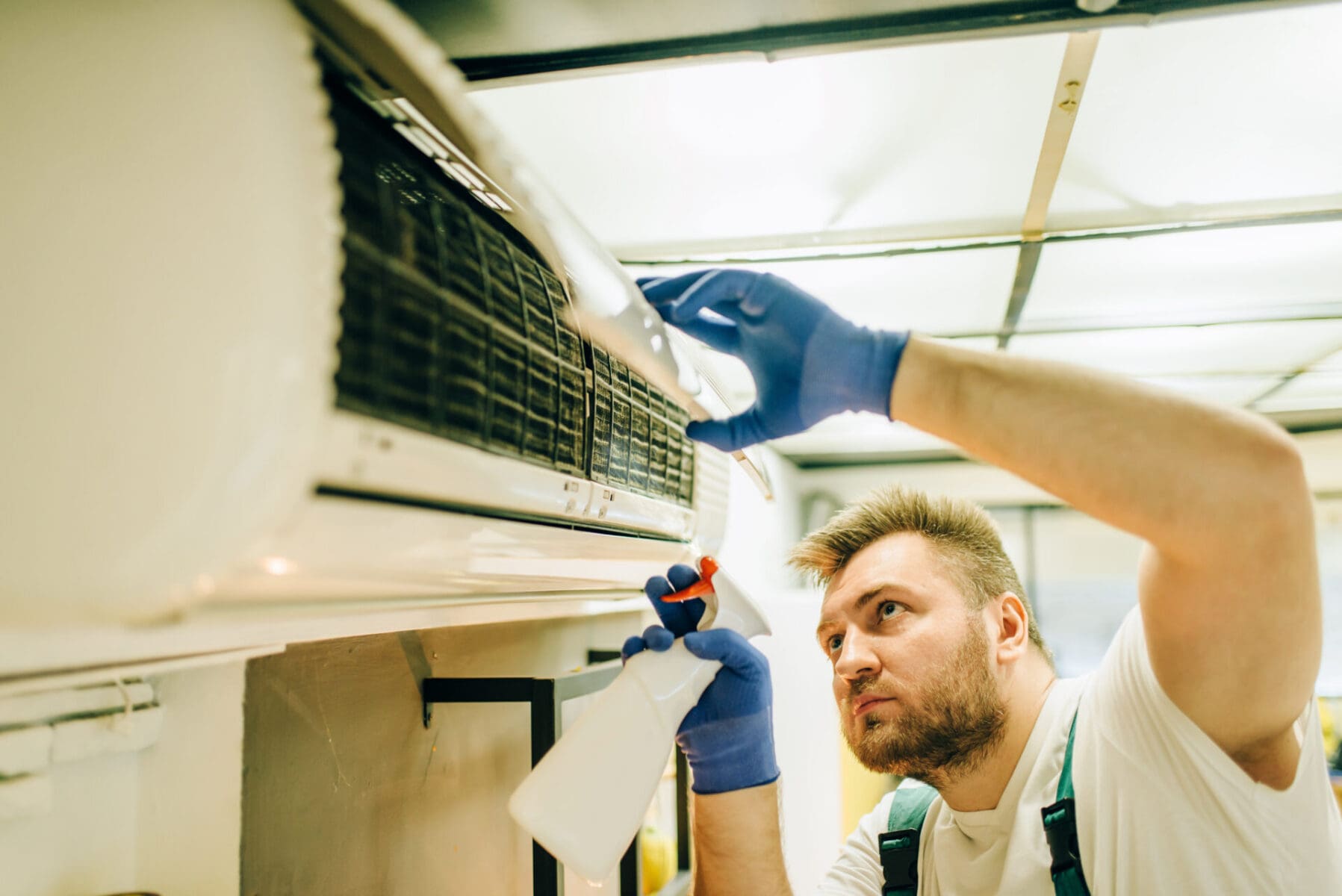
Our ventilation cleaning services address the surfaces and areas where dust, allergens, and biological matter accumulate around your air distribution system. Dirty vents and grilles reintroduce particulates into the airstream every time the system runs. Regular cleaning of vent covers, return air grilles, and accessible ductwork surfaces reduces the contaminant load recirculating through your Atlanta facility.
Coil Cleaning
Dirty evaporator coils are one of the primary contributors to both reduced cooling efficiency and mold growth in Atlanta commercial HVAC systems. JAN-PRO’s coil cleaning services remove the biological and particulate buildup that degrades heat transfer performance and creates conditions for microbial colonization — protecting both system efficiency and indoor air quality.
High-Touch Surface and Workspace Cleaning That Complements HVAC Performance
A clean facility produces less airborne dust and particulates — reducing the load on your HVAC filtration system and extending filter life between replacements. JAN-PRO’s commercial cleaning programs for Atlanta businesses address the surfaces, floors, and workspaces that contribute to the overall contaminant load your HVAC system has to manage. Clean building, better air quality, longer HVAC service intervals.
Customized Programs for Atlanta’s Specific Conditions
JAN-PRO service coordinators in Atlanta build cleaning programs around your facility’s specific needs — including your building’s age, occupancy patterns, industry type, and seasonal cleaning requirements during Atlanta’s peak pollen months. A Midtown high-rise office has different HVAC cleaning needs than a Decatur medical clinic or a Buckhead restaurant. Your program is calibrated accordingly.
Frequently Asked Questions
What does HVAC stand for?
HVAC stands for Heating, Ventilation, and Air Conditioning. It refers to the systems that regulate temperature, humidity, and air quality in a building. Commercial HVAC systems are larger and more complex than residential units and are engineered to handle the demands of high-occupancy spaces like offices, retail stores, medical facilities, and industrial buildings throughout Atlanta.
Why is HVAC cleaning especially important in Atlanta?
Atlanta’s humid subtropical climate creates ideal conditions for mold growth inside HVAC systems — particularly in ductwork, coils, and drip pans where moisture accumulates. The city also recorded its all-time highest pollen count of 14,801 grains per cubic meter on March 29, 2025, meaning Atlanta HVAC systems pull in significant allergen loads during spring months. Without regular cleaning, these contaminants recirculate through your building continuously, degrading indoor air quality and increasing allergy and respiratory symptoms among employees and visitors.
How often should commercial HVAC systems be cleaned in Atlanta?
- Air Filters: Replace every one to three months—with higher frequency during Atlanta’s peak pollen season from March through May.
- Coils & Drip Pans: Inspect and clean at least twice per year, specifically timed before the spring cooling season and before the winter heating season.
- Ductwork: Inspect on a variable schedule depending on building age, occupancy demands, or immediately following any visible mold growth, water damage, or significant dust accumulation.
Can a dirty HVAC system affect employee productivity?
Yes. The EPA has documented a direct relationship between indoor air quality and employee productivity, noting that improved air quality correlates with measurable increases in output and reductions in sick days. Poor indoor air quality from dirty HVAC systems contributes to Sick Building Syndrome — a condition linked to headaches, fatigue, and respiratory symptoms that reduce focus and increase absenteeism. In Atlanta, where pollen and humidity already create elevated allergen conditions, a dirty HVAC system amplifies these effects significantly.
What HVAC cleaning services does JAN-PRO provide in Atlanta?
JAN-PRO Cleaning & Disinfecting in Atlanta provides ventilation system cleaning to improve airflow and reduce odor buildup, and coil cleaning to prevent mold growth and improve cooling efficiency. These services are customized to the specific layout and usage of your commercial facility. Call 770-955-9822 or request a free consultation online.
Schedule Your Free HVAC Cleaning Consultation in Atlanta Today
Atlanta’s climate does not give commercial HVAC systems much margin for neglect. High humidity, record pollen loads, and sealed buildings create indoor air quality conditions that make regular, professional HVAC cleaning a business necessity — not a maintenance luxury.
JAN-PRO Cleaning & Disinfecting in Atlanta has the certified professionals, the documented processes, and the local knowledge of Georgia’s climate conditions to keep your HVAC system and your facility performing at their best.
Tell us about your facility, and we’ll put together a custom cleaning plan — no commitment required.
Call 770-955-9822 or visit our office at 881 Franklin Gtwy SE Ste 405, Marietta. A service coordinator will follow up within one business day.
About the Author
Carter James
 Carter James is Vice President of Strategy & Development, leading growth strategy, acquisitions, and multi-market expansion within a facility services platform. His background includes corporate strategy, M&A integration, and franchise development. He partners with senior leadership to drive disciplined execution, scalable operations, and long-term value through data-driven, high-accountability leadership.