A medical office isn’t like a regular office. Patients come and go all day, waiting rooms fill up, exam rooms turn over between appointments, and the same door handles and counters get touched over and over. Cleaning has to keep up with all of that without getting in the way of patient care.
JAN-PRO Cleaning & Disinfecting has more than 30 years of experience in commercial cleaning. That experience is built on a few simple habits: clear procedures, the right products, consistent service, and personal accountability. This guide shows how those habits apply to medical offices in Atlanta, from high-touch surfaces to quality checks, and what to look for in a cleaning provider.
Why Medical Offices Need a Different Cleaning Approach
In most offices, cleaning is mostly about appearance. In a medical office, it also supports the infection prevention steps your clinical team already follows. Every space is used differently, so every space needs its own plan:
- Reception and waiting room: heavy foot traffic and shared seating.
- Exam and treatment rooms: wiped down and disinfected between appointments to prepare for the next patient.
- Restrooms: constant use, so they need frequent checks.
- Staff offices and break rooms: closer to a typical office, with their own routine.
The Centers for Disease Control and Prevention (CDC) names environmental cleaning and disinfection as an important part of infection prevention in healthcare settings. Its guidance points to written procedures, the right products, trained staff, and regular checks.
A few things make healthcare cleaning harder than most:
- Patient turnover. Waiting rooms and exam rooms see many people in one day.
- Shared surfaces. Door handles, light switches, and reception counters are touched constantly.
- Different rooms, different rules. A front desk and an exam room don’t need the same steps.
- Product choice. The wrong cleaner can damage a surface or fail to do its job. The label always comes first.
- Timing. Cleaning has to work around appointments, not interrupt them.
What 30+ Years of Commercial Cleaning Experience Means for Medical Offices
Three decades of cleaning all kinds of businesses teach a few lessons that carry over directly to a medical practice. Here are four of them.
1. Build the Plan Around How the Space Is Used
Cleaning every room the same way doesn’t work. A reception area needs frequent attention to counters, seating, and entry surfaces. Exam rooms follow your practice’s cleaning and disinfection protocols. Staff offices can follow a lighter routine. A good plan starts with how each space is used and sets the tasks from there, within the scope you agree on and your healthcare requirements.
2. Put a Name and a Frequency on Every Task
A cleaning program works better when each task has a set frequency and a person responsible. A medical practice might split its work like this:
- Routine cleaning during the day.
- Cleaning and disinfecting between patients, handled by whoever your protocol assigns.
- End-of-day cleaning of designated rooms and common areas.
- Periodic detailed cleaning of surfaces that don’t get touched often.
- Extra cleaning after a spill or other incident, following your facility’s procedures.
Clear assignments keep tasks from falling into the gap between clinical staff and the cleaning crew.
3. Match the Method to the Surface
A product that’s fine for a floor may not be safe for a touchscreen, a medical device, or a delicate countertop. Good cleaning programs take into account the surface material, the manufacturer’s instructions, the product label, the safety gear needed, and safe chemical handling. JAN-PRO’s focus on using the right products and technology comes down to this: choose the method that fits the facility.
4. Check the Work
A completed task list shows what was supposed to happen. It doesn’t show whether it did. Inspections catch missed spots and repeat problems. This is where personal accountability matters most: each task is assigned, and the finished work is measured against clear expectations.
Cleaning vs. Disinfecting: What’s the Difference?
These two words often get used as if they mean the same thing. They don’t.
- Cleaning removes dirt, grime, and spills from a surface.
- Disinfecting uses an approved product to kill germs on that surface.
You have to clean first. Dirt left on a surface can keep a disinfectant from working properly. Disinfectants also need time to work. The product label gives the contact time, which is how long the surface must stay wet, along with dilution and the surfaces it’s safe for. Wiping it off right away doesn’t count.
A surface can look spotless and still not be properly disinfected, which is why written procedures and checks matter. The CDC’s guidance on environmental services in healthcare facilities makes the same point: clean before you disinfect, and follow the product instructions.
Medical Office Cleaning Checklist
Use this as a starting point. Your practice should set the exact tasks and how often they happen, based on its own infection prevention policies.
| Area | What to focus on | Things to keep in mind |
| Reception and check-in | Counters, door handles, pens, seating | Heavy traffic means frequent touchpoints |
| Waiting room | Chairs, tables, shared items, floors | Wipe down shared items and watch for spills |
| Exam rooms | Counters, exam tables, chairs, light switches | Follow your protocol between patients |
| Treatment areas | Reachable surfaces and high-touch points | Coordinate with clinical staff |
| Restrooms | Toilets, sinks, faucets, dispensers, handles | Check often during the day and restock |
| Staff offices | Desks, shared equipment, floors, trash | Standard office cleaning methods |
| Break rooms | Counters, tables, sinks, appliance handles | Keep food-area cleaning separate from patient areas |
| Floors and hallways | Spills, dust, tracked-in dirt | Clean up spills quickly to prevent slips |
High-Touch Surfaces That Need Extra Attention
High-touch surfaces are the things people touch again and again throughout the day. In a medical office, that usually includes:
- Door handles and push plates
- Light switches
- Reception counters and sign-in clipboards or tablets
- Chair armrests
- Faucet handles
- Soap and paper towel dispensers
- Buttons and controls on shared office equipment
How often each one gets cleaned depends on how much it’s touched and how close it is to patient care. The front door handle and an exam room light switch aren’t the same priority, and your plan should reflect that. Don’t assume every surface needs the same product or the same schedule.
Choosing the Right Products
The right product depends on the surface and the job. Before using any cleaner or disinfectant, check:
- Whether it’s meant for that surface.
- Whether it’s an EPA-registered disinfectant, if you need to disinfect.
- Which germs the label says it works against.
- How long it has to stay on the surface.
- What safety gear is needed to use it.
- How to store it and throw it away safely.
Never mix chemicals or change the dilution on your own. Follow the label and your facility’s approved procedures every time.
What Commercial Cleaning Covers and What It Doesn’t
This is where many medical practices get confused, so it’s worth saying plainly.
A commercial cleaning provider takes care of environmental surfaces: floors, counters, restrooms, waiting rooms, walls, trash, and similar areas. It does not replace your clinical team. Cleaning or sterilizing medical instruments, reprocessing equipment, and handling blood or other potentially infectious material require specialized training and follow your own protocols. Those jobs belong to qualified clinical staff.
A good cleaning provider will tell you where that line is and agree with you in writing on who handles what.
Building a Schedule That Fits Your Day
Your schedule should follow how your practice actually runs, not a generic template.
During the Day
- Wipe up spills right away.
- Keep the entrance and reception area tidy.
- Check restrooms and restock soap, paper towels, and toilet paper.
- Disinfect high-touch surfaces every few hours during peak clinic hours.
- Keep hallways clear and trash collected.
Between Patients
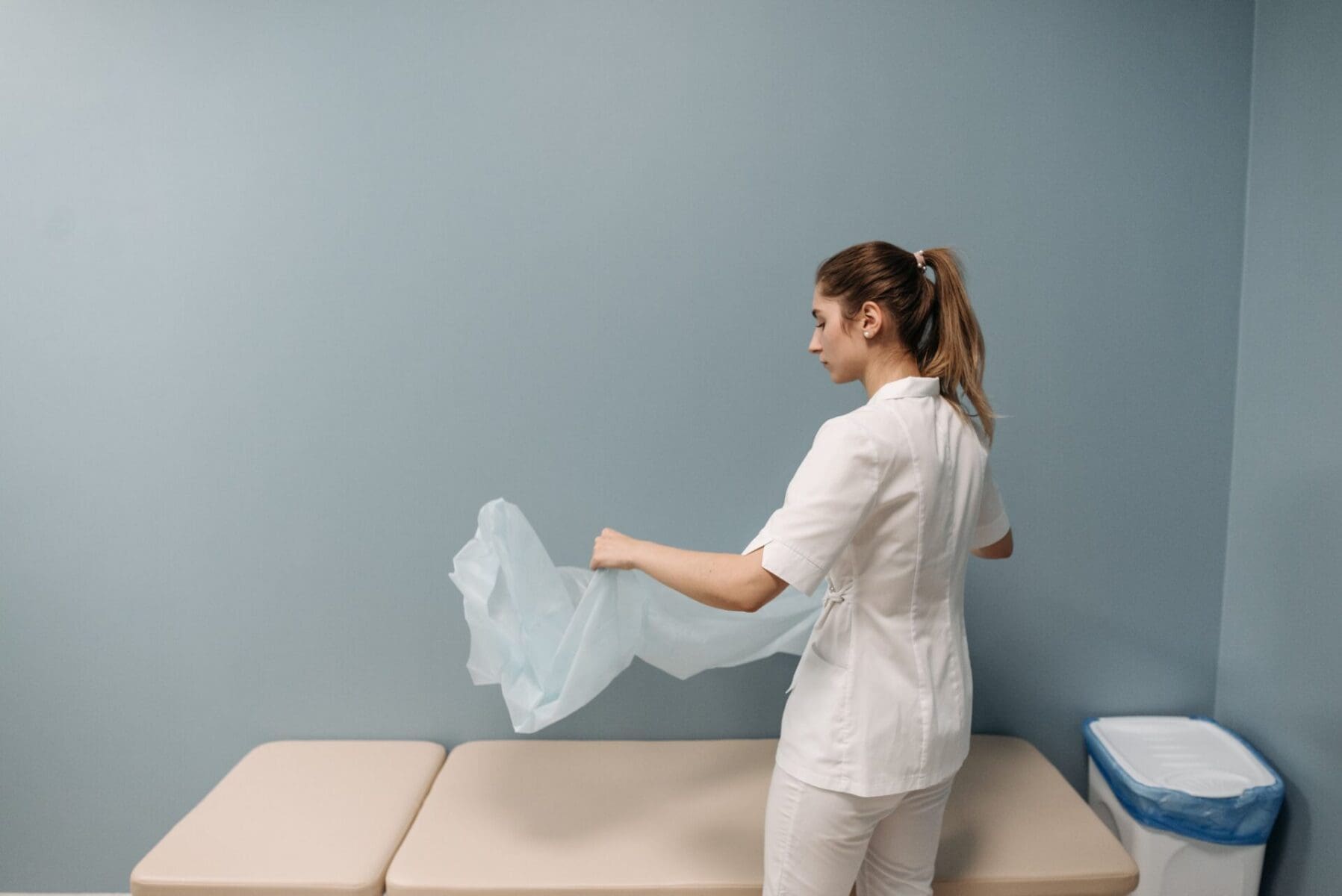
Exam and treatment rooms may need cleaning and disinfecting between appointments. Your protocol should spell out:
- Which tasks belong to clinical staff and which belong to the cleaning crew.
- Which surfaces get treated.
- Which products to use and how long they stay on.
- How the room is marked as ready for the next patient.
At the End of the Day
- Clean reception and waiting room surfaces.
- Clean and restock restrooms and staff areas.
- Empty the trash according to your facility’s procedures.
- Vacuum and mop floors.
- Check high-touch points.
- Note any tasks that were missed or need follow-up.
Periodic Detailed Cleaning
Some areas don’t need attention every day but shouldn’t be ignored: baseboards, corners, behind furniture, interior glass, and surfaces that rarely get touched. Schedule these so they don’t interfere with daily tasks.
How to Check That the Work Is Getting Done
The CDC’s guidance puts the emphasis on written procedures, training, monitoring, and feedback. A simple quality check built on those ideas has four steps:
- Set clear expectations. Each task lists the area, what needs to be done, and how often.
- Record completed work. A log shows the date, time, and who did the task.
- Inspect a few areas. A supervisor checks for missed spots or anything that doesn’t match the plan.
- Follow up on problems. If the same issue keeps coming up, review the schedule, the supplies, the training, or the instructions.
A visual check catches obvious problems like a dirty floor or an empty dispenser. It can’t confirm that a surface was disinfected correctly, so rely on your written procedures for that. Keep communication open with your cleaning provider so small problems get fixed quickly.
What to Look For in a Medical Office Cleaner in Atlanta
When you compare providers, a clean-looking lobby isn’t enough. Ask about:
- Experience. Have they worked in professional, high-traffic facilities?
- Scope of work. Is it clear what’s included and what isn’t?
- Products and methods. Do they match products to surfaces and follow the labels?
- Training. Are their people trained for the tasks assigned and for safe chemical handling?
- Scheduling. Can they work around your appointments and hours?
- Quality checks. How do they inspect their work and fix problems?
- Communication. Who do you call if something gets missed?
Also ask whether the people doing the work are qualified for any specialized tasks in the proposal. A structured commercial cleaning program is different from basic housekeeping, and the difference shows in how clearly these questions are answered.
How JAN-PRO Cleaning & Disinfecting in Atlanta Supports Medical Office Cleaning
JAN-PRO gives medical offices a clear way to organize their cleaning: set procedures, the right products, and a person accountable for each task.
For a medical office in Atlanta, that can include:
- Regular cleaning of reception areas, waiting rooms, and administrative spaces.
- Care of floors, restrooms, and common areas.
- Cleaning of reachable environmental surfaces.
- Attention to high-touch surfaces based on your practice’s requirements.
- A set schedule with tasks clearly assigned.
- Inspections and open communication so missed areas get addressed.
The exact services depend on your practice and what you agree on with the local team. If you need cleaning in patient care areas or tasks that follow specific healthcare protocols, talk it through with us first so expectations are clear from the start.
Putting Commercial Cleaning Experience to Work in Your Practice
A good medical office cleaning program comes down to a few things: a plan that matches how each space is used, attention to high-touch surfaces, the right products, a clear line between cleaning and disinfecting, and regular checks. JAN-PRO brings more than three decades of commercial cleaning experience to that work, as long as the scope fits your healthcare requirements.
For practices in Atlanta, the best results come from a documented schedule, clear responsibilities, quality checks, and good coordination with your clinical team.
Talk With Our Atlanta Team
Medical offices can call JAN-PRO Cleaning & Disinfecting in Atlanta at 770-955-9822 or visit 881 Franklin Gateway SE, Suite 405, to talk about their space, schedule, and which services make sense.
Frequently Asked Questions
1. What does medical office cleaning include?
Medical office cleaning may include reception and waiting room upkeep, restroom cleaning, floor care, trash removal, and cleaning of designated surfaces. Exam room disinfection can also be included when scoped into your custom service plan.
2. Why is disinfection important in medical offices?
Disinfection reduces germs on surfaces when the right product is used according to its label. It works alongside routine cleaning, hand hygiene, and the other infection prevention steps your practice follows.
3. How often should a medical office be cleaned?
It depends on patient volume, how rooms are used, how often surfaces are touched, and your practice’s policies. High-touch surfaces and patient care areas usually need more attention than administrative spaces.
4. What should medical offices look for in a commercial cleaning provider?
Look at their commercial cleaning experience, staff training, cleaning procedures, product choices, scheduling, quality checks, and communication. Also confirm who is qualified to handle any specialized tasks.
5. What is included in a medical office cleaning checklist?
A checklist can cover reception counters, waiting room seating, floors, restrooms, high-touch surfaces, trash, and designated exam room surfaces. It should also list how often each task is done, who is responsible, which products are approved, and how work is recorded.
6. Does commercial medical office cleaning include sterilizing medical instruments?
No, not automatically. Sterilizing or reprocessing medical instruments requires specialized equipment, training, and protocols, and should be done by qualified personnel.
About the Author
Carter James
 Carter James is Vice President of Strategy & Development, leading growth strategy, acquisitions, and multi-market expansion within a facility services platform. His background includes corporate strategy, M&A integration, and franchise development. He partners with senior leadership to drive disciplined execution, scalable operations, and long-term value through data-driven, high-accountability leadership.