A medical office cleaning scope is a written document that defines which areas of a healthcare facility are cleaned, which tasks are performed in each area, how often, with which products, and which party is responsible for each task. In outpatient settings such as primary care clinics, specialty practices, dental offices, and urgent care centers, the scope separates routine janitorial work from clinical duties that belong to medical staff. A clear scope reduces gaps in coverage, supports a practice’s infection control program, and gives facility managers a measurable standard for evaluating performance.
Key Terms in Medical Office Cleaning
Several terms appear in nearly every healthcare cleaning scope. Defining them up front keeps facility managers, clinical staff, and cleaning providers aligned.
- Cleaning: The physical removal of dust, soil, and organic matter from surfaces. Cleaning always comes before disinfecting.
- Disinfecting: Applying an EPA-registered disinfectant according to its label to kill the specific microorganisms the label lists.
- Contact time (dwell time): The period a disinfectant must stay visibly wet on a surface to work as labeled.
- High-touch surfaces: Door handles, light switches, check-in counters, chair arms, keyboards, faucet handles, and elevator buttons.
- Clinical areas: Exam rooms, treatment rooms, procedure rooms, labs, and sterilization rooms.
- Non-clinical areas: Waiting rooms, reception, offices, break rooms, corridors, and restrooms.
Why a Written Scope Matters in Medical Offices
Outpatient facilities serve a steady flow of patients, some of whom are ill, elderly, or immunocompromised. A vague agreement such as “clean offices nightly” leaves critical questions unanswered. Who wipes exam tables between patients? Who empties sharps containers? Which disinfectant is used in restrooms, and for how long does it stay on the surface?
A written scope answers these questions in advance. It assigns each task to a responsible party, sets frequencies, and documents products and methods. That clarity matters during staff turnover, accreditation reviews, and conversations about service quality.
Clinical and Non-Clinical Zones
Most medical office cleaning scopes are organized by zone, because each area carries a different risk profile and task list.
| Zone | Examples | Primary cleaning focus |
| Exam and treatment rooms | Exam table surfaces, counters, sinks, stools, floors | Disinfection of high-touch and horizontal surfaces, floor care |
| Patient restrooms | Toilets, sinks, grab bars, dispensers, partitions | Daily disinfection, restocking, odor control |
| Waiting room and reception | Chairs, check-in counters, kiosks, glass partitions | High-touch disinfection, upholstery care, glass cleaning |
| Labs, sterilization, and utility rooms | Counters, sinks, floors (environmental surfaces only) | Surface disinfection; instruments excluded |
| Staff areas | Workstations, offices, break rooms | General cleaning, kitchen sanitation, trash removal |
| Entrances and corridors | Entry mats, glass doors, handrails, elevator buttons | Soil control, floor care, high-touch disinfection |
Zone-by-Zone Tasks in a Medical Office Cleaning Scope
Exam and Treatment Rooms
- Disinfect counters, cabinet handles, sinks, faucets, light switches, and door hardware
- Wipe exam table frames, stools, and side chairs (between-patient table turnover is typically a clinical task)
- Clean and disinfect hand hygiene stations and refill soap and paper towels
- Remove general trash and recycling; regulated medical waste is handled separately
- Damp mop floors with a fresh mop head or microfiber pad for each room
Waiting Rooms and Reception
- Disinfect chair arms, check-in counters, clipboards, pens, and payment terminals
- Clean glass partitions, entry doors, and display surfaces
- Vacuum carpet or damp mop hard floors, with attention to entry zones
- Spot clean upholstery and wipe children’s play areas where present
Restrooms
- Clean and disinfect toilets, urinals, sinks, grab bars, and baby changing stations
- Restock soap, paper products, and seat covers
- Disinfect dispensers, flush handles, and door hardware
- Mop and disinfect floors, including corners and behind fixtures
Staff Workspaces and Break Rooms
- Dust and wipe desks, phones, keyboards, and monitors per facility policy
- Clean break room counters, sinks, microwaves, and refrigerator handles
- Empty trash and recycling and replace liners
Labs, Sterilization, and Utility Rooms
- Disinfect environmental surfaces such as counters, sinks, and floors
- Exclude instruments, specimens, and devices, which remain the responsibility of clinical staff
Recommended Cleaning Frequencies
Frequencies depend on patient volume, hours of operation, and the services the practice offers. The following schedule reflects common practice in outpatient facilities.
| Frequency | Typical tasks |
| Daily (each operating day) | High-touch disinfection, restrooms, exam room surfaces, trash removal, floor care in clinical and patient areas |
| Weekly | Detailed dusting, baseboards, interior glass, upholstery spot cleaning, break room appliances |
| Monthly | High dusting, vents and diffusers, light fixtures, deep cleaning of hard floor edges |
| Quarterly or periodic | Carpet extraction, hard floor scrubbing and refinishing, window washing |
In the Puget Sound region, the wet months from fall through spring bring tracked-in moisture, grit, and leaves. Many scopes increase entry mat service and floor care frequency during this period to limit slip hazards and floor wear.
What a Medical Office Cleaning Scope Usually Excludes
Exclusions are as important as inclusions. Listing them protects patients, clinical staff, and cleaning personnel by removing ambiguity.
- Between-patient exam table turnover: Usually performed by medical assistants or nurses as part of clinical workflow.
- Regulated medical waste and sharps: Handled by clinical staff and licensed medical waste haulers, not janitorial providers.
- Instrument reprocessing and sterilization: A clinical function governed by manufacturer instructions and practice protocols.
- Medical equipment cleaning: Excluded unless the scope specifically lists the equipment and the manufacturer-approved method.
- Large blood or body fluid spills: The scope should define who responds and which procedure applies.
These boundaries reflect federal workplace safety requirements. The OSHA Bloodborne Pathogens standard sets rules for employers whose workers may be exposed to blood or other potentially infectious materials, which is one reason scopes spell out who handles waste, sharps, and spills.
Products, Methods, and Protocols
The methods section of a scope turns task lists into repeatable procedures.
- EPA-registered disinfectants: Products, not services, carry EPA registration. Scopes typically name each product and keep Safety Data Sheets on site.
- Label-directed contact time: Surfaces stay visibly wet for the full contact time listed on the product label.
- Clean before disinfecting: Soil and organic matter are removed first so the disinfectant can perform as labeled.
- Color-coded microfiber: Separate cloths and mop heads for restrooms, clinical areas, and general areas limit cross-contamination.
- Clean-to-dirty, top-to-bottom sequencing: Work moves from cleaner areas to more soiled ones and from high surfaces to floors.
- Personal protective equipment: Gloves and eye protection are worn as required by each product’s Safety Data Sheet.
Dental Office Cleaning Considerations in Seattle
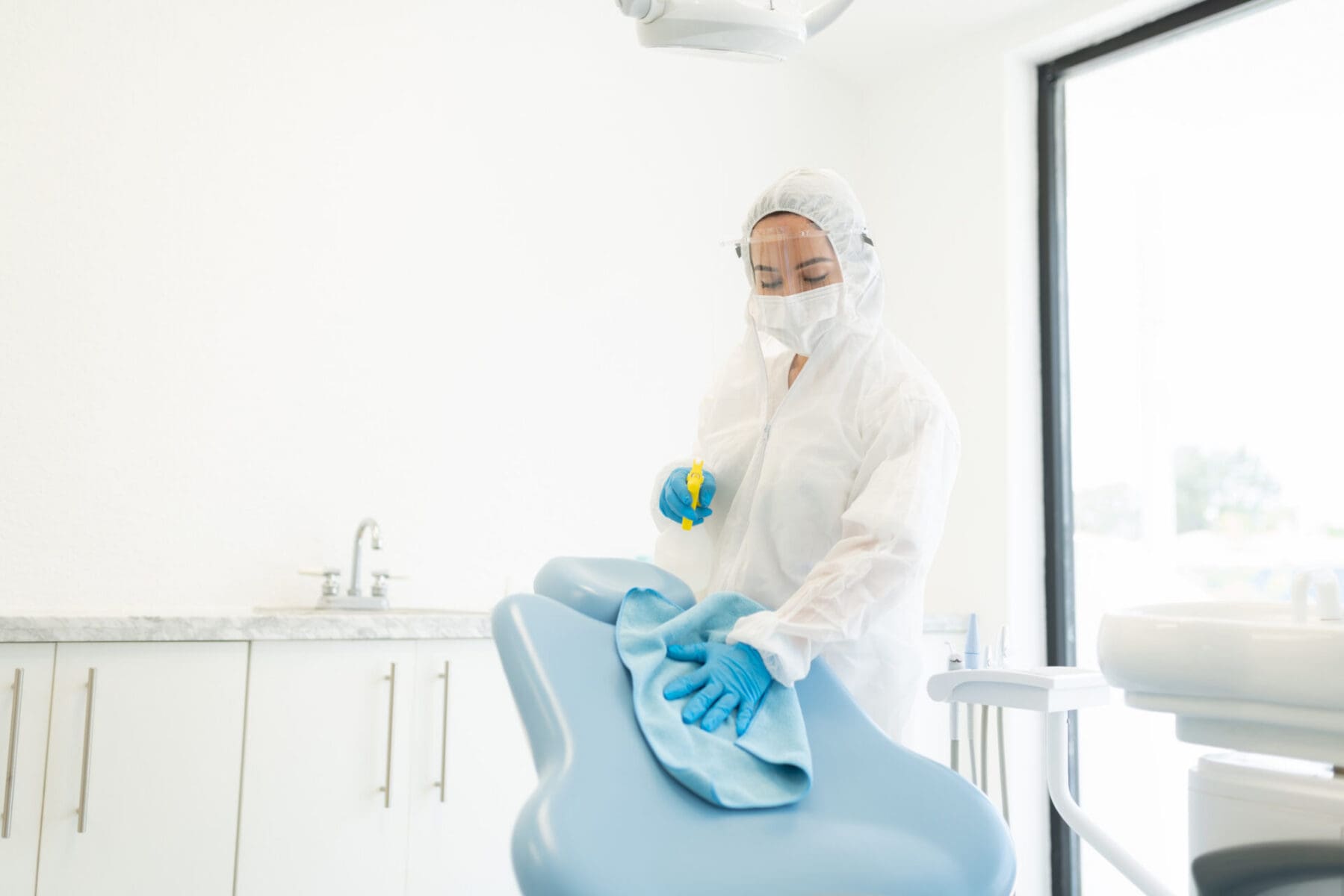
Dental office cleaning in Seattle follows the same zone-based logic, with a few additions. Dental operatories involve procedures that can generate aerosols, which settle on counters, light handles, and nearby horizontal surfaces. Scopes for dental practices typically emphasize disinfection of these environmental surfaces after each operating day.
Dental scopes also draw a firm line around clinical tasks. Instrument reprocessing, barrier changes between patients, and dental unit waterline maintenance remain with dental staff. Practices clustered in Seattle’s First Hill medical district and in Tacoma near MultiCare Tacoma General and St. Joseph Medical Center often share buildings with other healthcare tenants, so scopes also clarify responsibility for shared lobbies, elevators, and restrooms.
Documentation, Inspections, and Quality Control
Established cleaning providers back the scope with documentation that shows work is performed as written.
- Zone checklists: Task lists for each area, initialed or logged after each service
- Scheduled inspections: Walk-throughs scored against the scope, with corrective actions recorded
- Safety Data Sheet binder: Current sheets for every product used on site
- Training records: Bloodborne pathogens awareness, chemical handling, and site-specific procedures
- Communication log: A shared record of special requests, issues, and follow-ups
- Scope reviews: Updates when the practice adds services, renovates, or changes hours
A detailed scope also gives facility managers a consistent basis for comparing proposals. Differences in commercial cleaning price between providers often trace back to differences in tasks, frequencies, and documentation included in each scope.
How Providers Like JAN-PRO Cleaning & Disinfecting in Puget Sound Approach Medical Office Scopes
JAN-PRO Cleaning & Disinfecting in Puget Sound builds medical office scopes around the facility rather than a generic template. The process generally follows a consistent sequence:
- Site walk-through: A review of every room, traffic patterns, patient volume, and operating hours.
- Zone mapping: Classification of each area as clinical or non-clinical, with its own task list.
- Responsibility matrix: A clear split between janitorial tasks and clinical tasks that stay with practice staff.
- Product and method selection: EPA-registered products matched to the facility’s surfaces, applied according to label directions.
- Consistent assignment: The same certified franchise owner services the facility, which supports familiarity with the site and its protocols.
- Ongoing quality checks: Scheduled inspections and scope reviews as the practice changes.
This approach applies across the commercial cleaning services JAN-PRO Cleaning & Disinfecting in Puget Sound supports, including medical offices, dental practices, and other healthcare-adjacent facilities.
Key Takeaways
- A medical office cleaning scope defines areas, tasks, frequencies, products, and responsibilities in writing.
- Organizing the scope by clinical and non-clinical zones matches tasks to each area’s risk level.
- Exclusions such as sharps, regulated medical waste, and instrument reprocessing belong in the scope as clearly as inclusions.
- Label-directed disinfection, color-coded tools, and documented inspections turn a task list into a repeatable standard.
- Dental offices and multi-tenant medical buildings need additional clarity on aerosol-affected surfaces and shared spaces.
Medical Office Cleaning Support From JAN-PRO in Puget Sound
Healthcare practices across the region, from Seattle clinics to facilities seeking a medical office cleaning company in Tacoma, WA, benefit from a scope that is written, specific, and reviewed over time. JAN-PRO Cleaning & Disinfecting in Puget Sound works with medical and dental offices to build cleaning programs around each facility’s zones, patient flow, and clinical boundaries, delivered by certified franchise owners using EPA-registered products and documented quality checks. Facilities evaluating medical office cleaning in Tacoma, WA or the greater Puget Sound area can reach the regional office at (253) 589-9110 or visit 500 South 336th St #201, Federal Way, WA to discuss a site walk-through.
Frequently Asked Questions
What is a medical office cleaning scope?
A medical office cleaning scope is a written document that lists the areas to be cleaned in a healthcare facility, the tasks performed in each area, how often each task occurs, the products used, and which party is responsible for each task.
How often should a medical office be cleaned?
Most medical offices receive cleaning after every operating day, with high-touch surfaces, restrooms, and exam room surfaces disinfected daily. Deeper tasks such as floor scrubbing, vent dusting, and high dusting are usually scheduled weekly, monthly, or quarterly based on patient volume and facility layout.
Does a cleaning provider handle medical waste and sharps?
In most medical office scopes, regulated medical waste and sharps containers are excluded from janitorial duties and handled by clinical staff and licensed medical waste haulers. Cleaning providers typically remove general trash and recycling only.
What is the difference between cleaning and disinfecting in a medical office?
Cleaning removes dirt, dust, and organic matter from surfaces. Disinfecting applies to an EPA-registered product according to its label, including the required contact time, to kill the specific microorganisms the label lists. Surfaces are cleaned first so the disinfectant can work as labeled.
How is dental office cleaning in Seattle different from general medical office cleaning?
Dental offices include operatories where procedures can generate aerosols that settle on nearby surfaces, so scopes for dental office cleaning in Seattle typically emphasize horizontal surface disinfection. They also separate environmental cleaning from clinical tasks such as instrument reprocessing and dental unit waterline maintenance, which remain with dental staff.
About the Author
Aaron Hurlburt
 Aaron Hurlburt is the Regional Developer for JAN-PRO, a commercial cleaning company. He is grateful for the opportunity to serve the Puget Sound these past 25 years. Aaron’s primary focus is operational excellence by pairing the ideal franchisee with the appropriate client. Mr. Hurlburt’s office deploys Field Service Consultants to routinely quality control the service and drive greater operational synergies.