Commercial cleaning cost is one of the first questions facility managers ask when evaluating service providers in Puget Sound—and for good reason. Between high-traffic office corridors in downtown Tacoma, healthcare facilities near Federal Way, and industrial spaces along the I-5 corridor, cleaning needs (and pricing) can vary widely.
If you’re managing a property near Commencement Bay, overseeing a medical clinic, or running a retail space in a busy strip mall, you’re likely balancing budget constraints with expectations for consistency, hygiene, and compliance. The challenge isn’t just “how much does cleaning cost?”—it’s understanding what drives that cost and how to align it with your facility’s needs.
What Is the Average Commercial Cleaning Cost in Puget Sound?
Commercial cleaning costs in Puget Sound typically start at around $200 per visit for small facilities, but pricing varies based on square footage, frequency, and scope. Most businesses pay between $0.08 and $0.25 per square foot, depending on complexity, industry requirements, and cleaning standards.
This baseline reflects entry-level service for smaller offices or low-traffic environments across facilities serviced in Puget Sound. However, costs increase when:
- Facilities require daily service instead of weekly service
- There are specialized needs (medical-grade disinfection, industrial cleaning)
- The building includes restrooms, kitchens, and high-touch zones
- Compliance standards must align with organizations like the Occupational Safety and Health Administration (OSHA)
According to the International Sanitary Supply Association (ISSA), labor accounts for the majority of cleaning costs, often exceeding 50–60% of total service pricing. This is why consistency, training, and accountability directly impact what you pay.
In practice, a small professional office in Federal Way might stay near the base range, while a multi-tenant facility near Tacoma’s downtown core will require a more customized pricing structure.
What Factors Influence Commercial Cleaning Prices?
Commercial cleaning prices are primarily influenced by facility size, cleaning frequency, type of business, and required standards. Additional factors like floor type, restroom count, and specialized services (e.g., disinfection) can significantly increase overall costs.
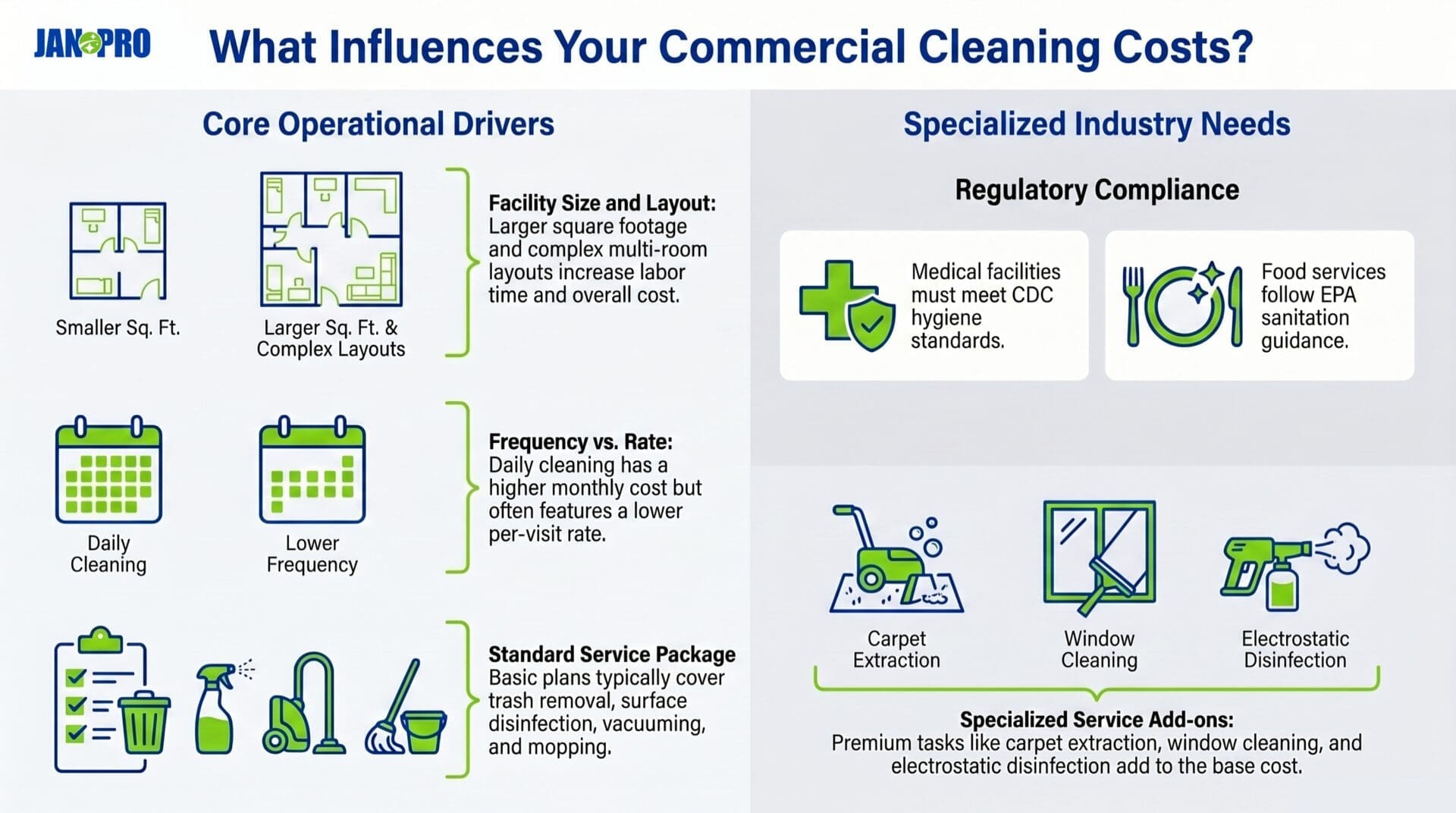
1. Facility Size and Layout
Larger spaces require more labor and time—but layout matters just as much as square footage.
- Open office plans are quicker to clean
- Multi-room layouts increase labor time
- High ceilings or complex structures add difficulty
2. Cleaning Frequency
Frequency is one of the biggest cost drivers:
- Daily cleaning: higher monthly cost, lower per-visit rate
- Weekly cleaning: lower overall cost, but less maintenance
- Custom schedules: tailored for hybrid office use
3. Industry-Specific Requirements
Certain industries require stricter protocols:
- Medical facilities must align with the Centers for Disease Control and Prevention (CDC) hygiene recommendations
- Food service businesses follow sanitation guidance from the U.S. Environmental Protection Agency (EPA)
- Manufacturing spaces often require debris and dust control
4. Type of Services Included
Not all cleaning plans are the same. A standard package may include:
- Trash removal
- Surface disinfection
- Vacuuming and mopping
Additional services that increase cost:
- Carpet extraction
- Window cleaning
- Electrostatic disinfection
In mixed-use buildings across Puget Sound, we often see offices, retail spaces, and shared restrooms requiring different cleaning standards within the same property. This typically leads to layered pricing, since each zone demands a different level of attention and frequency.
Hidden Cost Drivers We Commonly See in Puget Sound Facilities
Beyond square footage and frequency, long-term cleaning costs are often driven by operational inefficiencies rather than scope alone. Based on recurring patterns across facilities, the most common cost drivers include:
- Inconsistent service quality → leads to rework and corrective cleaning
- Over-cleaning low-use areas → wasted labor hours
- Under-cleaning high-traffic zones → faster wear and higher restoration costs
- Frequent vendor changes → loss of familiarity with the facility
Addressing these issues typically stabilizes both cost and performance more effectively than simply reducing service frequency.
Commercial Cleaning Rates by Facility Type (Puget Sound Comparison)
Commercial cleaning rates vary significantly depending on the type of facility. Offices typically cost less per square foot than medical or industrial spaces due to lower sanitation requirements and simpler layouts.
Below is a Puget Sound–specific comparison framework based on regional averages and industry benchmarks:
| Facility Type | Typical Rate (Per Sq Ft) | Cleaning Frequency | Key Cost Drivers | Notes |
| General Office | $0.08 – $0.15 | 2–5x per week | Desks, floors, shared spaces | Lower complexity |
| Medical Clinics | $0.15 – $0.25 | Daily | Disinfection, compliance, bio-risk areas | Higher standards (CDC-aligned) |
| Retail Stores | $0.10 – $0.20 | Daily/weekly | Foot traffic, glass, entryways | Seasonal fluctuations |
| Industrial Facilities | $0.12 – $0.22 | Custom | Dust, machinery zones, safety compliance | OSHA considerations |
| Educational Facilities | $0.10 – $0.18 | Daily | Classrooms, restrooms, high-touch areas | High usage patterns |
Note: Rates reflect Puget Sound regional averages and may vary by provider and scope.
For example, a clinic near a busy corridor in Tacoma will require stricter disinfection protocols than a small office in a suburban business park, directly affecting cost.
How Do Commercial Cleaning Rates Compare to Janitorial Services?
Commercial cleaning rates generally include broader, more specialized services, while janitorial services focus on routine, day-to-day maintenance. As a result, commercial cleaning often costs more but delivers deeper, more comprehensive results.
Here’s a quick comparison:
| Service Type | Scope of Work | Frequency | Cost Range |
| Janitorial Services | Daily upkeep (trash, floors, restrooms) | Daily/weekly | Lower |
| Commercial Cleaning | Deep cleaning, disinfection, specialty tasks | Weekly/monthly | Higher |
Understanding this distinction is critical when budgeting. If you’re unsure which applies, reviewing this breakdown of commercial cleaning can help clarify the scope.
In practice, facilities near high-traffic areas—like retail centers or shared office complexes—often require a hybrid approach that combines both.
How Often Should You Schedule Cleaning to Control Costs?
Cleaning frequency should match facility usage, not just budget. Under-cleaning can lead to higher long-term costs due to wear, health risks, and compliance issues, while over-cleaning may waste resources without adding value.
Recommended Frequency by Use Case
- Low-traffic offices: 1–2 times per week
- Standard offices: 3–5 times per week
- Medical or high-risk environments: Daily
- Retail spaces: Daily or multiple times per day
According to the American Society of Heating, Refrigerating and Air-Conditioning Engineers (ASHRAE), indoor air quality is directly impacted by cleaning frequency and surface hygiene. Poor maintenance can increase airborne particles and contaminants.
In Puget Sound, seasonal factors also play a role:
- Fall/Winter: Increased moisture → more dirt tracked indoors
- Spring: Pollen accumulation impacts surfaces and air quality
- Rainy months: Entryways require more frequent attention
For instance, a retail business in Tacoma may need daily entryway cleaning during peak rainy months to prevent buildup and safety hazards.
What Should Be Included in a Commercial Cleaning Quote?
A commercial cleaning quote should clearly outline scope, frequency, service inclusions, and accountability measures. Transparent quotes reduce misunderstandings and ensure consistent service delivery.
Essential Components of a Cleaning Quote
- Scope of Work
- Areas covered (offices, restrooms, breakrooms)
- Specific tasks (dusting, disinfecting, vacuuming)
- Cleaning Frequency
- Number of visits per week or month
- Supplies and Equipment
- Who provides cleaning products
- Use of eco-friendly or certified products (e.g., Green Seal)
- Quality Control Measures
- Inspections
- Performance tracking
- Pricing Structure
- Flat rate vs. per-square-foot pricing
According to the U.S. Environmental Protection Agency (EPA), using certified cleaning products can reduce indoor pollutants and improve occupant health.
A common scenario involves facilities switching providers due to inconsistent results—not pricing. Clear expectations in the quote help prevent that issue.
How Can Businesses Optimize Commercial Cleaning Costs Without Cutting Corners?
Businesses can control commercial cleaning cost by aligning service frequency with actual usage, focusing on high-impact areas, and using performance-based cleaning plans instead of fixed schedules.
Practical Cost Optimization Strategies
- Prioritize High-Traffic Areas
- Entryways, restrooms, shared spaces
- Adjust Frequency Based on Usage
- Hybrid offices don’t need daily full-service cleaning
- Bundle Services Strategically
- Combine deep cleaning with scheduled maintenance
- Use Data-Driven Cleaning Plans
- Track usage patterns and adjust accordingly
- Work With Consistent Teams
- Reduces inefficiencies and improves quality
For example, in mid-sized office environments near Federal Way, shifting from full daily cleaning to targeted daily disinfection plus scheduled deep cleaning is one of the most effective ways we’ve seen businesses reduce costs without affecting consistency.
Conclusion
Commercial cleaning cost in Puget Sound depends on multiple variables, including facility type, size, frequency, and required standards. Most businesses can expect base pricing starting at around $200 per visit. Understanding what drives pricing—especially labor, scope, and compliance—helps you make informed decisions. Across Puget Sound facilities, aligning cleaning plans with actual usage is the most reliable way to control costs without sacrificing performance.
Reduce Cleaning Costs with JAN-PRO Cleaning & Disinfecting in Puget Sound
When cleaning quality is inconsistent or costs keep rising, the issue is often a mismatch between service and actual facility usage. Aligning your cleaning plan with real needs helps stabilize results and avoid unnecessary expenses.
JAN-PRO Cleaning & Disinfecting in Puget Sound works with businesses to implement structured, performance-based cleaning programs across offices and multi-location facilities. Call (253) 589-9110 or visit 500 South 336th St #201, Federal Way, WA to implement a plan tailored to your operations, with commercial cleaning services available throughout Puget Sound, including Tacoma, Everett, Renton, Bellevue, Seattle, Kent, among others.
FAQs
What does commercial cleaning cost include for most businesses?
Commercial cleaning costs typically include routine tasks like trash removal, dusting, vacuuming, mopping, and restroom sanitation. Depending on the provider, it may also cover supplies, equipment, and quality control checks. More advanced services—such as disinfection, floor care, or window cleaning—are usually priced separately.
How are commercial cleaning rates calculated per square foot?
Commercial cleaning rates are calculated by assessing total square footage, facility layout, and cleaning complexity. Providers apply a per-square-foot rate and adjust based on frequency, labor requirements, and specialized services like medical-grade disinfection or industrial cleaning.
Why do office cleaning prices vary so much between providers?
Office cleaning prices vary due to differences in service scope, staff training, consistency, and accountability systems. Providers that include inspections, certified processes, or dedicated teams may charge more, but they often deliver more predictable and measurable results over time.
Is it cheaper to schedule cleaning daily or weekly?
Weekly cleaning is cheaper upfront, but daily cleaning can reduce long-term costs by preventing buildup, wear, and hygiene issues. The most cost-effective approach is aligning cleaning frequency with actual facility usage rather than choosing the lowest immediate price.
How can I reduce commercial cleaning costs without lowering quality?
You can reduce costs by focusing cleaning on high-traffic areas, adjusting frequency based on occupancy, and bundling services strategically. Data-driven cleaning plans—rather than fixed schedules—help eliminate unnecessary work while maintaining hygiene standards.
What’s the difference between commercial cleaning rates and janitorial rates?
Janitorial rates usually apply to routine, ongoing maintenance like trash removal and floor care, while commercial cleaning rates often include deeper services such as disinfection, carpet cleaning, and periodic intensive cleaning. This broader scope typically results in higher pricing.
About the Author
Aaron Hurlburt
 Aaron Hurlburt is the Regional Developer for JAN-PRO, a commercial cleaning company. He is grateful for the opportunity to serve the Puget Sound these past 25 years. Aaron’s primary focus is operational excellence by pairing the ideal franchisee with the appropriate client. Mr. Hurlburt’s office deploys Field Service Consultants to routinely quality control the service and drive greater operational synergies.