

Church cleaning plays a critical role in maintaining healthy, welcoming spaces for worship, community events, and educational activities. Religious facilities often host large gatherings several times per week, which increases the accumulation of dust, bacteria, and debris on surfaces, floors, and seating areas. Establishing an appropriate cleaning schedule helps maintain sanitation standards, preserve building materials, and ensure a comfortable environment for congregants.
In the Tampa Bay region, churches vary widely in size and activity level. Some facilities host daily services, community programs, and childcare activities, while others hold weekly gatherings. Because of these variations, determining the proper church cleaning schedule requires evaluating building usage, occupancy levels, and the types of surfaces present within the facility.
Why Regular Church Cleaning Is Important
Church environments combine high foot traffic with large indoor gatherings. Over time, this leads to the accumulation of dust, allergens, and microorganisms on frequently touched surfaces.
Regular church cleaning contributes to several operational goals:
- Maintaining sanitary conditions in shared spaces
- Preserving flooring, seating, and carpeting materials
- Supporting indoor air quality within enclosed worship spaces
- Reducing the spread of bacteria on high-touch surfaces
- Creating a welcoming environment for visitors and members
According to the Centers for Disease Control and Prevention (CDC), routine cleaning and disinfection of frequently touched surfaces is essential in environments where many people gather, particularly in communal indoor spaces.
Churches in Tampa Bay face additional environmental factors such as humidity, pollen, and coastal air, which can accelerate dust accumulation and require more frequent maintenance.
Typical Cleaning Needs in Churches
Religious facilities contain a combination of spaces that require different cleaning approaches.
These areas include:
- Worship halls or sanctuaries
- Entryways and lobbies
- Classrooms and meeting rooms
- Restrooms
- Kitchens or fellowship halls
- Administrative offices
Each area experiences different levels of traffic and requires specialized attention during church cleaning routines.
High-Touch Surfaces in Religious Facilities
Certain surfaces in churches require more frequent sanitation due to constant contact.
Examples include:
- Door handles and push plates
- Seating armrests and pew backs
- Light switches
- Handrails and stair rails
- Microphones and podium surfaces
- Restroom fixtures
Maintaining cleanliness in these areas helps reduce the transfer of germs during gatherings. For example, facilities interested in improving sanitation protocols often review detailed church cleaning practices that address high-contact surfaces and specialized cleaning procedures.
Recommended Church Cleaning Schedule
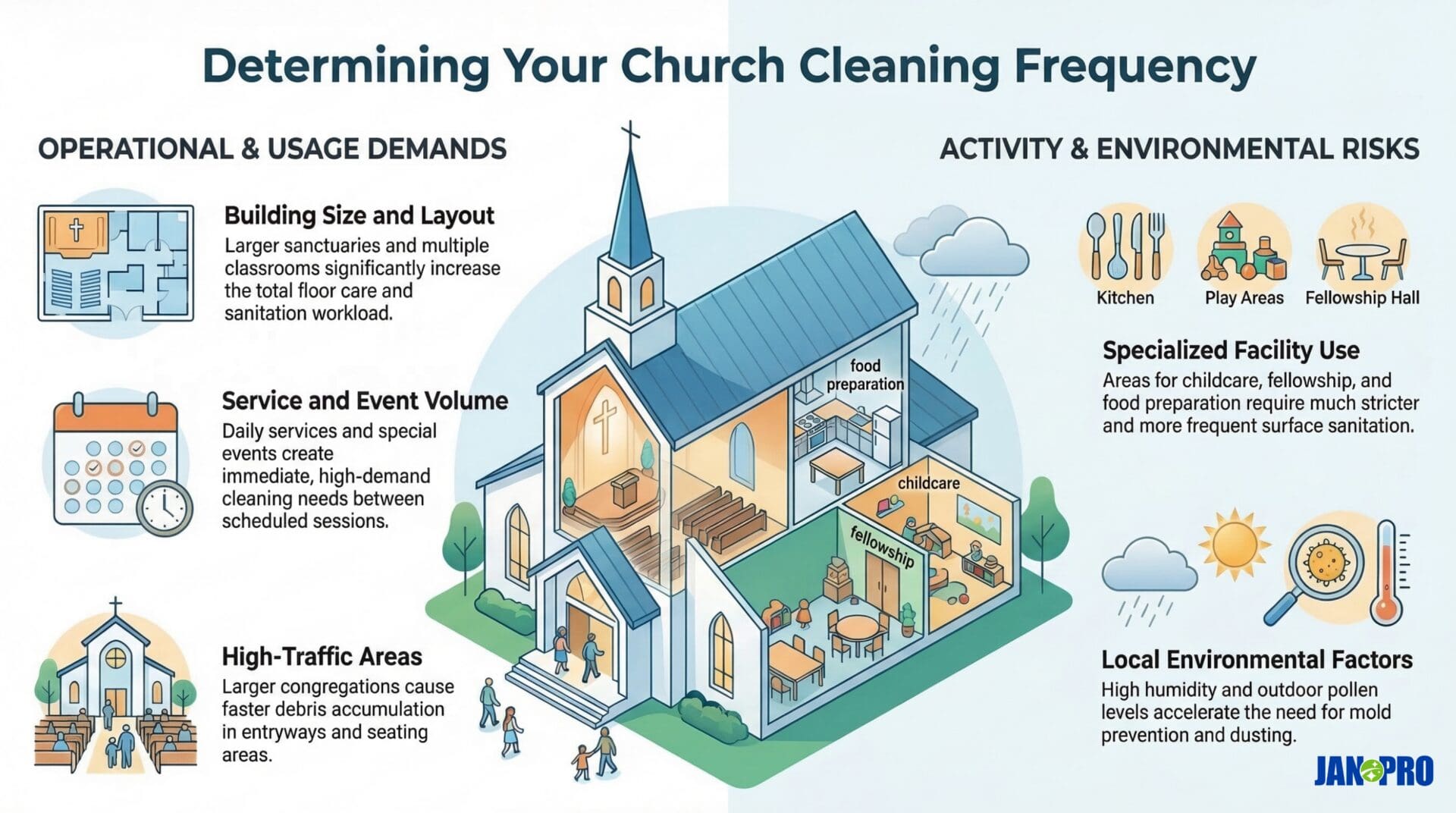
The ideal cleaning frequency depends on the number of weekly services, the size of the congregation, and the variety of activities hosted within the building.
The following schedule is commonly used in religious facilities:
| Cleaning Task | Recommended Frequency | Purpose |
| Trash removal | After every service | Prevent odor and clutter |
| Disinfect high-touch surfaces | After each gathering | Reduce bacteria transfer |
| Floor vacuuming or sweeping | 2–3 times per week | Remove dust and debris |
| Restroom sanitation | Daily during active weeks | Maintain hygiene standards |
| Carpet deep cleaning | Every 3–6 months | Extend carpet lifespan |
| Window and glass cleaning | Monthly | Maintain visibility and presentation |
| HVAC vent dusting | Quarterly | Improve air circulation |
Churches that host multiple services or community programs throughout the week may require more frequent cleaning cycles. Facilities with daycare programs, youth activities, or food service operations often adopt enhanced cleaning schedules due to stricter sanitation expectations.
Environmental Factors Affecting Cleaning Frequency in Tampa Bay
Regional environmental conditions influence how often professional cleaning should occur.
Tampa Bay’s climate introduces several cleaning challenges:
- High humidity levels that promote mold growth
- Seasonal pollen accumulation
- Sand and debris tracked indoors from outdoor areas
- Increased dust buildup due to HVAC operation
These conditions can require more frequent maintenance for carpets, entryways, and ventilation systems than in drier climates. Churches located near coastal areas or high-traffic roadways may also experience faster accumulation of airborne particles.
Key Factors That Determine Church Cleaning Frequency
Low-Cost Cleaning vs Professional Cleaning Services
Church administrators sometimes compare basic cleaning services with professional commercial cleaning providers.
| Feature | Low-Cost Cleaning Providers | Professional Cleaning Services |
| Training | Limited or inconsistent | Structured training programs |
| Cleaning protocols | Basic surface cleaning | Industry-standard sanitation processes |
| Equipment | Standard household tools | Commercial-grade equipment |
| Documentation | Often informal | Structured cleaning checklists |
| Safety procedures | Limited oversight | Compliance with OSHA guidelines |
Professional providers typically follow structured cleaning protocols designed for high-traffic commercial environments. These procedures include defined checklists, documented sanitation steps, and specialized equipment for floors, carpets, and ventilation areas.
Organizations exploring commercial cleaning in Tampa often evaluate providers based on operational procedures, safety compliance, and consistency of service.
How Professional Cleaning Providers Approach Church Cleaning
Established commercial cleaning providers apply structured cleaning systems designed for facilities with high public usage.
Typical processes include:
- Facility assessment – evaluating building layout and traffic patterns
- Customized cleaning plans – determining service frequency and focus areas
- Standardized cleaning checklists – ensuring consistent results
- Use of commercial-grade equipment – improving cleaning efficiency
- Air quality considerations – reducing dust and allergens
These procedures allow large facilities to maintain consistent sanitation across multiple rooms, floors, and gathering spaces.
Churches in different cities across Tampa Bay may also review localized service options, such as church cleaning services in Clearwater, when evaluating cleaning providers in the region.
FAQs
How often should a church sanctuary be cleaned?
Sanctuaries typically require cleaning after each service or gathering. High-touch surfaces, seating areas, and floors should be sanitized regularly to maintain hygiene standards.
Do churches require daily cleaning?
Churches that host weekday programs, childcare services, or community events often require daily cleaning. Smaller congregations with weekly services may require cleaning several times per week.
What areas of a church require the most cleaning?
Restrooms, entryways, seating areas, and fellowship halls experience the highest traffic and typically require the most frequent cleaning.
Is carpet cleaning necessary in churches?
Carpet cleaning is important for maintaining indoor air quality and extending carpet lifespan. Deep cleaning is commonly scheduled every three to six months, depending on usage levels.
Why is professional church cleaning recommended?
Professional cleaning providers use structured sanitation protocols, commercial equipment, and trained personnel capable of maintaining large facilities efficiently.
Church Cleaning Support in Tampa Bay
Church facilities require cleaning programs tailored to building size, congregation activity, and environmental conditions. Establishing a structured schedule helps maintain sanitation standards while preserving building materials and improving indoor air quality.
JAN-PRO Cleaning & Disinfecting in Tampa Bay provides customized commercial cleaning programs designed for offices, educational facilities, and religious buildings across the region. Through standardized cleaning systems and trained cleaning teams, facilities receive structured sanitation protocols suited for high-traffic environments.
Organizations seeking professional church cleaning support can learn more from JAN-PRO Cleaning & Disinfecting in Tampa Bay, located at 6908 W. Linebaugh Ave., Tampa, or by contacting the local office at (813) 864-1940 for information about cleaning programs designed for religious facilities throughout the Tampa Bay area.
About the Author
 Laura Ricchino
 Laura Ricchino
Laura Ricchino is Regional Director at JAN-PRO Cleaning Systems of Tampa, based in Florida. She supports operational excellence and growth across the commercial cleaning sector. With a focus on leadership, consistency, and client satisfaction, she works closely with teams to ensure high service standards and strong performance throughout the Tampa Bay region.