Office cleaning services typically address recurring workplace cleanliness issues that office managers describe in shorthand phrases like “the break room needs attention” or “high-traffic areas look worn.” These requests usually signal deeper concerns about hygiene standards, employee perception, or client-facing space appearance rather than isolated cleaning tasks. Understanding the intent behind common cleaning requests helps businesses secure more effective commercial cleaning partnerships.
Why Office Managers Speak in Code When Requesting Cleaning
Office managers rarely specify the exact cleaning tasks needed because they lack technical vocabulary for commercial cleaning protocols. Instead, they communicate symptoms of workplace cleanliness problems using vague descriptors.
The disconnect creates misaligned expectations. When an office manager says “the lobby needs a deep clean,” they might mean anything from carpet extraction to baseboard detailing to glass polishing. Professional cleaning providers must interpret these common phrases to deliver appropriate services.
Common Translation Gaps Between Request and Need
- “Make it look fresh” — Usually means remove visible dirt from high-contact surfaces and restore shine to floors and glass
- “The kitchen is a mess” — Often indicates appliance interiors, sink drains, and cabinet fronts require degreasing beyond daily wipe-downs
- “We need everything sanitized” — Typically requests disinfection of shared equipment, door handles, and communal workspace surfaces
- “High-traffic areas need work” — Generally points to carpet traffic lanes, entry mat replacement, or floor finish restoration
- “It smells off in here” — Almost always signals trash containment issues, HVAC filter needs, or carpet moisture problems requiring extraction
The Five Most Common Office Cleaning Requests and Their Real Meaning
Certain cleaning requests appear consistently across office environments in Wilmington, DE, particularly in sectors like finance, healthcare administration, and legal services where professional appearance directly affects client trust.
Request 1: “Can You Focus on the Restrooms?”
This phrase rarely means basic restroom cleaning. Office managers use this request when they notice odor issues, supply shortages, or visible buildup that suggests the current cleaning frequency or technique falls short.
What the request actually requires:
- Grout line scrubbing and mildew treatment in tile areas
- Toilet and urinal descaling to remove mineral deposits
- Partition and door disinfection at multiple heights
- Floor drain treatment to eliminate odor sources
- Supply monitoring systems to prevent shortages during business hours
Request 2: “The Carpets Look Tired”
Office managers make this observation when foot traffic patterns become visible, stains accumulate, or the carpet texture feels matted. The comment indicates dissatisfaction with overall space presentation.
Appropriate response services:
- Hot water extraction to remove embedded soil and restore fiber height
- Spot treatment for protein-based stains (coffee, food) using enzyme cleaners
- Traffic lane treatment with pre-spray and agitation
- Post-cleaning grooming to reset carpet pile direction
- Scheduling recommendations for quarterly deep cleaning cycles
Request 3: “Make the Conference Rooms Presentation-Ready”
This urgent request typically arrives before client meetings or executive visits. The manager needs assurance that shared spaces meet heightened cleanliness standards that reflect company professionalism.
| Surface Type | Expected Treatment | Visibility Priority |
| Glass surfaces | Streak-free cleaning of interior/exterior windows, glass walls, and display cases | High — immediately visible to visitors |
| Table surfaces | Disinfection and polish removal of fingerprints, water rings, and dust | High — direct contact during meetings |
| Electronics | Static-safe cleaning of screens, keyboards, remote controls, and conference phones | Medium — touched frequently but less scrutinized |
| Air quality | Vent cleaning and odor neutralization to prevent stale air perception | Medium — sensory impact on attendee comfort |
Request 4: “The Entryway Needs Attention”
Entry areas accumulate outdoor debris, weather-related moisture, and the visual wear of constant foot traffic. This request signals concern about first impressions for clients visiting Wilmington offices.
Critical entryway maintenance elements:
- Floor mat extraction or replacement to maintain moisture absorption capacity
- Hard floor finish reapplication where traffic removes protective coating
- Glass door cleaning to remove handprints and weather spotting
- Threshold and track cleaning where dirt accumulates in door hardware
- Lighting fixture cleaning to maximize brightness in greeting spaces
Request 5: “We Need a Post-Event Clean”
After-hours events, training sessions, or company gatherings create cleaning demands beyond regular janitorial schedules. Office managers need rapid restoration to normal working conditions.
Post-event cleaning checklist:
- Trash removal from overflow beyond regular bin capacity
- Spill remediation on carpets and hard surfaces before staining occurs
- Furniture reconfiguration to restore standard office layout
- Kitchen and break room deep cleaning after catering use
- Air quality management through ventilation and odor treatment
How Commercial Office Cleaning Companies Decode Vague Service Requests
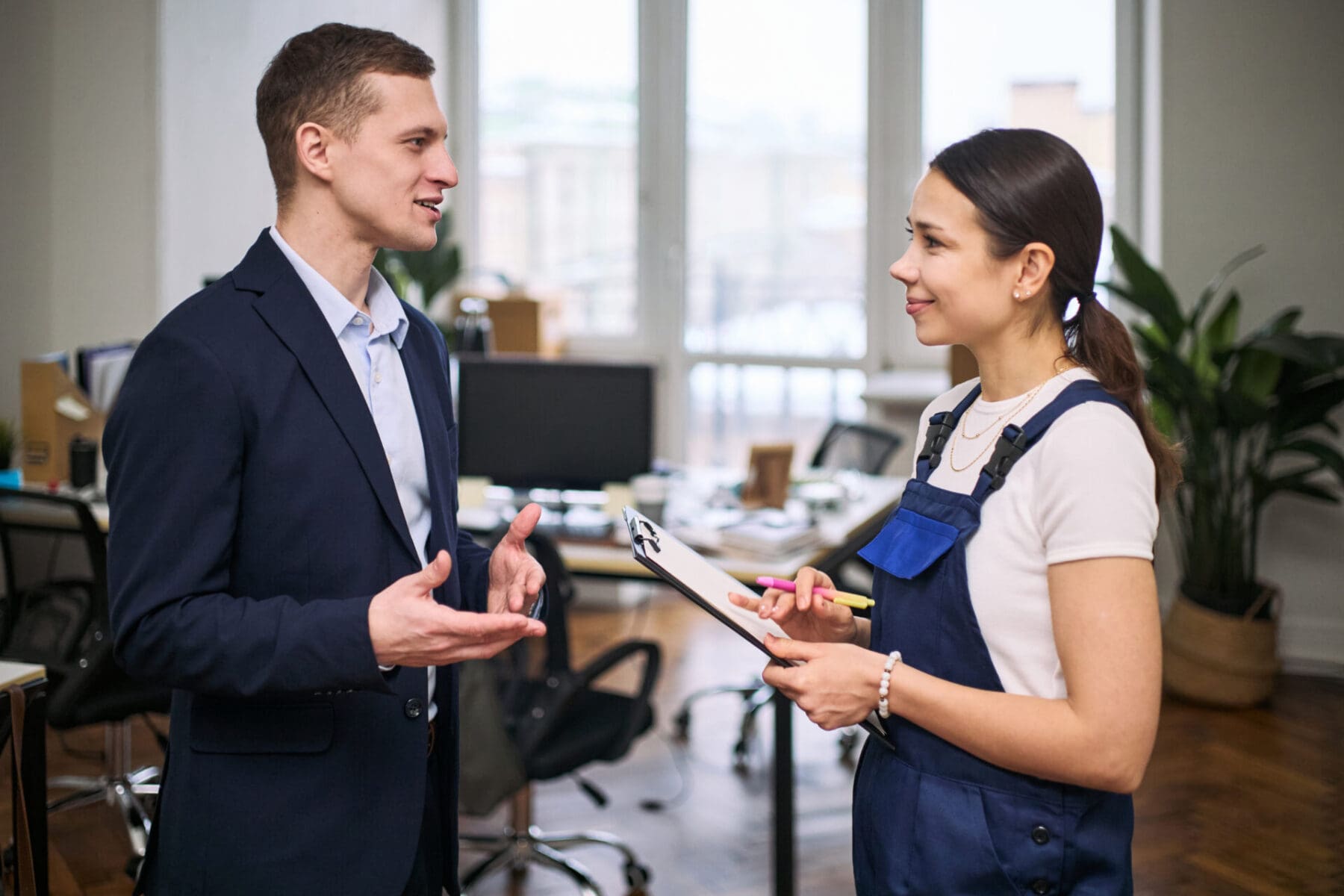
Professional cleaning providers develop systematic approaches to translate general requests into specific service protocols. This process protects both client expectations and operational efficiency.
Experienced commercial cleaning services conduct initial walk-throughs to identify the gap between stated requests and actual facility needs. This assessment reveals unstated priorities that office managers assume are obvious but cleaning teams cannot infer.
Standard Request Clarification Process
- Visual facility assessment — Document current conditions across all requested areas using photos and standardized checklists
- Usage pattern analysis — Identify which spaces receive heaviest use and which cleaning frequencies match traffic levels
- Priority ranking discussion — Confirm which cleaning outcomes matter most for business operations and budget allocation
- Service specification documentation — Convert general requests into specific tasks with measurable completion criteria
- Quality verification systems — Establish inspection protocols that confirm completed work matches interpreted requests
This structured approach prevents the common scenario where office managers feel dissatisfied despite cleaners completing assigned tasks, because the assigned tasks never matched the underlying need.
Industry-Specific Cleaning Requests Common in Wilmington Business Sectors
Different business types in the Wilmington area generate predictable cleaning requests based on their operational characteristics and client interaction patterns.
Financial Services and Banking
Financial institutions prioritize visible cleanliness in client-facing areas and regulatory compliance in document handling spaces. Requests focus on trust-building through immaculate presentation.
- Daily disinfection of shared transaction surfaces and ATM interfaces
- Lobby floor maintenance to eliminate scuff marks and maintain reflective finish
- Glass partition cleaning for transparency in open-concept layouts
- Secure document destruction coordination alongside routine cleaning
Healthcare Administration Offices
Medical office buildings and healthcare administration centers require cleaning that meets elevated hygiene standards. The Centers for Disease Control and Prevention’s Guidelines for Environmental Infection Control in Health-Care Facilities influence the service expectations in these settings.
- EPA-registered disinfectant use on high-touch surfaces in waiting areas
- Restroom cleaning frequency aligned with patient volume patterns
- Biohazard-safe waste handling procedures
- Air quality maintenance through HVAC coordination and proper ventilation
Legal and Professional Services
Law firms and professional service providers need cleaning that supports long working hours and maintains confidentiality. Requests often emphasize after-hours access and document security.
- Conference room readiness for early morning client meetings
- Secure cleaning protocols that respect confidential document handling
- Kitchen and break room maintenance for staff working extended hours
- Quiet cleaning techniques that don’t disturb late-working attorneys
JAN-PRO Cleaning & Disinfecting in New Castle: Interpreting and Delivering on Office Cleaning Requests
JAN-PRO Cleaning & Disinfecting in New Castle has built three decades of experience translating office manager requests into effective commercial office cleaning protocols. The certified franchisees serving Wilmington businesses use structured assessment methods to identify actual cleaning needs behind common request phrases.
The service approach combines initial facility evaluation with ongoing communication systems. Office managers receive clarity on which specific cleaning tasks address their stated concerns, eliminating the guesswork that often disappoints both parties in commercial cleaning relationships.
Service delivery framework includes:
- Detailed scope documentation that converts requests into measurable cleaning tasks
- Consistent team assignments so the same trained professionals service each location
- Quality assurance systems that verify completed work matches interpreted needs
- Flexible scheduling that accommodates urgent requests alongside routine service
- Communication protocols for addressing new concerns as they emerge
This systematic approach serves diverse Wilmington industries including healthcare administration, financial services, legal firms, and corporate office environments. The best commercial cleaning services recognize that effective cleaning requires understanding business context, not just executing task lists.
Businesses seeking reliable office cleaning service in Wilmington can contact JAN-PRO Cleaning & Disinfecting in New Castle at 302-324-5240 or visit the office at 2417 Lancaster Ave Ste. 101 to discuss specific facility needs and service options.
Frequently Asked Questions About Office Cleaning Service Requests
What does “deep cleaning” actually mean in office cleaning contexts?
Deep cleaning involves intensive treatment of surfaces beyond daily maintenance, including carpet extraction, grout scrubbing, baseboard detailing, light fixture cleaning, and furniture moving for access to hidden areas. This service typically occurs quarterly or semi-annually alongside regular janitorial schedules.
How should businesses communicate cleaning priorities to commercial cleaning companies?
Effective communication specifies which spaces receive highest visibility, which cleaning outcomes matter most for business operations, and which problems currently cause the most concern. Photos of problem areas and examples of desired results help cleaning providers understand expectations better than general descriptive phrases.
Why do office managers often feel dissatisfied even when cleaning tasks are completed?
Dissatisfaction typically stems from misaligned expectations where completed tasks don’t address the underlying concern. When managers request “better restroom cleaning” but mean “eliminate odors,” standard cleaning without drain treatment fails to solve the actual problem despite task completion.
What cleaning frequency do most Wilmington office environments require?
Most professional office environments benefit from daily trash removal and restroom cleaning, with weekly detail cleaning of common areas and monthly intensive treatment of high-traffic surfaces. Specific needs vary based on employee count, client visit frequency, and industry hygiene standards.
How do commercial cleaning services handle urgent or unexpected cleaning requests?
Professional cleaning providers maintain communication systems for urgent requests and deploy additional team members for same-day or next-day response. Service agreements typically distinguish between routine scheduled cleaning and on-demand urgent services with corresponding response time commitments.
Turning Vague Cleaning Requests into Measurable Results for Wilmington Offices
Office managers communicate cleaning needs through shorthand phrases that describe symptoms rather than specific service requirements. Professional cleaning providers must interpret these common requests to deliver appropriate solutions that address underlying concerns about hygiene, appearance, and workplace perception.
The most successful commercial cleaning partnerships develop when both parties invest in clear communication that translates vague requests into specific, measurable cleaning protocols. This alignment ensures that completed work actually solves the problems office managers identify.
For Wilmington businesses seeking an office cleaning company that understands the real needs behind common cleaning requests, JAN-PRO Cleaning & Disinfecting in New Castle provides certified professionals trained in systematic facility assessment and service delivery. Contact the team at 302-324-5240 or visit 2417 Lancaster Ave Ste. 101 to discuss how tailored cleaning protocols can address specific workplace challenges.
About the Author
 Jon Brodack
 Jon Brodack
Jonathan Brodack is Director of Sales & Marketing at JAN-PRO Franchise Development of the Delaware Valley. Holding an MBA from Rutgers University–Camden, he combines a data-informed approach with a focus on building enduring professional partnerships. He is dedicated to driving franchise growth and market expansion through a strategy centered on long-term relationship development.