Commercial cleaning has traditionally relied on a fixed set of chemical disinfectants, degreasers, and surface cleaners chosen mainly for speed and cost. Green cleaning replaces or reduces those products with formulations and procedures designed to lower chemical exposure, cut environmental impact, and improve indoor air quality without sacrificing sanitation standards. For facilities managers evaluating the shift, the change touches far more than the label on a bottle. It reshapes product selection, cleaning procedures, staff training, equipment, and how a building’s air quality is monitored over time.
What Defines Green Cleaning in a Commercial Setting
Green cleaning is not a single product or a marketing label. It is a set of practices built around three consistent principles: reducing volatile organic compound (VOC) emissions, minimizing the use of hazardous chemical concentrates, and selecting products verified by independent certification programs such as Green Seal or EPA Safer Choice. A commercial cleaning program qualifies as “green” when these principles are applied consistently across product selection, dilution control, application methods, and waste handling, not when a single eco-labeled product is added to an otherwise unchanged routine.
This distinction matters for facilities because inconsistent application produces inconsistent results. A single certified glass cleaner sitting next to a conventional degreaser does little to change the overall chemical load in a building. A full green cleaning program addresses the entire product and procedure inventory used across a facility, including floor care, restroom sanitation, and high-touch surface disinfection.
Product-Level Changes: From Conventional Chemicals to Certified Alternatives
The most visible change in a green cleaning transition happens at the product level. Conventional cleaning chemicals often rely on solvents, fragrances, and concentrated surfactants that off-gas VOCs during and after application. Green cleaning programs substitute these with:
- Third-party certified all-purpose cleaners and degreasers with reduced or no VOC content
- Fragrance-free or low-fragrance formulations, which lower the likelihood of triggering respiratory sensitivity in building occupants
- Concentrated products paired with metered dilution control systems, which reduce overuse and chemical waste
- Microfiber cleaning cloths and mop systems, which reduce the volume of chemical product needed per cleaning cycle
Product substitution alone does not complete the transition. Dilution ratios, contact times for disinfectants, and compatibility with surfaces such as sealed concrete, natural stone, or commercial flooring all need to be re-verified when a facility changes its core chemical inventory.
Air Quality and Allergy Considerations
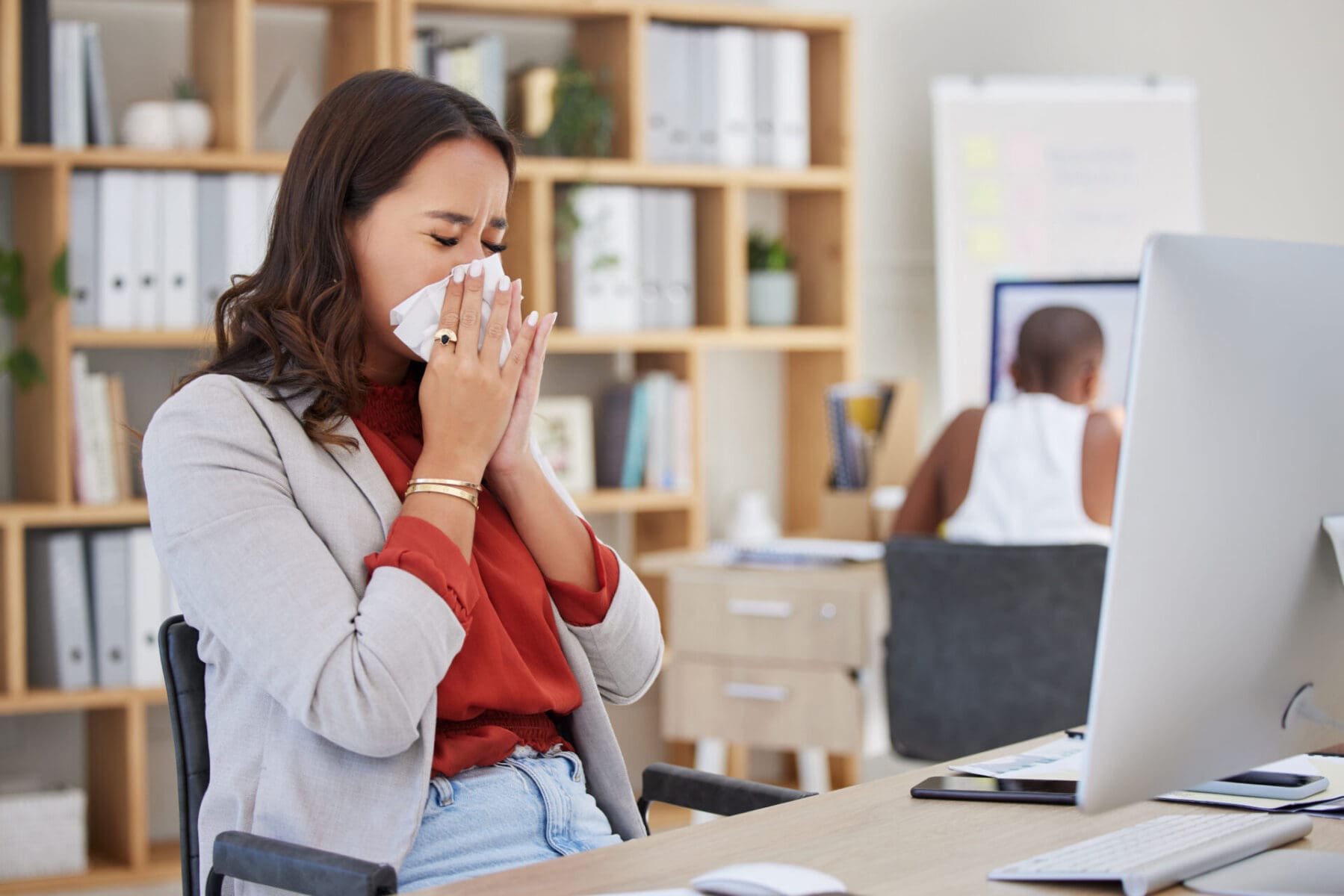
Indoor air quality is one of the primary reasons commercial facilities pursue green cleaning, and it is directly tied to allergy and respiratory symptoms among building occupants. According to the U.S. Environmental Protection Agency, volatile organic compounds are released as gases from certain solids and liquids and can carry short- and long-term health effects, with indoor concentrations of many VOCs running consistently higher than outdoor levels. Cleaning, disinfecting, and fragrance products are among the common indoor sources of these compounds, a factor the EPA’s guidance on indoor air quality outlines in detail.
For occupants with asthma, chemical sensitivity, or seasonal allergies, elevated indoor VOC levels can compound symptoms that are otherwise attributed to pollen, dust, or seasonal allergens. Green cleaning programs address this overlap in several ways:
- Reducing or eliminating synthetic fragrance additives, which are a common trigger for headaches and respiratory irritation
- Using HEPA-filtration vacuum systems to capture fine dust and allergen particles rather than redistributing them into the air
- Scheduling disinfection and floor care during off-hours to allow adequate ventilation before occupants return
- Selecting low-VOC floor finishes and carpet treatments that reduce off-gassing in enclosed spaces
None of these steps eliminate allergens entirely, since dust, pollen carried in on clothing, and biological contaminants originate from sources outside a cleaning program’s control. What a green cleaning approach can do is reduce one identifiable contributor, chemical-based indoor air pollution, to the overall allergen and irritant load in a facility.
Procedural and Training Changes
A green cleaning transition also changes how cleaning staff are trained and how work is documented. Common procedural shifts include:
- Color-coded microfiber systems to prevent cross-contamination between restrooms, kitchens, and general office areas
- Dilution control training, since concentrated green products require accurate measurement to remain both effective and safe
- Updated Safety Data Sheet (SDS) libraries reflecting the new product inventory, which facility managers and cleaning staff must have on hand
- Green cleaning checklists that document which certified products and methods were used at each service visit, supporting both compliance and quality assurance
These procedural updates are frequently the part of a green cleaning transition that takes the longest to implement fully, since they depend on retraining an entire cleaning staff rather than simply reordering supplies.
How Established Commercial Cleaning Providers Approach the Transition
Commercial cleaning providers with structured training programs, such as JAN-PRO Cleaning & Disinfecting in New Castle, generally approach a green cleaning transition as a documented process rather than a one-time product swap. This typically involves an initial facility assessment to identify current chemical usage, a phased product substitution plan, staff retraining aligned with a national certification curriculum, and ongoing quality checks to confirm that dilution ratios and application methods remain consistent across service visits. Because commercial cleaning franchise networks operate under standardized training programs, this structure allows a green cleaning transition to be implemented consistently across a facility’s various zones, from lobbies and offices to restrooms and break areas, rather than applied unevenly by individual staff members.
Key Considerations Before Committing to a Green Cleaning Program
Facilities evaluating a green cleaning transition typically weigh several factors before committing:
- Certification verification. Not all products marketed as “green” carry independent certification; confirming Green Seal, EPA Safer Choice, or equivalent third-party verification prevents reliance on unsubstantiated marketing claims.
- Disinfection efficacy. Green-certified disinfectants must still meet efficacy standards for the pathogens relevant to a facility’s industry, particularly in healthcare-adjacent or food-service environments.
- Cost of transition versus long-term savings. Concentrated, dilution-controlled products often reduce per-unit cleaning costs over time, even where the initial product cost is comparable to or higher than conventional alternatives.
- Staff training timeline. A full transition, including retraining and documentation updates, typically spans weeks rather than days.
Frequently Asked Questions
Does green cleaning reduce allergy symptoms in a commercial building?
Green cleaning can reduce one contributing factor, chemical-based indoor air pollutants such as VOCs and synthetic fragrances, which are documented triggers for respiratory irritation. It does not address non-chemical allergens such as pollen or dust originating from outside the cleaning program.
Is green cleaning as effective as conventional cleaning for disinfection?
Certified green disinfectants are required to meet the same efficacy standards as conventional products for the pathogens they are registered to address. Effectiveness depends on following correct dilution ratios and contact times, not on whether a product is certified green.
What certifications indicate a legitimate green cleaning product?
Green Seal and EPA Safer Choice are among the most recognized third-party certifications in commercial cleaning. Products carrying these certifications have been independently evaluated against defined environmental and health-based criteria, rather than self-labeled by the manufacturer.
Green Cleaning as Part of an Ongoing Commercial Cleaning Program
Facilities considering this shift often begin with a facility assessment before selecting products or retraining staff, an approach outlined in more detail through janitorial services in New Castle. A structured green cleaning program works best when it is integrated into the broader scope of a facility’s cleaning contract rather than treated as a standalone add-on, an approach further detailed through best commercial cleaning services. JAN-PRO Cleaning & Disinfecting in New Castle, located at 2417 Lancaster Ave Ste. 101, can be reached at 302-324-5240 for facilities evaluating a green cleaning transition alongside their existing commercial cleaning program.
Key Takeaways
Green cleaning changes a facility’s chemical inventory, cleaning procedures, staff training, and documentation practices, not just the products on a cleaning cart. The clearest, best-supported benefit is a reduction in indoor VOC exposure, which is directly relevant to occupants managing allergy or respiratory sensitivity. Verifying third-party certification, confirming disinfection efficacy standards, and planning for a multi-week training transition are the practical steps that separate a genuine green cleaning program from a surface-level rebrand of an existing one.
About the Author
 Jon Brodack
 Jon Brodack
Jonathan Brodack is Director of Sales & Marketing at JAN-PRO Franchise Development of the Delaware Valley. Holding an MBA from Rutgers University–Camden, he combines a data-informed approach with a focus on building enduring professional partnerships. He is dedicated to driving franchise growth and market expansion through a strategy centered on long-term relationship development.