High-touch surfaces in Gulfport offices should be cleaned and disinfected at least twice daily—once mid-morning and again in the afternoon—with additional spot cleaning during high-traffic periods. Door handles, light switches, elevator buttons, shared keyboards, and breakroom countertops require the most frequent attention because they accumulate pathogens rapidly in commercial environments where multiple employees make contact throughout the workday.
Working with businesses along the Mississippi Gulf Coast for more than 10 years, we’ve seen firsthand how coastal humidity creates unique challenges for office cleanliness. The combination of high moisture levels and constant employee interaction makes surface contamination spread faster than in drier climates.
Maintaining proper cleaning frequencies protects employee health, reduces absenteeism, and creates a professional environment that clients notice the moment they walk through your door. Understanding which surfaces need attention and how often determines whether your cleaning program truly works.
What Qualifies as a High-Touch Surface in Office Settings?
High-touch surfaces are any objects or areas that multiple people contact repeatedly throughout a workday. These surfaces serve as transfer points for bacteria, viruses, and other contaminants between employees, clients, and visitors.
In Mississippi Gulf Coast offices, these surfaces accumulate pathogens particularly quickly due to regional humidity that helps microorganisms survive longer on non-porous materials.
Priority High-Touch Surfaces That Need Daily Attention:
- Door handles and push plates: Entry doors, conference rooms, restrooms, and supply closets
- Light switches and thermostats: Particularly in shared spaces and meeting areas
- Elevator buttons and handrails: Both interior cab controls and exterior call buttons
- Shared technology: Copier touchscreens, shared keyboards, conference room remotes
- Breakroom surfaces: Refrigerator handles, microwave doors, coffee makers, sink faucets
- Reception areas: Front desk counters, sign-in tablets, waiting room armrests
- Stair railings: Interior and exterior handrails that employees grip daily
- Restroom fixtures: Faucet handles, soap dispensers, toilet flush handles, stall locks
Healthcare offices, financial institutions, and hospitality businesses along Highway 90 face additional requirements. Patient check-in areas and transaction counters demand more frequent attention than standard office environments.
Recommended Cleaning Frequencies for Different Surface Categories
Not all high-touch surfaces require identical cleaning schedules. The right frequency depends on traffic volume, surface material, and the specific function each area serves in your operation.
Professional office cleaning services in Gulfport adjust these frequencies based on your facility’s actual usage patterns rather than applying one-size-fits-all schedules.
| Surface Type | Minimum Frequency | High-Traffic Adjustment |
| Door handles and push bars | Twice daily | Every 2-3 hours |
| Restroom fixtures | Three times daily | Every 1-2 hours |
| Breakroom surfaces | After each rush period | Continuous monitoring |
| Reception counters | Twice daily minimum | Every 3-4 hours |
| Elevator buttons | Twice daily | Four times daily |
| Shared keyboards/mice | Once daily | Between user changes |
| Conference room tables | After each meeting | Same standard applies |
Biloxi casinos, Gulfport medical facilities, and Ocean Springs professional offices each operate on different traffic patterns. A dental practice waiting room requires more frequent attention than a private accounting firm with scheduled appointments.
Adjusting for Seasonal Factors
Mississippi’s humid summers and mild winters affect how quickly surfaces become contaminated. During June through September, increased HVAC use and higher humidity create conditions where pathogens survive longer on surfaces.
Hurricane season preparedness also matters—offices that remain operational during storm warnings see concentrated employee populations that increase contact frequency on all shared surfaces.
The Health and Business Case for Frequent Surface Cleaning
Regular high-touch surface cleaning directly reduces disease transmission in office environments. When one employee carries a virus into the workplace, inadequate surface cleaning allows that pathogen to spread to door handles, elevator buttons, and shared equipment within hours.
We’ve worked with several Gulfport businesses that tracked sick days before and after implementing enhanced surface cleaning protocols. The pattern remains consistent: offices that clean high-touch surfaces at least twice daily see fewer consecutive absences among employees.
Measurable Benefits Beyond Health:
- Reduced absenteeism: Fewer employees calling in sick means maintained productivity and reduced coverage gaps
- Client confidence: Visible cleaning practices signal professionalism and attention to detail
- Extended surface life: Regular cleaning prevents buildup that degrades finishes and materials
- Regulatory compliance: Healthcare and food-service businesses meet inspection standards
- Employee morale: Staff appreciate employers who prioritize their well-being
- Liability protection: Documented cleaning schedules demonstrate duty of care
Property managers throughout Harrison County recognize that office buildings with visible cleaning programs command higher lease rates and experience lower tenant turnover. The investment in proper surface cleaning pays dividends in reputation and retention.
Common Mistakes That Compromise Surface Cleaning Effectiveness
Even offices with cleaning contracts often miss critical elements that determine whether their surface cleaning actually protects employees. The most expensive cleaning program fails if it applies the wrong approach to high-touch areas.
Critical Errors to Avoid:
- Using the same cloth on multiple surfaces: This spreads contamination rather than removing it; fresh microfiber cloths should be used for each major zone
- Cleaning but not disinfecting: Dirt removal without pathogen elimination leaves surfaces looking clean but remaining contaminated
- Insufficient dwell time: Disinfectants need contact time to work; wiping immediately after spraying renders products ineffective
- Skipping “hidden” high-touch points: Stair railings, interior door edges, and file cabinet handles get overlooked despite frequent contact
- Inconsistent schedules: Cleaning twice on Monday but skipping Tuesday creates gaps where pathogens accumulate
- Wrong product selection: Not all cleaners disinfect, and not all disinfectants work on all surface materials
One Gulfport law firm we work with previously had nightly cleaning but still experienced frequent cold outbreaks. The issue wasn’t cleaning frequency—it was that daytime high-touch surfaces received no attention between 8 AM and 6 PM when employees actually used them.
Implementing an Effective High-Touch Surface Program
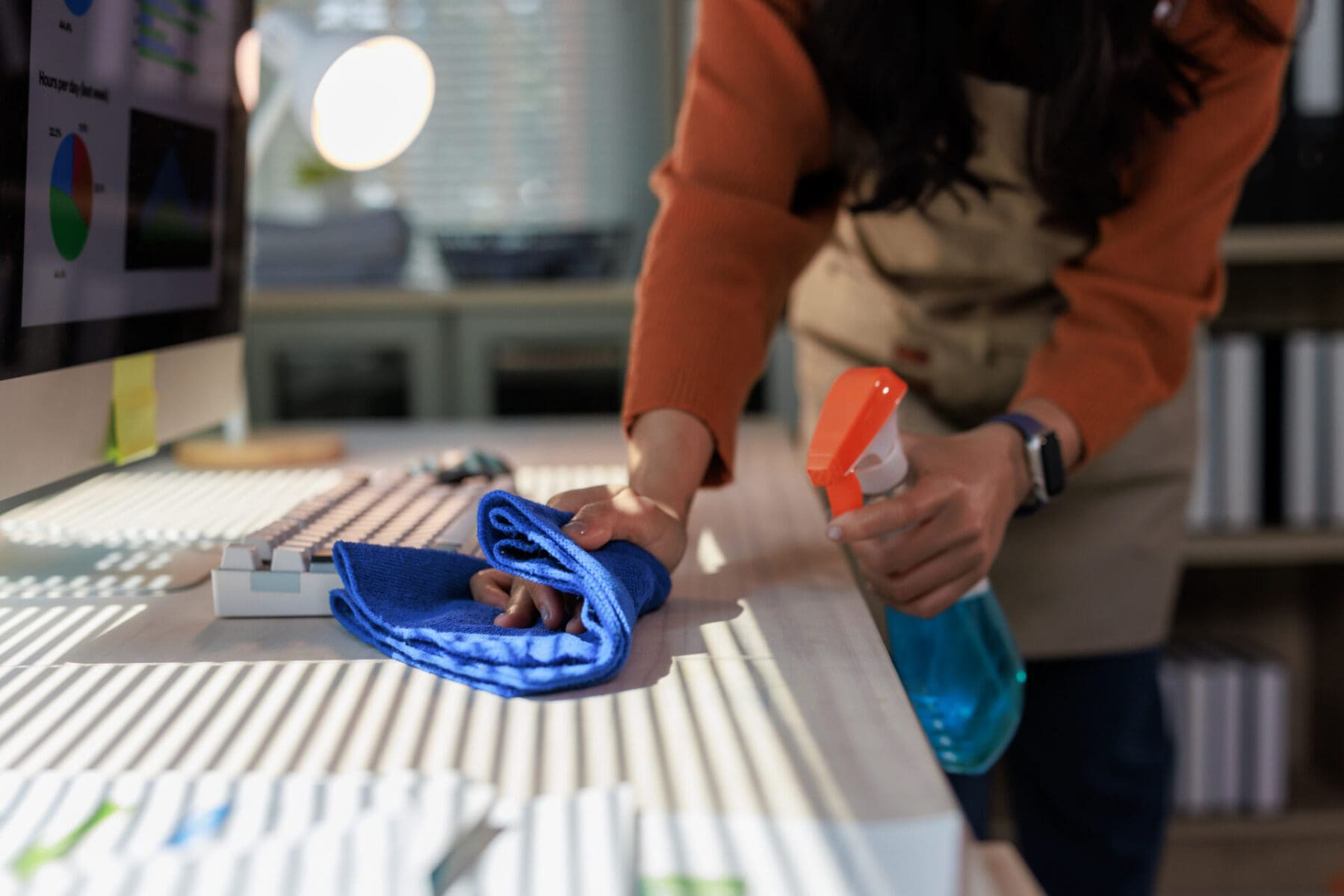
Creating a functional cleaning program requires more than good intentions. Your approach must account for your specific facility layout, employee count, client traffic, and operational schedule.
Professional janitorial services in the Mississippi Gulf Coast start by mapping your facility to identify every high-touch point, then build schedules that address each surface based on actual contact frequency.
Essential Program Elements
Surface Cleaning Checklist:
- Complete inventory of all high-touch surfaces in every room
- Assigned cleaning frequency for each surface category
- Designated responsibility (day porter, evening crew, or department staff)
- Approved disinfectant products with proper dwell times documented
- Color-coded microfiber system to prevent cross-contamination
- Verification process to confirm completion of scheduled tasks
- Monthly review to adjust frequencies based on observed needs
Day porter services work particularly well for offices with more than 30 employees. A dedicated cleaner maintains high-touch surfaces throughout business hours, addressing contamination as it occurs rather than waiting until evening crews arrive.
Smaller offices can implement successful programs through staff training combined with evening cleaning services. Providing disinfecting wipes at strategic locations allows employees to address personal workspaces while professional cleaners handle shared areas.
Documentation and Verification
Proving your cleaning program works requires documentation. Digital tracking systems, physical checklists, or photographic records demonstrate that scheduled cleaning actually occurs as planned.
This documentation matters during regulatory inspections, insurance reviews, or liability situations. It also provides data to optimize your program—if certain surfaces consistently show cleanliness issues, you know to increase attention there.
Why Professional Services Outperform In-House Approaches
Many Gulfport businesses attempt to handle high-touch surface cleaning through existing staff. While this seems cost-effective initially, it rarely delivers consistent results over time.
Employees already focused on their primary responsibilities tend to rush cleaning tasks or skip them entirely when workloads increase. Professional cleaning companies bring dedicated staff whose sole focus is maintaining facility cleanliness according to proven protocols.
Professional Service Advantages:
- Consistency: Scheduled services occur regardless of your internal workload fluctuations
- Proper training: Professional cleaners understand product chemistry, dwell times, and technique
- Quality supplies: Access to commercial-grade disinfectants and equipment not available at retail
- Liability coverage: Insured services protect your business from cleaning-related incidents
- Flexibility: Service levels adjust as your needs change seasonally or as business grows
- Accountability: Service agreements define expectations and provide recourse when standards aren’t met
At JAN-PRO, we combine local ownership with national training standards. Our franchise model means you work with business owners who live in this community and understand the specific challenges Mississippi Gulf Coast facilities face.
We customize cleaning frequencies based on your actual traffic patterns rather than applying generic schedules. A Gulfport medical office receives different attention than an Ocean Springs real estate agency because their needs genuinely differ.
Frequently Asked Questions
What’s the difference between cleaning and disinfecting high-touch surfaces?
Cleaning removes visible dirt and some microorganisms using soap or detergent, while disinfecting uses EPA-registered chemicals to kill pathogens that remain after cleaning. Effective surface hygiene requires both steps—cleaning first to remove organic matter, then disinfecting to eliminate bacteria and viruses. Disinfectants need proper contact time on clean surfaces to work effectively.
Should we clean high-touch surfaces more often during flu season?
Yes, increasing frequency during October through March reduces disease transmission when respiratory viruses circulate most actively. Add at least one additional cleaning cycle for primary surfaces like door handles and breakroom areas during these months. Many Gulf Coast offices implement enhanced protocols from Thanksgiving through Easter to address both seasonal illness and increased client traffic.
Can regular employees handle high-touch surface cleaning between professional services?
Employees can supplement professional cleaning by wiping their immediate workspaces and personal items, but shouldn’t replace scheduled services for shared surfaces. Provide EPA-approved disinfecting wipes at convenient locations and brief training on proper use. Professional cleaners should still handle restrooms, common areas, and comprehensive disinfection that requires specific products and techniques.
How do we know if our current cleaning frequency is adequate?
Monitor illness patterns among staff, observe visible soil accumulation on light-colored surfaces by midday, and solicit employee feedback about facility cleanliness. If surfaces show visible dirt or stickiness between cleanings, or if multiple employees report consecutive illnesses, your frequency needs adjustment. Professional assessments can identify gaps in coverage you might overlook.
What surfaces do offices most commonly neglect in their cleaning programs?
Stair railings, interior door edges, file cabinet handles, water fountain buttons, vending machine keypads, and shared office equipment receive insufficient attention in most facilities. Light switches in storage areas, closet door handles, and exterior building entrance handles also get overlooked. Comprehensive programs map every touchpoint rather than focusing only on obvious surfaces like desks and counters.
Protect Your Gulfport Workplace with Professional Surface Cleaning
Proper high-touch surface cleaning requires expertise, consistency, and attention to detail that delivers measurable results. Your employees deserve a workspace that actively protects their health rather than simply looking presentable.
JAN-PRO Cleaning & Disinfecting in the Mississippi Gulf Coast provides detail-focused commercial cleaning designed specifically for the needs of Gulf Coast businesses. We understand how coastal humidity, seasonal tourism patterns, and regional business cycles affect your facility’s cleaning requirements.
Our locally owned franchise brings national training standards to every client we serve. Whether you operate a small professional office or manage a large commercial facility, we build cleaning programs around your actual needs rather than forcing you into preset packages.
Ready to implement a high-touch surface cleaning program that actually works? Contact us today for a facility assessment and customized proposal. Call (601)-900-3000 to discuss how professional cleaning services can protect your Gulfport workplace.
About the Author
Chrystal Coleman
 Chrystal Coleman is a business owner at JAN-PRO of Mississippi, leading a dedicated team that has expanded the company across Central Mississippi and the Coast. Raised in a close-knit community, she combines a strong work ethic with a passion for entrepreneurship, building a reputation for excellence in commercial cleaning and customer satisfaction.