
Many facility managers and business owners assume that if tile floors are mopped regularly, they should continue looking clean. Yet even with consistent maintenance, commercial tile floors can begin to appear dull, stained, or discolored over time.
If you’ve ever looked across your lobby, hallway, restroom, or retail floor and wondered why it still looks dirty despite routine cleaning, you’re not alone.
At JAN-PRO Cleaning & Disinfecting in Kansas City, one of the most common concerns we hear from business owners is that their floors no longer reflect the level of cleanliness they expect. In many cases, the issue is not a lack of cleaning. Instead, it’s the accumulation of soil, moisture, grease, and contaminants that regular mopping alone cannot fully remove.
Understanding why this happens can help businesses make better decisions about floor maintenance and protect one of the most visible assets in their facility.
The Problem Isn’t Always the Tile
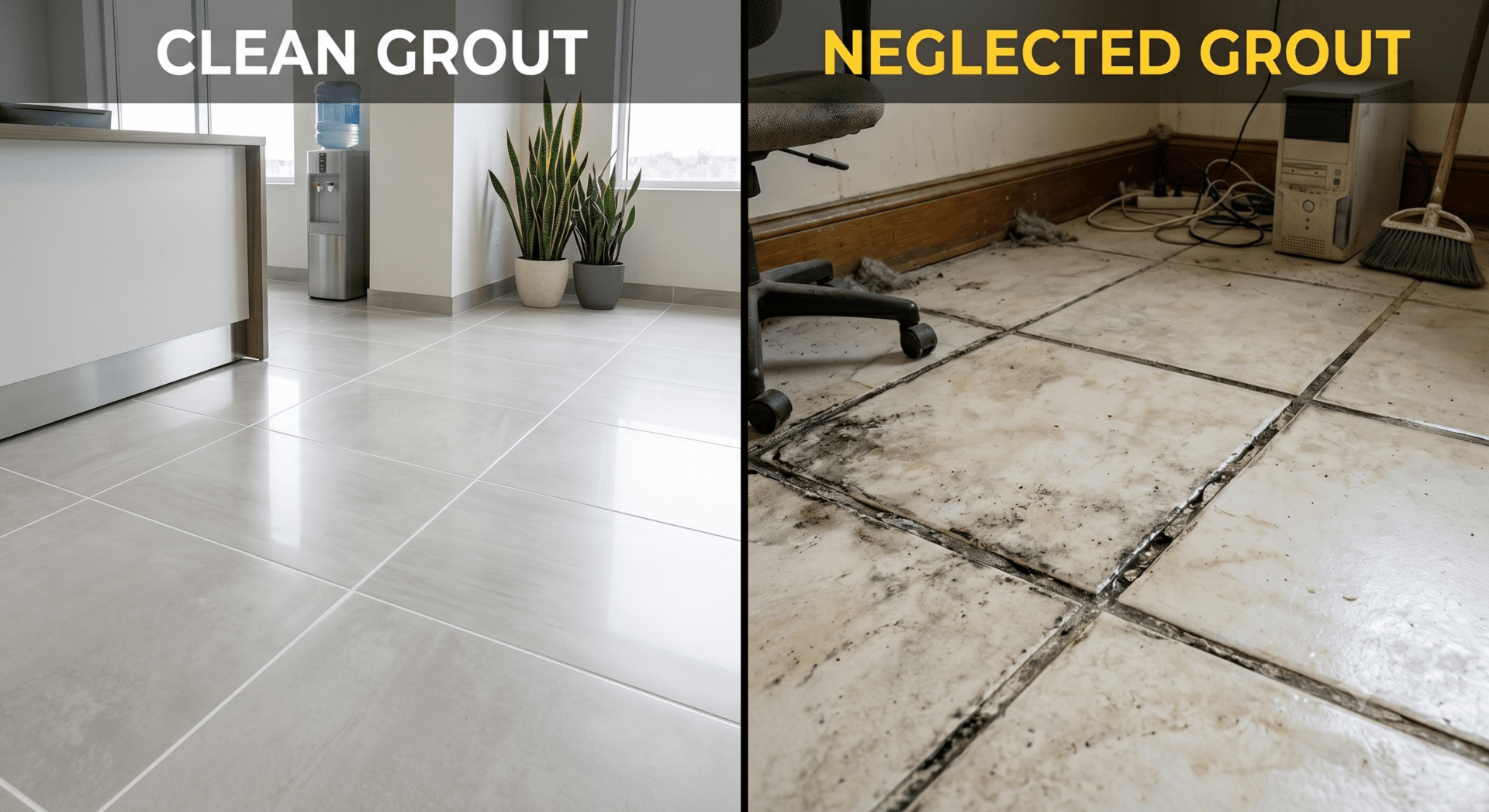
When commercial floors begin looking dirty, many people assume the tile itself has become permanently stained or damaged. In reality, grout lines are often the primary culprit.
Unlike tile, grout is a porous material that absorbs dirt, moisture, cleaning residue, and other contaminants over time. As these materials become embedded within the grout, the floor develops a darker, uneven appearance that routine mopping may not address.
This is especially noticeable in high-traffic environments where hundreds or even thousands of people pass through the facility each day. As grout gradually darkens, even otherwise clean tile surfaces can appear neglected.
Why Routine Mopping Has Its Limits
Daily floor cleaning is an important part of maintaining a professional environment. However, mopping is primarily designed to remove loose dirt and surface-level debris. Over time, contaminants can become trapped below the surface where standard cleaning methods have limited effectiveness.
Several factors contribute to this buildup:
- Dirt tracked in from parking lots and sidewalks
- Moisture from rain and snow
- Food and beverage spills
- Cleaning product residue
- Grease and oils
- Dust and airborne particles
As these materials accumulate, floors may develop a dull appearance that persists no matter how frequently they are mopped.
Common Tile Floor Challenges We See in Kansas City Businesses
Every facility experiences different flooring challenges based on its industry, traffic patterns, and environment.
Retail Stores and Shopping Centers
Retail entrances often show the earliest signs of grout discoloration.
Customers bring in dirt, moisture, and debris from outside, particularly during periods of rain or winter weather. Over time, traffic lanes become visible as darkened grout lines near entrances and checkout areas.
Medical Offices and Healthcare Facilities
Healthcare environments require frequent cleaning and disinfection.
While these practices are essential for maintaining a healthy environment, repeated exposure to cleaning solutions can contribute to residue buildup if floors are not periodically deep cleaned.
Restaurants and Food Service Facilities
Restaurants face unique challenges from grease, oils, and food spills.
Even when spills are cleaned promptly, small amounts of residue can accumulate over time and become embedded in grout lines, creating discoloration and reducing floor appearance.
Schools and Educational Facilities
Schools experience constant foot traffic throughout the day.
Hallways, cafeterias, and entrances often develop heavily worn traffic patterns that require more than routine maintenance to restore their appearance.
How Kansas City Weather Impacts Commercial Floors
Local conditions can play a significant role in floor maintenance needs. Throughout the Kansas City area, seasonal weather patterns introduce additional contaminants into commercial facilities.
- During winter, snow, slush, and deicing products can be tracked indoors. These materials often settle into grout lines and create residue that regular mopping may not fully remove.
- In spring and summer, rain, mud, pollen, and dust can contribute to floor discoloration, particularly in facilities with high customer traffic.
Businesses that experience significant seasonal foot traffic often notice that floors lose their appearance long before they show signs of actual wear.
Signs Your Floors Need More Than Routine Cleaning
Many facility managers wait until flooring looks severely discolored before considering additional maintenance.
However, several warning signs often appear much earlier.
You may benefit from professional floor care if you notice:
- Dark or uneven grout lines
- Floors that look dull shortly after cleaning
- Persistent stains near entrances
- Sticky or slippery surfaces
- Visible traffic patterns
- Lingering odors in tiled areas
- Discoloration around restroom or breakroom floors
These issues typically indicate that contaminants have accumulated below the surface and require a deeper cleaning approach.
Why Floor Appearance Matters More Than Many Businesses Realize
Flooring occupies a significant portion of every commercial space. Customers, patients, visitors, and employees interact with it every day, whether they consciously notice it or not.
Clean, well-maintained floors help create positive first impressions and reinforce a professional image. Conversely, stained grout and discolored tile can make an otherwise clean facility appear poorly maintained.
For businesses in competitive industries, appearance can influence how customers perceive quality, professionalism, and attention to detail. Maintaining floors isn’t simply about aesthetics. It’s about supporting the overall image of your organization.
How Professional Tile and Grout Cleaning Helps Restore Floors
Professional tile and grout cleaning targets the embedded contaminants that routine maintenance often leaves behind. Using specialized equipment and commercial-grade cleaning solutions, trained professionals can remove dirt and buildup from grout lines while restoring the appearance of tile surfaces.
Many businesses are surprised by the difference professional cleaning can make. Floors that appeared permanently stained often regain a brighter, cleaner appearance once years of embedded soil are removed.
In addition to improving appearance, professional floor care can help extend the life of flooring materials and support long-term maintenance goals.
How Often Should Commercial Tile Floors Be Deep Cleaned?
The ideal frequency depends on the type of facility and the amount of daily traffic.
In general:
- Medical facilities may require more frequent deep cleaning due to strict sanitation standards.
- Restaurants often benefit from regular service because of grease and food residue.
- Retail stores may need seasonal cleaning based on customer traffic.
- Schools and educational facilities often schedule deep cleaning during academic breaks.
- Professional offices may require less frequent service depending on occupancy levels.
A customized maintenance plan can help determine the right schedule for your specific environment.
Maintain Cleaner, More Professional Floors With JAN-PRO Kansas City
If your commercial tile floors still look dirty despite regular mopping, the issue may be deeper than surface-level dirt. Embedded contaminants, grout discoloration, seasonal conditions, and high traffic can all affect floor appearance over time.
JAN-PRO Cleaning & Disinfecting in Kansas City helps local businesses restore and maintain tile flooring through customized floor care solutions designed for healthcare facilities, schools, retail stores, offices, restaurants, and other commercial environments.
Whether you’re addressing visible grout discoloration or looking to protect your flooring investment, our team can help you develop a maintenance strategy that keeps your facility looking its best.
Contact JAN-PRO at (913) 469-4060 today to learn more about our professional tile and grout cleaning services in Lenexa or other cities, and our comprehensive commercial cleaning solutions in Kansas City.
About the Author
Carter James
 Carter James is Vice President of Strategy & Development, leading growth strategy, acquisitions, and multi-market expansion within a facility services platform. His background includes corporate strategy, M&A integration, and franchise development. He partners with senior leadership to drive disciplined execution, scalable operations, and long-term value through data-driven, high-accountability leadership.