A school cleaning schedule is more than a checklist of daily tasks. For administrators, facility managers, and custodial teams, it is a system that helps maintain healthier learning environments, protect facility investments, and reduce disruptions caused by illness outbreaks or preventable maintenance issues.
At JAN-PRO Cleaning & Disinfecting in Kansas City, one challenge frequently observed in educational facilities is that cleaning schedules often look effective on paper but fail in practice because they do not account for how students actually use the building throughout the day. High-traffic hallways, cafeteria entrances, locker areas, and shared technology stations typically require far more attention than standard cleaning plans allocate.
Schools throughout the Kansas City metro area also face seasonal challenges that affect cleaning priorities, including winter snow and salt, spring pollen, and increased illness transmission during cold and flu season.
Creating a schedule that reflects these realities can help schools maintain cleaner, safer, and more productive learning environments year-round.
Start With Traffic Patterns, Not Cleaning Tasks
One of the most common mistakes schools make is creating cleaning schedules based solely on rooms instead of usage patterns. For example, two hallways may appear identical on a floor plan, but one may handle three times as much daily traffic due to its proximity to cafeterias, gyms, or main entrances.
Before building a cleaning schedule, conduct a walkthrough and identify:
- Main student traffic corridors
- Primary entrances and exits
- Cafeteria access points
- Restroom clusters
- Shared technology spaces
- Nurse’s office waiting areas
- Administrative reception areas
In many Kansas schools, these locations accumulate dirt, moisture, allergens, and germs much faster than traditional classrooms. By prioritizing traffic patterns, custodial teams can focus resources where they have the greatest impact.
The Areas Most Frequently Missed in School Cleaning Programs
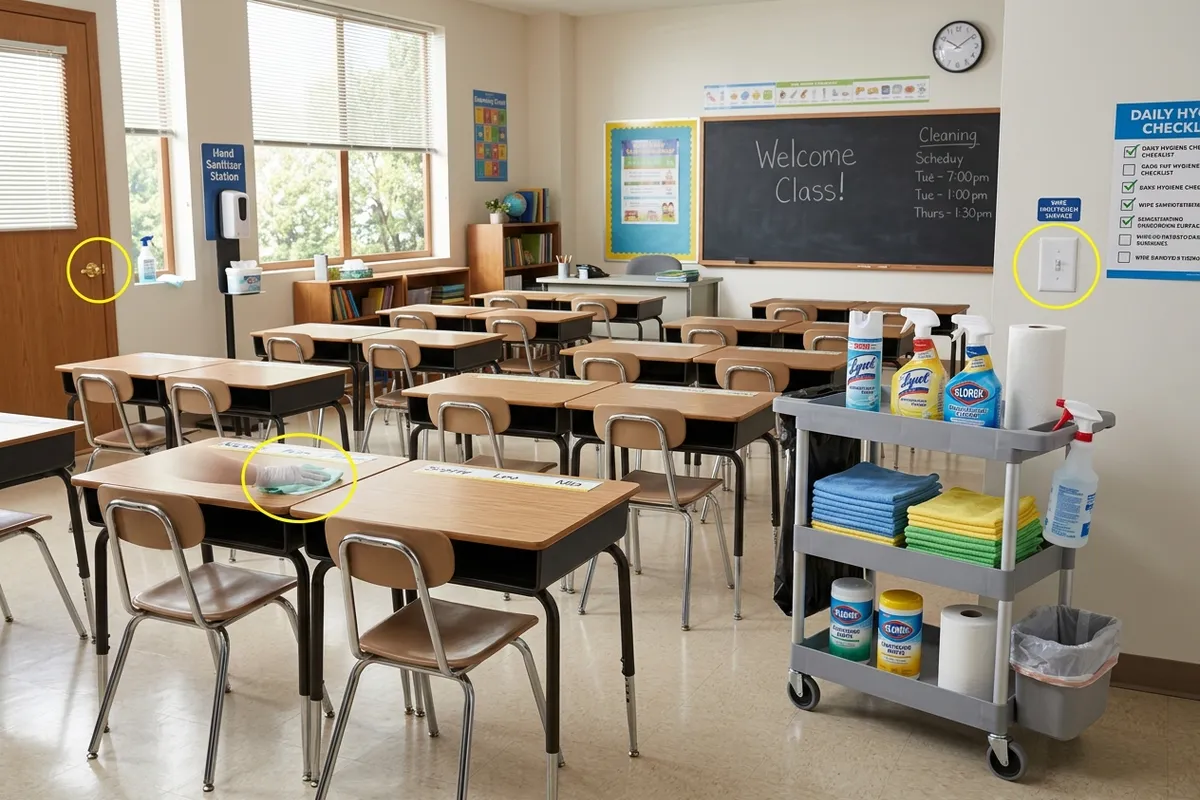
When JAN-PRO teams perform evaluations of educational facilities, several areas commonly require additional attention.
Shared Technology Equipment
Students and staff may use the same devices throughout the day, including:
- Computer keyboards
- Mice
- Tablets
- Touchscreens
- Shared classroom equipment
These surfaces often receive less frequent cleaning than desks and chairs despite significant daily contact.
Hallway Touchpoints
Hallways serve as transition zones between classrooms and often contain dozens of high-touch surfaces, including:
- Door handles
- Push plates
- Handrails
- Locker handles
- Water fountains
These areas benefit from multiple daily disinfection cycles, especially during peak illness seasons.
Entryways
Kansas weather creates unique challenges throughout the year.
During winter months, moisture, snow, and deicing products can quickly accumulate near entrances. During spring, pollen and outdoor debris can be tracked throughout the building.
Without consistent entryway maintenance, contaminants spread rapidly into classrooms and common areas.
A Practical School Cleaning Schedule
Rather than assigning identical cleaning frequencies throughout the facility, schools should establish cleaning levels based on risk and usage.
Daily Cleaning Priorities
The following tasks should occur every school day:
Classrooms
- Disinfect desks and student work surfaces
- Sanitize shared learning equipment
- Empty trash receptacles
- Vacuum or mop floors
- Clean door handles and light switches
Hallways
- Remove debris and dirt accumulation
- Disinfect handrails and touchpoints
- Inspect entry mats
- Spot-clean visible spills
Restrooms
- Clean and disinfect fixtures
- Replenish consumable supplies
- Sanitize touchpoints
- Address odors and moisture concerns
Cafeterias
- Sanitize tables between lunch periods
- Clean food preparation contact surfaces
- Remove waste promptly
- Disinfect frequently touched areas
Weekly Cleaning Tasks
Weekly services provide a deeper level of maintenance that prevents long-term buildup.
These tasks often include:
- Detailed floor scrubbing
- Interior glass cleaning
- Trash receptacle sanitization
- Dust removal from elevated surfaces
- Spot cleaning walls and partitions
- Cleaning classroom storage areas
Monthly Cleaning Tasks
Monthly cleaning addresses areas that can be overlooked during routine service.
Examples include:
- Air vents and return grilles
- Window blinds
- Baseboards
- Light fixtures
- Behind furniture
- Locker interiors
Completing these tasks consistently helps improve indoor air quality while reducing dust accumulation throughout the facility.
Adjust Your Schedule for Kansas Seasons
School cleaning needs change throughout the year.
Winter
Winter often places the greatest strain on school cleaning programs.
Additional focus should be placed on:
- Entryway floor maintenance
- Moisture control
- Salt residue removal
- Slip prevention
- Frequent hallway inspections
Without proactive cleaning, moisture and salt can accelerate floor deterioration and increase safety risks.
Spring
Spring introduces new challenges associated with pollen and allergens.
Schools may benefit from:
- Increased dust removal
- More frequent HVAC filter inspections
- Additional cleaning around entrances
- Enhanced carpet maintenance
These measures help reduce indoor allergen accumulation and improve comfort for students and staff.
Summer Break
Summer provides the best opportunity for major restorative cleaning projects.
Many schools schedule:
- Floor stripping and refinishing
- Carpet extraction
- Locker cleaning
- High-level dusting
- Deep classroom sanitation
Completing these projects while buildings are unoccupied prepares facilities for the next academic year.
Signs Your School Cleaning Schedule Needs Improvement
Even well-designed schedules should be reviewed periodically.
Common indicators that adjustments may be necessary include:
- Frequent complaints about cleanliness
- Visible dust accumulation
- Persistent restroom issues
- Increased absenteeism during illness outbreaks
- Premature floor wear
- Odors in classrooms or common areas
- Custodial teams consistently falling behind schedule
Regular inspections and feedback from faculty can help identify these issues before they become larger problems.
Why Many Schools Use Professional Cleaning Support
School administrators often find that combining in-house custodial staff with professional cleaning services provides the best balance of efficiency and consistency.
Internal teams can focus on daily operational needs, while a commercial cleaning company in Kansas can assist with:
- Deep cleaning projects
- Summer restoration work
- Floor care programs
- Disinfection services
- Specialized equipment needs
- Staffing support during peak demand periods
This approach allows schools to maintain consistent cleaning standards without overextending existing resources.
Frequently Asked Questions
How often should classrooms be disinfected?
High-touch surfaces such as desks, chairs, light switches, and shared equipment should typically be disinfected daily. During periods of increased illness activity, schools may choose to increase cleaning frequency.
What areas of a school require the most attention?
Hallways, cafeterias, restrooms, entrances, and shared technology stations generally experience the highest levels of daily use and often require the most frequent cleaning.
Should schools modify cleaning schedules throughout the year?
Yes. Seasonal weather, student attendance patterns, and health concerns can all affect cleaning priorities. Schools that adjust schedules throughout the year often achieve better results than those using a fixed approach.
Maintain Cleaner Learning Environments With JAN-PRO Kansas City
An effective school cleaning schedule should reflect how students, staff, and visitors actually use the building—not simply how rooms appear on a floor plan.
At JAN-PRO Cleaning & Disinfecting in Kansas City, we help educational facilities throughout Overland Park, Olathe, and surrounding communities develop customized cleaning programs designed around traffic patterns, seasonal conditions, and facility-specific needs.
Whether your school needs professional school cleaning services in Olathe or another city, summer deep cleaning, or a comprehensive facility maintenance plan, our team can help create a healthier learning environment for students and staff.
Contact JAN-PRO Kansas City today at (913) 469-4060 to schedule a facility assessment and discuss a customized school cleaning program for your campus.
About the Author
Carter James
 Carter James is Vice President of Strategy & Development, leading growth strategy, acquisitions, and multi-market expansion within a facility services platform. His background includes corporate strategy, M&A integration, and franchise development. He partners with senior leadership to drive disciplined execution, scalable operations, and long-term value through data-driven, high-accountability leadership.