

Office cleaning during flu season is not simply a matter of adding more disinfecting tasks to an existing janitorial schedule. It involves reviewing how employees use the workplace, identifying changes in occupancy and shared-space activity, and adjusting cleaning priorities when the original service plan no longer reflects actual conditions.
For Kansas City offices, seasonal influenza activity can coincide with changing attendance, increased use of meeting rooms, and more frequent movement between shared workspaces. A cleaning schedule that works during a typical week may become insufficient when several departments begin using the same conference rooms, breakrooms, and reception areas throughout the day.
At JAN-PRO Cleaning & Disinfecting in Kansas City, we have learned that an effective seasonal cleaning plan should respond to how a facility actually operates. The important question is not whether every surface needs to be disinfected more often. It is whether the cleaning frequency, service timing, and assigned responsibilities still match the building’s activity.
1. When the Usual Cleaning Schedule Stops Being Enough
A cleaning schedule is designed around expected occupancy, building use, and the agreed scope of service. During flu season, those assumptions may change.
We have learned that recurring cleaning problems often become visible before anyone formally requests a schedule adjustment. A breakroom may become noticeably dirtier between service visits, shared meeting spaces may require more attention, or restroom supplies may run out earlier than expected.
These conditions do not automatically indicate that the cleaning team is performing poorly. They may indicate that the original schedule no longer matches the facility’s usage.
Five signs that a cleaning schedule needs review
- Restrooms require attention before the next scheduled visit: Higher occupancy or increased visitor traffic may affect supply consumption and surface conditions.
- Meeting rooms are used continuously: Shared tables, chair arms, and frequently touched controls may receive more use than the original plan anticipated.
- Breakroom surfaces accumulate residue throughout the day: More employees using shared appliances and counters can create additional maintenance needs.
- Reception areas show repeated soil accumulation: Visitors, deliveries, and employee traffic may increase the need for entrance and floor maintenance.
- The same cleaning issues appear in multiple inspections: Recurring findings may indicate a scheduling, task-allocation, or communication problem.
A useful distinction is whether a problem is isolated or recurring. A spill that occurs after the cleaning visit requires a different response from a surface that repeatedly remains dirty after scheduled service.
2. How Office Occupancy Changes Cleaning Priorities
Not every office experiences flu season in the same way. Occupancy patterns can matter as much as the total size of the building.
A hybrid office with employees rotating between home and the workplace may have concentrated activity on certain days. A traditional office may experience relatively consistent attendance, while a client-facing business may have additional visitors moving through reception areas and meeting rooms.
| Office environment | Operational pattern | Cleaning priorities to review |
| Traditional office | Relatively consistent employee attendance | Workstations, restrooms, breakrooms, and shared equipment |
| Hybrid workplace | Attendance varies by day | Meeting rooms, shared desks, collaboration spaces, and common touchpoints |
| Client-facing office | Employees and visitors use shared areas | Reception counters, waiting areas, meeting rooms, and entrance floors |
| High-occupancy office | Many employees share facilities throughout the day | Restrooms, breakrooms, elevators, and frequently used common areas |
Why occupancy matters more than square footage
Two offices with the same floor area can require different cleaning arrangements. One may have mostly private offices with limited shared use, while another may have open workstations, frequent meetings, and a busy reception area.
At JAN-PRO, we have learned that cleaning plans are more useful when they reflect the way people move through a facility rather than relying exclusively on its square footage.
For example, an office that experiences a concentration of employee attendance on Tuesdays, Wednesdays, and Thursdays may need different attention to shared spaces on those days than on quieter Mondays and Fridays.
The service plan should reflect those patterns instead of assuming that every weekday creates the same cleaning demand.
An Example From a Hybrid Office Environment in Kansas City
Consider a professional services office in Kansas City that experiences its highest employee attendance from Tuesday through Thursday. Its existing cleaning arrangement was designed around relatively consistent occupancy, with most janitorial tasks completed after business hours.
During flu season, the facility manager begins reporting a recurring pattern: meeting rooms are clean when employees arrive in the morning, but shared tables and frequently touched surfaces accumulate visible soil throughout the afternoon. Restrooms also require attention before the next scheduled cleaning visit, particularly on the busiest attendance days.
Rather than increasing the cleaning frequency across the entire building, the cleaning provider reviews the facility’s occupancy patterns, inspection records, and service schedule.
The review identifies three opportunities for adjustment:
- Prioritize peak-attendance days: Shared meeting rooms, reception areas, and restrooms receive additional attention on the days when employee activity is highest.
- Introduce targeted daytime checks: Specific high-use areas are reviewed between scheduled cleaning visits, according to the agreed service scope.
- Clarify employee and cleaning-team responsibilities: Employees are responsible for removing personal belongings and reporting spills, while the cleaning team handles assigned surface cleaning, disinfection, and supply checks.
At JAN-PRO, we have learned that situations like this require a closer look at the relationship between occupancy and service timing. Increasing the number of cleaning tasks is not always the most effective solution. Sometimes, reallocating existing tasks to match the busiest periods makes the cleaning plan more practical.
The important lesson is that a seasonal adjustment should address the source of the problem, not simply add more cleaning to the schedule.
3. What Happens Between Scheduled Cleaning Visits?
One of the most overlooked parts of seasonal office cleaning is the period between professional service visits.
A cleaning team may thoroughly service a breakroom at the end of the day, but several hours of employee activity can change its condition. A conference room may be cleaned overnight but used by different departments throughout the next morning.
This is why scheduled cleaning and daytime housekeeping should be treated as connected responsibilities rather than interchangeable activities.
Identify the areas most likely to change during the day
Shared meeting rooms
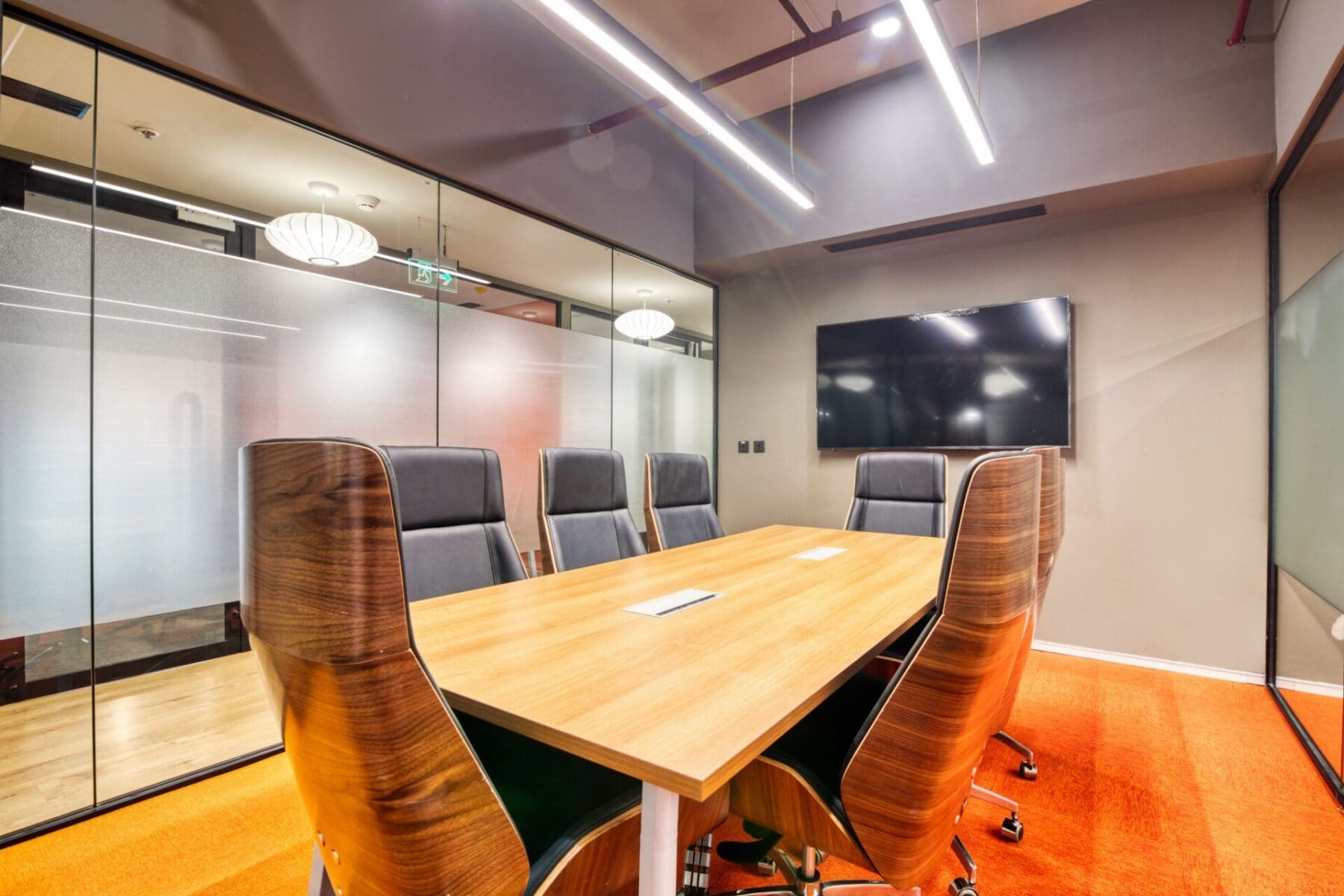
Tables, chair arms, door handles, and presentation controls may be touched by several groups. A room used repeatedly throughout the day may require a defined between-meeting maintenance procedure.
Breakrooms and kitchenettes
Shared counters, appliance handles, tables, and sinks can accumulate food residue and other visible soil. Employee housekeeping practices should complement the professional cleaning schedule.
Reception and visitor areas
Front desks, waiting-room furniture, entrance surfaces, and accessible touchpoints may need attention according to visitor activity and the agreed cleaning scope.
Restrooms
Supply levels, visible conditions, and usage patterns should be reviewed to determine whether the existing inspection and replenishment schedule remains appropriate.
Cleaning does not always mean disinfecting
Another important lesson is that increasing cleaning frequency does not mean applying disinfectant to every surface throughout the building.
Cleaning removes dirt and many germs from surfaces. Disinfection uses an appropriate product to kill specified microorganisms that remain after cleaning. The right procedure depends on the surface, its use, visible contamination, and the applicable product instructions.
The CDC’s guidance for community facilities recommends regularly cleaning high-touch surfaces and disinfecting areas where people have obviously been ill. It also emphasizes that surfaces should be cleaned before disinfection. Its guidance on when and how to clean and disinfect a facility provides useful context for non-healthcare office environments.
This distinction matters because unnecessary chemical application does not automatically make a workplace safer. Correct product selection, surface compatibility, and required contact time remain essential.
4. How Cleaning Teams Should Communicate Recurring Problems
A cleaning plan cannot be adjusted effectively when observations remain informal or are not passed to the right person.
We have learned that communicating a problem is most useful when the information explains what happened, where it occurred, and whether it has happened before.
For example, reporting that a breakroom was dirty provides limited operational information. Reporting that the same counters repeatedly accumulate residue before the end of the afternoon gives facility management a more useful starting point.
A practical reporting framework
| What to document | Example | Why it matters |
| Location | Third-floor breakroom | Identifies the affected area |
| Observation | Food residue repeatedly found on counters | Describes the actual condition |
| Timing | Condition appears before afternoon service | Helps identify when the issue develops |
| Frequency | Reported during three inspections | Establishes whether it is recurring |
| Possible operational factor | Increased employee use on office attendance days | Helps evaluate scheduling needs |
| Follow-up | Review supply checks or daytime responsibilities | Creates a corrective action |
The purpose is not to assign blame. A recurring issue may originate in an unrealistic cleaning frequency, unclear responsibilities, insufficient time between visits, or a change in how employees use a space.
When should the cleaning plan change?
Not every observation requires a new service schedule. An adjustment is more appropriate when inspections reveal a consistent pattern.
A practical decision process is:
- Record the issue and the area where it occurs.
- Determine whether it is an isolated incident or a recurring finding.
- Compare the observation with occupancy and usage patterns.
- Review whether the task is included in the existing scope.
- Identify whether the solution involves a different method, frequency, timing, or responsibility.
- Review the area again after the adjustment.
This approach helps prevent unnecessary changes to the entire building’s cleaning routine when only one area requires additional attention.
5. How JAN-PRO Adjusts Facility-Specific Cleaning Plans
At JAN-PRO Cleaning & Disinfecting in Kansas City, we have learned that seasonal cleaning is most effective when it is treated as an operational review rather than a blanket instruction to clean everything more frequently.
Each facility has different requirements. A professional office with private workspaces does not have the same cleaning priorities as a client-facing office with continuous visitor traffic or a hybrid workplace with fluctuating attendance.
Our approach considers several factors:
- Occupancy and activity patterns: Identifying which days and times create the greatest demand for shared spaces.
- Surface and area usage: Distinguishing between frequently touched surfaces, ordinary office surfaces, floors, and areas that require specialized care.
- Service timing: Reviewing whether tasks should remain within the existing service window or whether specific areas require additional attention.
- Cleaning scope: Clarifying which tasks belong to the cleaning team and which depend on employee housekeeping or facility management.
- Communication and follow-up: Documenting recurring observations and reviewing whether previous adjustments have resolved them.
Businesses evaluating office disinfecting services in Kansas City should look beyond the number of surfaces listed in a cleaning proposal. The service plan should explain how cleaning and disinfection procedures are selected, how responsibilities are defined, and how recurring facility issues are communicated.
The agreed commercial cleaning contract should also clearly identify the areas covered, service frequency, additional responsibilities, and procedures for communicating changes in facility needs. This helps prevent assumptions that a seasonal adjustment is automatically included in the original scope.
How Kansas City Offices Can Make Seasonal Cleaning More Effective
Office cleaning during flu season works best when the service plan reflects actual building conditions. Changes in employee attendance, visitor traffic, shared-space usage, and recurring inspection findings can indicate when the existing routine needs adjustment.
At JAN-PRO Cleaning & Disinfecting in Kansas City, we have learned that consistency does not mean applying exactly the same schedule regardless of circumstances. It means maintaining defined cleaning procedures while adapting priorities to the facility’s real operational needs.
A thoughtful seasonal review helps offices identify where additional attention is useful, where existing routines remain sufficient, and how cleaning teams and facility managers can work together to maintain consistent standards.
Frequently Asked Questions About Office Cleaning During Flu Season
Should offices increase cleaning frequency during flu season?
Not automatically. Cleaning frequency should reflect occupancy, surface usage, visible soil, and the condition of shared spaces. High-traffic areas may need more frequent attention, while other surfaces may continue to follow their regular schedules.
Which office areas should receive additional attention during flu season?
Shared meeting rooms, reception areas, breakrooms, restrooms, elevator buttons, and frequently touched surfaces deserve particular consideration. The priorities depend on how employees and visitors use the building.
Is disinfecting an entire office every day necessary?
Not generally. Routine cleaning is appropriate for many office surfaces. Disinfection may be warranted for frequently touched surfaces in higher-traffic environments or areas where someone has been ill, depending on the circumstances and applicable guidance.
How does hybrid work affect office cleaning schedules?
Hybrid work creates fluctuating occupancy. Shared desks, conference rooms, collaboration spaces, and common areas may receive concentrated use on office attendance days. Cleaning priorities should reflect those patterns rather than assume constant daily occupancy.
What should happen when cleaning issues appear between service visits?
The condition should be recorded and communicated to the designated facility contact. If the issue occurs repeatedly, the cleaning frequency, task scope, timing, or responsibility should be reviewed to identify the appropriate adjustment.
Does office cleaning prevent influenza transmission?
Cleaning and appropriate disinfection can help reduce germs on surfaces, but they are only part of workplace infection prevention. Ventilation, vaccination, respiratory hygiene, and policies that allow sick employees to stay home also contribute to a healthier workplace.
About the Author
Carter James
 Carter James is Vice President of Strategy & Development, leading growth strategy, acquisitions, and multi-market expansion within a facility services platform. His background includes corporate strategy, M&A integration, and franchise development. He partners with senior leadership to drive disciplined execution, scalable operations, and long-term value through data-driven, high-accountability leadership.