Commercial cleaning staff wearing only latex gloves face a 64% higher risk of chemical exposure injuries compared to workers with complete personal protective equipment, according to OSHA workplace safety data.
The real protection comes from comprehensive PPE systems that include respiratory protection, eye shields, protective clothing, and chemical-resistant footwear—not just hand coverings.
This matters especially in Birmingham’s diverse commercial facilities, where cleaning crews encounter everything from healthcare-grade disinfectants to industrial degreasers that can cause serious harm when proper safety equipment is overlooked.
The Full Spectrum of Cleaning PPE Most Companies Ignore
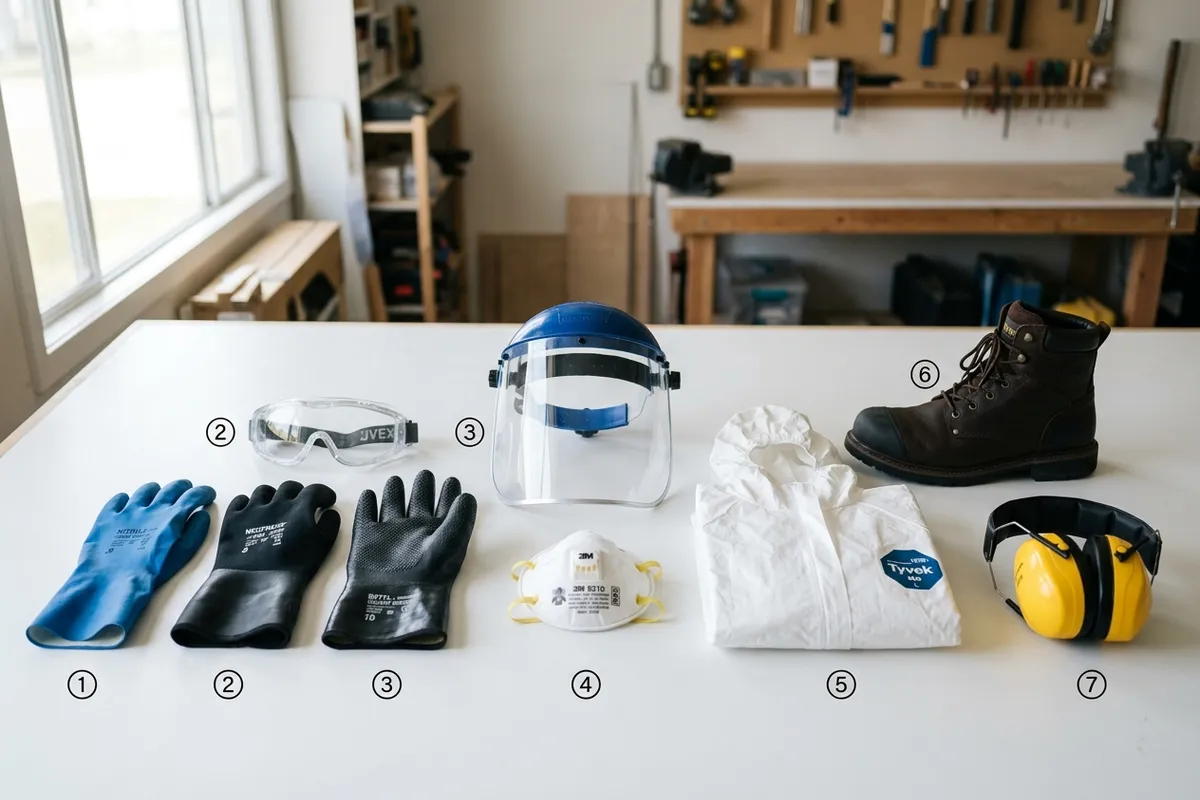
Complete PPE for commercial cleaning includes seven critical components:
- Chemical-resistant gloves rated for specific cleaners being used
- Safety goggles or face shields for splash protection
- N95 or higher-grade respirators when working with disinfectants or in poorly ventilated spaces
- Impermeable aprons or coveralls
- Slip-resistant footwear with chemical resistance
- Hearing protection in facilities with loud equipment
- Proper storage systems to prevent cross-contamination between clean and soiled protective gear
In many cleaning environments, injuries occur not because PPE is absent, but because the wrong type of protective equipment is used for the task. Workers may wear gloves, but they’re the wrong type for the chemical being handled. They might have goggles, but not face shields, when working with spray equipment above shoulder height.
Chemical Compatibility: Why One Size Never Fits All

Not all gloves protect against all chemicals.
- Latex gloves suitable for light cleaning tasks may not provide adequate protection when used with concentrated disinfectants or solvent-based products.
- Nitrile gloves resist most acids, oils, and petroleum products but degrade rapidly with ketones and strong oxidizers.
- Neoprene offers broad chemical resistance, including alcohols and acids, but provides less dexterity.
- Butyl rubber excels with aldehydes and ketones but costs significantly more.
- PVC gloves handle most acids and bases, but become brittle in cold environments common in refrigerated warehouse spaces across the Birmingham metro area.
Professional cleaning companies maintain multiple glove types and train workers to select appropriate protection based on Safety Data Sheets for each product. A cleaner might switch gloves three times during a single shift when moving between restroom sanitizing, floor stripping, and kitchen degreasing.
Respiratory Protection in Indoor Environments
The Alabama Department of Public Health notes that indoor air quality complaints increase during winter months when buildings seal tightly for heating efficiency. This creates particular risks for cleaning staff working with disinfectants, floor finishes, and other volatile products in spaces with limited air exchange.
Standard dust masks may not provide appropriate protection against chemical vapors or certain airborne contaminants. Workers need respirators with organic vapor cartridges when using products that emit fumes, especially in enclosed spaces like restrooms, storage closets, or offices cleaned after hours when HVAC systems run at reduced capacity.
Repeated exposure to cleaning fumes and airborne irritants can contribute to respiratory concerns when proper protection is not used. Symptoms may develop gradually, making it important to address respiratory protection proactively in cleaning environments where airborne exposure is a concern.
Eye and Face Protection Beyond Basic Safety Glasses
Chemical splashes to the eyes represent the second most common cleaning injury after skin exposure, according to the Bureau of Labor Statistics occupational injury data. Standard safety glasses with side shields protect against flying particles but offer minimal defense against liquid splashes.
Tasks requiring proper eye protection include:
- Spray application
- Overhead cleaning,
- Toilet bowl treatment
- Drain cleaning
- Mixing concentrated chemicals
Goggles provide splash protection with a seal around the eyes, while full face shields protect the entire face when working with highly corrosive materials or pressure spray equipment.
In addition, many facilities in Birmingham use hard water, which requires stronger descaling chemicals that increase splash risk. Workers treating mineral buildup in restrooms, break rooms, and cooling systems need face shields rather than goggles alone.
The Hidden Costs of Inadequate PPE Programs
Insufficient PPE programs can create significant costs for cleaning providers and the businesses that hire them. When protective equipment is lacking, improperly selected, or inconsistently used, the result may include workplace injuries, lost productivity, workers’ compensation claims, compliance concerns, and operational disruptions.
Beyond direct financial consequences, inadequate PPE practices can contribute to higher insurance costs, staffing challenges, and reputational issues that affect long-term business relationships.
Most importantly, poor PPE protocols can put cleaning personnel at unnecessary risk of preventable injuries and exposure incidents—outcomes that can impact worker well-being and disrupt service continuity.
Training: The Component That Makes PPE Actually Work
Providing equipment alone is not enough if workers are not trained on proper use, limitations, and maintenance. Effective PPE training covers when to use specific equipment, how to inspect items before each use, proper donning and doffing sequences to prevent contamination, storage requirements, and replacement schedules.
Gloves develop invisible micro-tears that compromise protection. Respirator cartridges have specific service lives that vary based on exposure levels and humidity. Goggles scratch over time, reducing visibility and increasing the likelihood that workers will remove them during critical tasks.
Professional cleaning companies conduct PPE training during onboarding and quarterly refresher sessions. They maintain logs documenting training completion, equipment inspections, and replacement schedules to demonstrate compliance during audits.
Alabama-Specific Considerations for Commercial Cleaning PPE
Central Alabama’s climate creates particular challenges for cleaning PPE. Summer heat and humidity increase perspiration inside gloves and respirators, tempting workers to remove protection prematurely. High pollen counts affect indoor air quality, making respiratory protection even more critical during the spring months.
The region’s industrial diversity means cleaning companies service facilities ranging from medical offices requiring healthcare-grade disinfection to manufacturing plants with specialized industrial cleaning needs. Each environment demands different PPE configurations and training protocols.
Local regulations may exceed federal minimums. Birmingham facilities subject to health department inspections face stricter requirements for cleaning documentation, including PPE usage records and training certificates.
How Professional Cleaning Companies Implement Comprehensive PPE Programs
Top-tier commercial cleaning services in Central Alabama invest in robust PPE programs that protect workers while demonstrating professionalism to clients.
These programs include:
- Conducting hazard assessments for each facility
- Maintaining an adequate inventory of appropriate PPE types
- Implementing regular training schedules
- Establishing inspection and replacement protocols
- Documenting compliance for accountability
They assign PPE coordinators who monitor equipment condition, track inventory, and ensure workers have the necessary protection before starting shifts. They work with suppliers to stay current on new products and technologies that improve safety or comfort.
Most importantly, they create cultures where workers feel empowered to refuse tasks when proper PPE isn’t available rather than proceeding unsafely to meet deadlines.
Trust Your Commercial Cleaning to PPE Experts in Central Alabama
When evaluating a commercial cleaning provider, safety standards matter. Inadequate PPE practices can increase operational risk, create compliance concerns, and reflect broader gaps in a contractor’s cleaning processes.
JAN-PRO Cleaning & Disinfecting in Central Alabama incorporates PPE protocols into every customized cleaning program. Our certified franchise owners receive ongoing training in proper protective equipment use, chemical handling, and environment-specific cleaning procedures to help ensure safer, more consistent service across facility types.
Whether you manage a medical office, commercial property, industrial facility, or corporate workspace, JAN-PRO delivers cleaning programs built around safety, accountability, and operational excellence.
Based in Birmingham at 234 Aquarius Dr Ste 106, JAN-PRO proudly serves businesses throughout Central Alabama with professional commercial cleaning solutions tailored to each facility’s needs.
Call 205-767-7435 today to request a quote and learn how JAN-PRO can help support a cleaner, safer facility.
Frequently Asked Questions
What PPE should commercial cleaners wear beyond basic gloves?
Professional cleaners need chemical-resistant gloves matched to specific products, safety goggles or face shields for splash protection, N95 or higher respirators when using disinfectants or working in confined spaces, protective aprons or coveralls, and slip-resistant footwear with chemical resistance. The exact combination depends on the facility type and cleaning products being used.
How often should commercial cleaning PPE be replaced?
Gloves should be replaced between tasks when switching chemicals, whenever damage is visible, or after 4 hours of continuous use. Respirator cartridges require replacement based on manufacturer guidelines, typically after 40 hours of use or when breathing becomes difficult. Goggles need replacement when scratched or cracked. Professional services maintain replacement schedules documented in compliance logs.
Does OSHA require specific PPE for commercial cleaning companies?
Yes. OSHA’s Hazard Communication Standard and PPE standards require employers to assess workplace hazards, provide appropriate protective equipment at no cost to employees, train workers on proper use, and maintain documentation of training and assessments. Violations carry significant fines, and facilities can share liability when contractors fail to comply with PPE requirements.
What is the purpose of personal protective equipment when cleaning?
The primary purpose of PPE is to act as a final line of defense between the cleaner and potential hazards. This includes preventing “dermal absorption” (skin contact with chemicals), “inhalation” (breathing in toxic fumes), and “physical trauma” (slips or debris in eyes). In a commercial setting, it ensures that high-strength disinfectants can be used safely to maintain a sterile environment.
Why is it important to keep PPE and equipment clean?
Contaminated PPE can actually spread the very pathogens it is meant to contain. In Central Alabama’s humid climate, damp equipment can become a breeding ground for mold and bacteria. Regularly sanitizing or replacing PPE ensures that cross-contamination does not occur between different areas of a facility, such as moving from a restroom to a breakroom.
Is PPE necessary when cleaning offices?
Yes. Even “standard” office cleaning involves chemicals that can cause respiratory irritation or skin burns over time. Furthermore, office environments in cities like Birmingham and Montgomery often house high-touch surfaces that require hospital-grade disinfectants, making hand and eye protection a 2026 safety standard for all janitorial staff.
Does the Alabama heat affect how PPE is used?
Absolutely. PPE must be inspected more frequently in the South. High temperatures can cause rubber components (like glove seals) to degrade or “heat-rot,” making them brittle and unsafe. Professional teams rotate gear more frequently during the summer months to ensure integrity.
About the Author
Carter James
 Carter James is Vice President of Strategy & Development, leading growth strategy, acquisitions, and multi-market expansion within a facility services platform. His background includes corporate strategy, M&A integration, and franchise development. He partners with senior leadership to drive disciplined execution, scalable operations, and long-term value through data-driven, high-accountability leadership.