
The short version: dust or vacuum first to remove grit, then damp mop with a pH-neutral, vinyl-safe cleaner, never a steam mop or harsh chemicals like bleach and ammonia. In a commercial building, the schedule matters as much as the method: high-traffic areas need daily dry cleaning and several damp mops a week, tied to actual foot traffic rather than a fixed weekly routine.
LVP is one type of vinyl plank flooring, and the same core method works if you’re trying to clean vinyl floors more broadly, whether that’s LVP, standard vinyl plank, or sheet vinyl. Most guides to cleaning LVP flooring are written for a homeowner’s kitchen: a few hundred square feet and light daily use.
A commercial lobby, medical waiting room, or office hallway in Central Alabama sees that much foot traffic before lunch. The advice doesn’t change because the surface changes. It changes because the volume changes, and that’s where most in-house cleaning routines get it wrong.
At JAN-PRO Cleaning & Disinfecting in Central Alabama, we service LVP floors in office buildings, medical facilities, and retail spaces across the region every day, and the floors that hold up longest aren’t the ones cleaned most often. They’re the ones cleaned in the right order.
Key Takeaways
- LVP flooring is durable, but the failure mode in commercial spaces is almost always the same: grit gets ground in during a rushed dry-cleaning step, then the wear layer gets scratched during the wet-mop pass that follows.
- Most LVP manufacturers recommend a pH-neutral, vinyl-specific cleaner and advise against steam mops. Check your flooring’s warranty terms before assuming otherwise.
- A commercial cleaning schedule needs to match actual traffic volume, not a generic weekly routine. A lobby and a back office don’t need the same cadence.
What Makes LVP Flooring Different to Clean
The wear layer is what most cleaning mistakes damage, and it’s the reason LVP needs different handling than hardwood or tile. Vinyl plank flooring is built in layers: a backing layer for stability, a rigid core, and a printed design layer topped with a clear urethane wear layer that protects it from scratches and stains.
Once that top layer is compromised, the floor scratches and dulls faster and can’t be fully restored without replacement. In a commercial setting, it takes damage on a much faster timeline than a residential floor simply because more traffic puts more grit in contact with it every day.
Step by Step: How to Clean LVP Flooring
1. Gather the Right Tools
- Broom or soft brush vacuum attachment. A hard vacuum head or beater bar can scratch the surface.
- Microfiber mop or cloth. Stiff bristles and standard string mops can leave scratch marks.
- pH-neutral, vinyl-safe cleaner. Check the label. Many all-purpose cleaners are too alkaline for LVP.
- Soft-bristled brush for scuffs and stubborn spots only; never for routine cleaning.
- Bucket for diluting cleaner to the correct ratio.
2. Dry Clean First
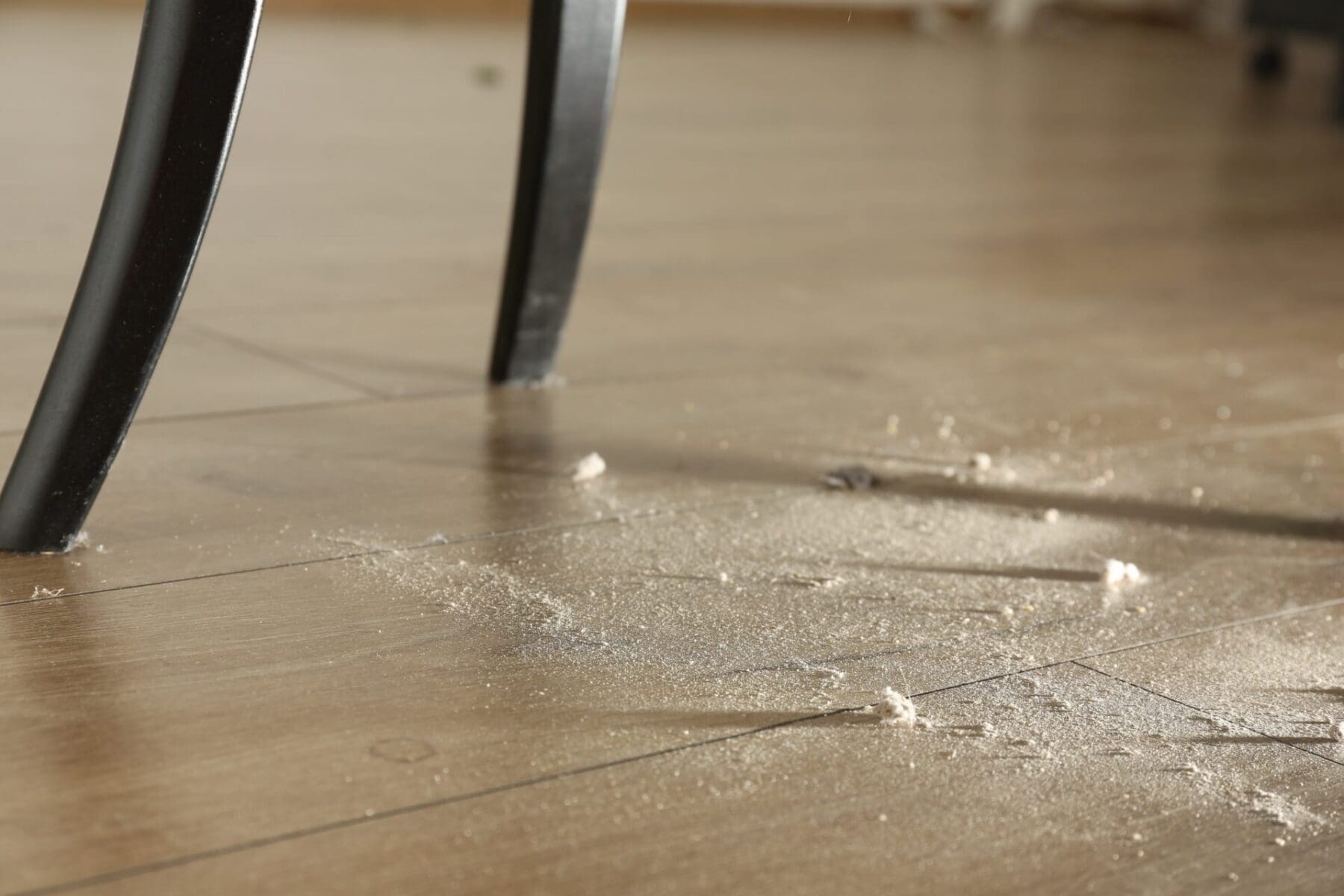
This is the step we see skipped most often in commercial buildings, and it’s the one that causes the most damage over time. Sweep or vacuum before you introduce any liquid. Dirt and grit ground into a wet floor act like sandpaper on the wear layer under mop pressure. In a low-traffic home, this happens slowly over years. In a commercial hallway, it can visibly dull a floor in months, because it feels faster to just mop over what’s already there.
3. Choose the Right Cleaner
A mild, vinyl-specific cleaner or a diluted vinegar solution, roughly one cup of distilled white vinegar per gallon of water, is the safer standard. Bleach, ammonia, and other harsh alkaline cleaners strip the protective coating off LVP flooring, leaving it dull and more vulnerable to staining. Always spot test in a low-visibility area first, like a stockroom corner rather than the main entrance.
When selecting a cleaner, look for one that’s specifically labeled as safe for luxury vinyl plank (LVP) or vinyl flooring. pH-neutral products are generally the safest choice for routine commercial maintenance because they clean effectively without damaging the protective wear layer.
4. Mop Correctly, Damp, Not Wet
Wring the mop out well. LVP is water-resistant, not waterproof, so standing water or over-saturation can seep into seams and cause buckling or warping over time. Saturate a microfiber mop in your cleaning solution, then wring before mopping. This risk is higher near commercial entrances, where rain and foot traffic already push moisture into the same joints day after day. Work in small sections and rinse the mop as it picks up dirt, rather than spreading it around.
5. Treat Scuffs and Spots Separately
Use a dampened soft bristle brush instead of a mop for stubborn marks, or a paste of baking soda and warm water for tougher spots, then wipe clean with a microfiber cloth.
Safe vs. Unsafe: A Quick Reference
| Category | Safe for LVP | Avoid |
| Cleaners | pH-neutral, vinyl-specific cleaner; diluted white vinegar solution | Bleach, ammonia, strong alkaline cleaners, oil soap |
| Tools | Microfiber mop, soft broom, vacuum without a beater bar | Stiff bristle brushes, string mops, steam mops |
| Finishing | Nothing, LVP is pre-finished | Wax, polish, “mop and shine” products |
| Water | Damp mop, wrung out well | Standing water, soaking, over saturation at seams |
Common Mistakes That Damage LVP Flooring
A property manager in Hoover called us a couple of years ago, convinced her building’s vinyl flooring was simply low quality. Her nightly cleaning crew had been mopping the break room with a heavy-duty all-purpose degreaser for months, and the floor had gone from glossy to gray in under a year.
The vinyl wasn’t the problem. The degreaser was stripping a little more of the wear layer every night. Switching to a pH-neutral, vinyl-safe cleaner stopped the fading within weeks. We see variations of this problem regularly across Central Alabama. More often than not, the flooring isn’t defective—the cleaning products are.
- Using a steam mop. Heat and steam can force moisture into the seams between planks and, over time, loosen the adhesive or cause warping. Most LVP manufacturer warranties specifically exclude steam cleaning damage, so check the warranty before using one.
- Skipping the dry clean step under time pressure. This is the shortcut that costs the most over a year, because it compounds daily instead of showing up as a single incident.
- Using wax or polish products meant for hardwood or tile. These can leave a cloudy film on LVP that’s difficult to remove, and it’s an easy mix-up when one crew handles several flooring types across a building.
- Over-wetting entrance areas specifically, where rain, mud, and mop water compound at the same seams every day.
Signs Your Cleaning Routine May Be Damaging Your LVP Flooring
Sometimes the damage caused by an ineffective cleaning routine isn’t obvious until the floor has already begun to wear prematurely. During commercial cleaning walkthroughs, these are some of the first warning signs we look for when evaluating LVP flooring:
- Fine scratches appearing in high-traffic lanes. These usually indicate that grit and dirt are being left on the floor before damp mopping. Even small particles can act like sandpaper under foot traffic.
- Floors look dull shortly after cleaning. A loss of shine often points to the use of overly aggressive cleaners, waxes, or products that leave behind residue instead of cleaning the wear layer.
- White streaks or residue remain after the floor dries. This can happen when too much cleaner is used, products aren’t diluted correctly, or dirty mop water is spread across the floor.
- Moisture lingers around plank seams. LVP is water-resistant, but standing moisture around seams can increase the risk of edge swelling or adhesive issues over time, particularly near entrances.
- Scuff marks become harder to remove. As the protective wear layer gradually deteriorates, scuffs and dirt tend to cling more easily, making routine maintenance more difficult.
If you notice several of these issues, the flooring itself may not be the problem. In many cases, adjusting the cleaning products, equipment, or maintenance schedule can help prevent additional wear and extend the life of your commercial LVP flooring.
How Often Should Commercial LVP Floors Be Cleaned?
Match the schedule to traffic, not the calendar, since treating a home floor and a commercial floor the same is the most common scheduling mistake we run into. High-traffic areas like lobbies, hallways, and break rooms need daily dust mopping and damp mopping several times a week, with a deeper scrub and recoat tied to actual foot traffic.
A 24/7 facility or one with heavy public traffic, like retail or a medical waiting room, needs a noticeably different cadence than a standard 9-to-5 office. A schedule built for one will under-service or over-service the other.
Frequently Asked Questions
Is cleaning vinyl floors the same as cleaning vinyl plank flooring?
Yes, for the most part. LVP and standard vinyl plank flooring share the same wear layer construction, so the same method applies: dry clean first, use a pH-neutral vinyl-safe cleaner, and mop damp rather than wet. Sheet vinyl follows the same core rules, though it has fewer seams to worry about than plank flooring.
Can I use a steam mop on LVP flooring?
Generally, no. Most manufacturers advise against it because heat and moisture can compromise the seams and adhesive over time, and steam damage is commonly excluded from flooring warranties. Check your specific flooring’s warranty terms before using one.
Can I use vinegar to clean LVP flooring?
A diluted vinegar solution, about one cup of distilled white vinegar per gallon of water, is a commonly accepted method for LVP, as long as it’s not overused. Vinegar is mildly acidic, so daily use over years can dull the finish. A dedicated pH-neutral vinyl cleaner is the safer default for regular use.
What should I never use to clean vinyl plank flooring?
Avoid bleach, ammonia, abrasive scouring pads, wax or polish products made for hardwood or tile, and excessive standing water. Each of these can strip the protective wear layer or force moisture into the seams.
How is cleaning commercial LVP different from a home floor?
Volume of foot traffic and consistency of schedule are the two biggest differences. A home floor might get cleaned when it looks dirty. A commercial floor needs a set cadence tied to actual traffic to avoid ground-in grit causing cumulative scratch damage, and may have added sanitation requirements depending on the industry.
How do I get scuffs out of LVP flooring without damaging it?
Use a dampened soft bristle brush rather than a mop for spot treatment, or a baking soda and water paste for stubborn marks, then wipe with a clean microfiber cloth. Avoid abrasive pads, which can scratch the wear layer.
Protect Your Commercial LVP Flooring with the Right Cleaning Plan
Keeping commercial LVP flooring looking its best isn’t just about choosing the right cleaner. It’s about using the right products, equipment, and maintenance schedule for the amount of traffic your facility experiences.
If your commercial LVP flooring is showing scratches, dullness, or premature wear despite regular cleaning, the issue may be your cleaning process rather than the flooring itself.
JAN-PRO Cleaning & Disinfecting provides customized commercial floor cleaning programs for offices, medical facilities, retail stores, and other businesses across Central Alabama. Call (205) 767-7435 or request a free estimate to build a maintenance schedule that helps protect your investment.
About the Author
Carter James
 Carter James is Vice President of Strategy & Development, leading growth strategy, acquisitions, and multi-market expansion within a facility services platform. His background includes corporate strategy, M&A integration, and franchise development. He partners with senior leadership to drive disciplined execution, scalable operations, and long-term value through data-driven, high-accountability leadership.