

High-touch surface disinfecting targets frequent contact areas—door handles, light switches, elevator buttons, shared equipment—where pathogens accumulate and transfer rapidly between people. During flu season, certified cleaning professionals prioritize these zones because respiratory viruses can survive on hard surfaces for hours or days, creating continuous reinfection pathways in commercial environments. Thorough disinfection of these contact points breaks transmission cycles and reduces workplace illness.
Birmingham businesses face heightened exposure during seasonal outbreaks, when employees interact with shared surfaces dozens of times daily. Office disinfecting services use EPA-registered antimicrobial products and documented protocols to eliminate germs that cleaning alone cannot address.
Understanding the Difference: Cleaning, Sanitizing, and Disinfecting
Many facility managers use these terms interchangeably, but each process serves a distinct purpose and achieves different levels of pathogen reduction.
Cleaning removes visible dirt, debris, and some germs from surfaces using soap or detergent and water. It improves appearance and reduces the number of microorganisms but does not kill pathogens. Sanitizing lowers bacterial counts to levels public health codes consider safe, typically reducing bacteria by 99.9% within 30 seconds. Disinfecting uses EPA-registered chemicals to kill viruses, bacteria, and fungi on surfaces, achieving pathogen elimination rather than mere reduction.
| Process | Purpose | Pathogen Reduction | Typical Application |
| Cleaning | Remove visible soil and some germs | Reduces but does not eliminate | General surface maintenance |
| Sanitizing | Lower bacterial counts to safe levels | Reduces bacteria by 99.9% | Food-contact surfaces, childcare areas |
| Disinfecting | Kill viruses, bacteria, fungi | Eliminates pathogens per EPA label claims | High-touch zones, healthcare, outbreak response |
Effective office disinfecting during flu season requires cleaning first to remove organic matter that can shield pathogens, then applying the appropriate disinfectant for the required contact time.
Which High-Touch Surfaces Require Priority Disinfection
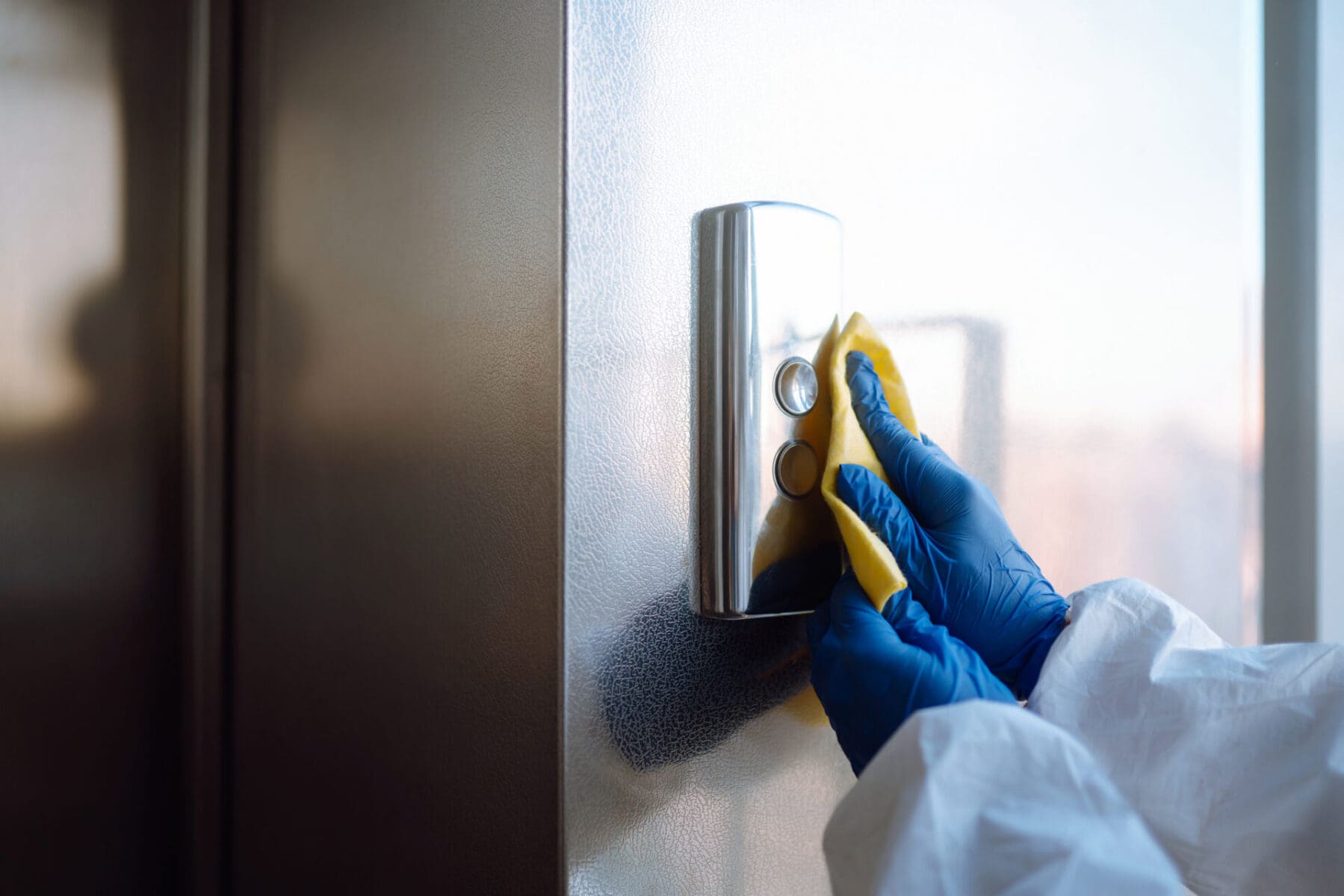
Professional cleaning teams map contact-point zones based on frequency of human interaction and surface material properties. Hard, non-porous surfaces support longer viral survival and warrant the most attention.
Common Entry and Transition Zones
- Door handles and push plates: Main entry doors, conference room doors, restroom doors, and interior office doors see hundreds of touches daily
- Elevator controls: Call buttons and floor-selection panels concentrate contact from every building occupant
- Stair railings: Continuous hand contact along full lengths creates extended contamination zones
- Reception counters: Transaction surfaces where visitors and employees exchange documents and materials
Shared Equipment and Workplace Tools
- Copier and printer touchscreens: Multiple users per hour tap the same display areas
- Shared keyboards and mice: Especially in hot-desking environments and training rooms
- Coffee station fixtures: Pot handles, dispensers, microwave controls, refrigerator handles
- Conference room controls: Presentation remotes, thermostat panels, speakerphone buttons
Personal Workspace Contact Points
- Desk phones: Handsets and keypads collect respiratory droplets and hand transfer
- Light switches: Daily activation at arrival and departure
- Chair armrests: Prolonged hand contact throughout the workday
- Desktop surfaces: Areas surrounding keyboards where hands rest between tasks
Birmingham offices in sectors such as healthcare administration, legal services, and financial firms face regulatory expectations for documented sanitation protocols. Commercial cleaning in Central Alabama addresses these compliance requirements through systematic surface identification and disinfection schedules.
How Certified Franchise Owners Execute Disinfection Protocols
Professional teams follow structured processes that ensure consistent pathogen elimination while protecting surface integrity and occupant safety.
Step 1: Pre-Cleaning Surface Preparation
Technicians remove visible soil, dust, and organic matter using appropriate cleaning agents. This step prevents contamination from interfering with disinfectant efficacy and allows antimicrobial chemicals to contact the surface directly.
Step 2: EPA-Registered Disinfectant Application
Certified professionals apply hospital-grade disinfectants proven effective against influenza viruses and other seasonal pathogens. Product selection considers surface compatibility, required contact time, and occupant exposure windows. The Centers for Disease Control and Prevention maintains guidance on disinfecting facilities that informs professional protocols.
Step 3: Contact Time Compliance
Disinfectants require specific wet-surface contact times to achieve labeled kill claims—typically between one and ten minutes depending on the formulation. Rushing this step undermines pathogen elimination. Trained teams monitor dwell times and reapply product as needed to maintain wet surfaces.
Step 4: Documentation and Verification
Professional services maintain records of which areas received treatment, which products were used, and when work occurred. This documentation supports compliance reviews and helps facility managers demonstrate due diligence during outbreaks.
Frequency Recommendation: During active flu season, high-touch surface disinfecting should occur at minimum once daily in standard office environments. Spaces with heavy public traffic or vulnerable populations may require twice-daily or continuous protocols.
When Birmingham Businesses Need Commercial Disinfecting Services
Seasonal illness patterns create predictable demand cycles, but certain triggers warrant immediate escalation of surface treatment protocols.
Seasonal Flu Activity Peaks
Influenza circulation in Alabama typically intensifies between December and February, though onset and duration vary yearly. Forward-looking facility managers increase disinfection frequency before outbreaks peak rather than reacting after absenteeism rises.
Confirmed Illness Among Staff
When employees report flu diagnosis or display respiratory symptoms, immediate disinfection of their workspace and commonly shared areas limits spread. This includes their assigned desk, nearby collaborative spaces, and any equipment they used during their infectious period.
Post-Event Deep Cleaning
Conferences, training sessions, client meetings, and other gatherings that bring external visitors into the facility elevate pathogen introduction risk. Commercial deep cleaning services following these events reset the microbial baseline before regular occupancy resumes.
Industry-Specific Compliance Requirements
Healthcare facilities, childcare centers, food service operations, and senior living communities face regulatory mandates for documented disinfection. Birmingham businesses in these sectors require year-round protocols that intensify during outbreak seasons.
How JAN-PRO in Central Alabama Delivers Certified Surface Disinfection
JAN-PRO Cleaning & Disinfecting in Central Alabama applies over three decades of commercial cleaning expertise to surface disinfection protocols designed for measurable pathogen reduction. Certified franchise owners serving Birmingham businesses follow systematic processes that address the complete spectrum of high-touch zones.
Each cleaning team receives training in proper disinfectant selection, application techniques, and contact time compliance. The franchise model ensures accountability through consistent provider assignment, so facility managers work with the same reliable professionals who understand their specific workspace configurations and traffic patterns.
JAN-PRO franchise owners use EPA-registered disinfectants appropriate for commercial environments and provide documentation that supports compliance verification. The approach combines quality products, proven methodology, and personal responsibility to deliver consistent results across diverse Birmingham industries—from corporate office parks near the Riverchase area to medical office buildings in the Summit corridor.
Frequently Asked Questions About High-Touch Surface Disinfecting
How long do flu viruses survive on office surfaces?
Influenza viruses remain infectious on hard, non-porous surfaces such as stainless steel, plastic, and glass for 24 to 48 hours under typical indoor conditions. Porous materials like fabric and paper support shorter survival times, usually a few hours. Temperature and humidity influence these durations—viruses persist longer in cool, dry environments common in heated winter offices.
Can regular cleaning eliminate flu viruses without disinfecting?
Standard cleaning with soap and water removes many viral particles through mechanical action but does not reliably eliminate all infectious agents. Cleaning reduces viral load, which lowers transmission risk, but disinfection using EPA-registered antimicrobial products provides the pathogen kill necessary to break infection chains. Combined cleaning followed by disinfection delivers optimal protection.
What contact time do disinfectants need to kill flu viruses?
Contact time requirements appear on EPA-registered product labels and vary by formulation, typically ranging from one to ten minutes. The surface must remain visibly wet throughout this period for the disinfectant to achieve its labeled efficacy claims. Faster-acting products expedite turnaround in high-traffic areas but may require more frequent application.
Should businesses disinfect high-touch surfaces multiple times daily?
Facilities with heavy occupant traffic, public access, or vulnerable populations benefit from twice-daily or more frequent disinfection of high-touch points during active flu season. Standard office environments typically achieve adequate protection with once-daily protocols, though critical surfaces such as restroom fixtures and break room appliances may warrant midday attention.
How do professional services differ from in-house cleaning for disinfection?
Certified commercial disinfecting services provide trained technicians who understand product chemistry, proper application methods, contact time requirements, and surface compatibility. Professional teams use commercial-grade EPA-registered disinfectants, maintain compliance documentation, and follow systematic protocols that ensure complete coverage. In-house staff often lack specialized training, appropriate products, and sufficient time allocation for thorough disinfection.
Partner with JAN-PRO Cleaning & Disinfecting in Central Alabama
Birmingham businesses seeking reliable office disinfecting services backed by decades of commercial cleaning expertise can connect with JAN-PRO Cleaning & Disinfecting in Central Alabama. The franchise delivers measurable results through certified professionals who understand local workplace environments and seasonal illness patterns.
Certified franchise owners provide consistent service from reliable teams trained in proper surface disinfection protocols. Each engagement includes quality products, documented processes, and personal accountability that facility managers depend on during flu season and year-round.
To discuss high-touch surface disinfecting tailored to a specific Birmingham facility, contact JAN-PRO Cleaning & Disinfecting in Central Alabama at 205-767-7435 or visit the office at 234 Aquarius Dr Ste 106, Birmingham.
About the Author
Carter James
 Carter James is Vice President of Strategy & Development, leading growth strategy, acquisitions, and multi-market expansion within a facility services platform. His background includes corporate strategy, M&A integration, and franchise development. He partners with senior leadership to drive disciplined execution, scalable operations, and long-term value through data-driven, high-accountability leadership.