

In coastal environments like Mobile, Alabama, the aesthetic and structural condition of a commercial facility is constantly challenged by environmental variables. The combination of high humidity, intense UV exposure, and airborne salt particles creates a unique set of challenges for building exteriors.
Maintaining clear, structurally sound glass is not merely a matter of curb appeal; it is a critical component of preventative facility maintenance. For property managers in Central Alabama, understanding the chemical and physical impacts of the Gulf Coast climate on glass surfaces is essential for preserving long-term capital investments.
The Chemistry of Coastal Glass Degradation
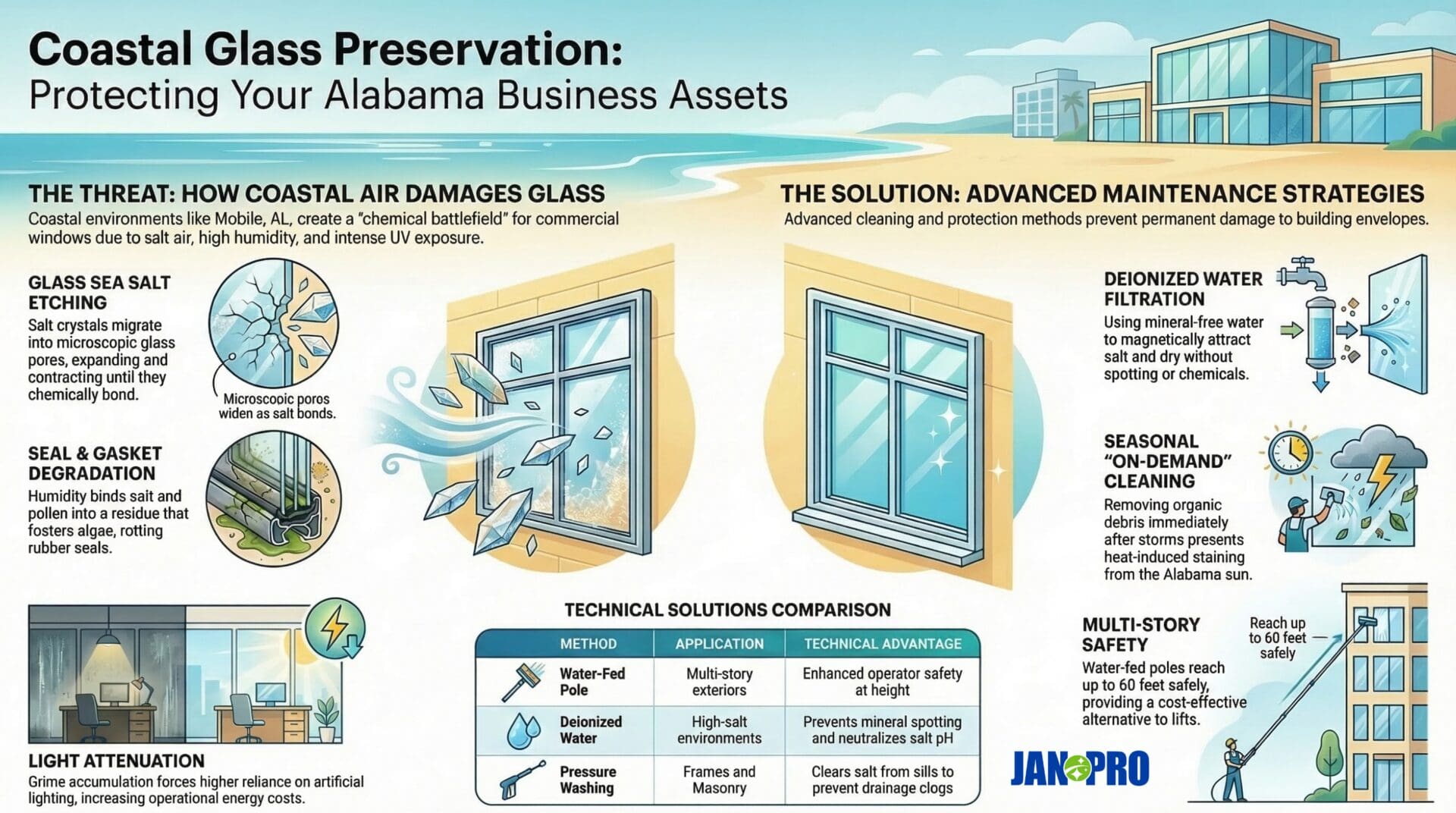
Proximity to the Gulf of Mexico introduces high concentrations of sodium chloride into the atmosphere. This aerosolized salt is carried by sea breezes and deposited directly onto commercial building envelopes. When salt-laden moisture settles on a window, the water eventually evaporates, leaving behind concentrated crystalline deposits.
These crystals are chemically aggressive. Glass, while appearing smooth to the naked eye, is actually porous at a microscopic level. Over time, salt crystals can migrate into these pores. As temperatures fluctuate, these crystals expand and contract, leading to “glass sea salt etching.” If left unaddressed, these deposits bond chemically with the silica in the glass, creating a permanent cloudy appearance that cannot be removed with standard wiping or household cleaners.
Regular commercial window cleaning is a technical necessity to neutralize these corrosive elements before permanent structural damage occurs. According to the International Association of Certified Home Inspectors (InterNACHI), the proper maintenance of building exterior components, including windows and sealants, is vital to preventing premature material failure and ensuring the longevity of the building envelope.
Impact of Humidity and Bio-Growth on Commercial Exteriors
Mobile is known for its subtropical climate, which features some of the highest humidity levels in the United States. This moisture acts as a binding agent for other pollutants. When salt combines with high humidity, it creates a sticky residue that captures organic matter, such as pollen and fungal spores.
In the shaded areas of a commercial building, this mixture can lead to the growth of mildew or algae on window frames and gaskets. If these biological contaminants are not removed, they can degrade the rubber seals that keep a building airtight.
This leads to energy loss and potential water intrusion during Alabama’s frequent rainstorms. Professional maintenance involves checking these seals while performing glass sanitation to ensure the building remains efficient and weather-tight.
Indoor Environmental Quality and Natural Light Transmission
While the exterior of a building battles salt and humidity, the interior surfaces of windows accumulate a different set of contaminants. These include:
- Volatile Organic Compounds (VOCs): Off-gassing from office carpets, furniture, and printers can leave a thin film on interior glass.
- Particulate Matter: Dust and allergens circulated by HVAC systems.
- Biological Residues: Fingerprint oils and skin cells that can harbor bacteria.
Neglecting these surfaces contributes to a decline in indoor environmental quality (IEQ). Furthermore, accumulated grime on both sides of the glass significantly reduces the transmission of natural light.
This phenomenon, known as “light attenuation,” forces building systems to rely more heavily on artificial lighting, which increases operational energy costs. Utilizing a deep cleaning strategy that includes interior glass ensures a healthier environment for employees and visitors alike.
Systematic Approaches to Exterior Glass Maintenance
Professional facility maintenance requires a systematic approach that moves beyond traditional soap and water. Modern commercial standards dictate the use of specific technologies to ensure safety and efficacy, especially for multi-story structures.
Specialized Equipment and Water Purity
High-rise and mid-rise commercial structures often require deionized water filtration systems. Standard tap water contains minerals like calcium and magnesium. If used on windows in high-heat environments, this water evaporates and leaves behind “hard water spots.” Deionization removes these minerals, allowing the water to act as a magnet for dirt and salt. When the glass air-dries, it remains clear without the need for chemical drying agents.
Comparison of Cleaning Methodologies
| Method | Application | Technical Advantage |
| Traditional Squeegee | Ground-level storefronts | High precision for detail-oriented retail glass. |
| Water-Fed Pole | Multi-story exteriors | Reaches up to 60 feet safely without heavy machinery. |
| Deionized Water | High-salt environments | Prevents mineral spotting and neutralizes salt pH. |
| Pressure Washing | Frames and Masonry | Clears salt from porous sills to prevent drainage clogs. |
Frequency and Scheduling for Mobile Businesses
The frequency of professional glass maintenance is determined by a building’s specific micro-climate. Facilities located directly on the waterfront may require monthly exterior service to combat salt accumulation, whereas inland facilities might move to a quarterly schedule.
However, seasonal factors in Alabama—such as the heavy pollen drop in the spring and the hurricane season in the late summer—often necessitate “on-demand” cleanings. Removing heavy organic debris immediately after a storm prevents the material from “baking” onto the glass under the intense Alabama sun, which can cause heat-induced staining and permanent degradation of the glass substrate.
Long-Term Asset Preservation and ROI
Beyond immediate aesthetics, consistent glass maintenance represents a significant return on investment (ROI) for property owners. Replacing commercial-grade windows is a capital-intensive project that can cost tens of thousands of dollars. By implementing a preventative cleaning schedule, building managers can extend the lifespan of the glass and its surrounding hardware.
Corrosion doesn’t stop at the glass. In the Mobile area, salt air also attacks metal window frames, particularly aluminum or steel. If salt is allowed to sit on these surfaces, it triggers oxidation. Regular rinsing and cleaning remove these corrosive agents, maintaining the mechanical functionality of operable windows and the aesthetic finish of the frames.
Professional Standards in Commercial Sanitation
For comprehensive facility hygiene, window maintenance should be viewed as an extension of the building’s overall sanitary profile. Professional providers often integrate glass care into broader commercial cleaning frameworks. This ensures that the transition points—where the glass meets the frame and where the frame meets the building skin—remain free of debris.
In areas requiring commercial cleaning services in Birmingham, AL, the focus may shift from salt to industrial pollutants and soot, but the methodology remains consistent: use the least abrasive, most effective chemical solutions to preserve the substrate.
Safety and Liability in Commercial Maintenance
Window maintenance for large facilities involves significant safety considerations. Professional organizations adhere to OSHA standards regarding fall protection and chemical handling. By employing trained technicians, property owners mitigate the liability risks associated with amateur maintenance.
Furthermore, professional services use environmentally responsible surfactants that break down oily residues without harming the surrounding landscaping or contaminating local groundwater, which is particularly important in coastal ecosystems.
Geographic Considerations for Central and Coastal Alabama
Maintenance needs vary significantly across the state. In the northern reaches of Central Alabama, industrial dust and red clay runoff are primary concerns. In the coastal regions, the focus is almost entirely on salt and humidity.
Effective providers like JAN-PRO Cleaning & Disinfecting in Central Alabama understand these regional nuances. They apply specific protocols—such as increased rinsing cycles for coastal properties—to ensure that the unique environmental threats of the region are neutralized.
For businesses operating in Trussville, the accumulation of tree sap and bird droppings from local foliage may be the primary driver for service, highlighting why a “one size fits all” approach is insufficient for professional property management.
JAN-PRO Cleaning & Disinfecting as a Facility Solution
JAN-PRO Cleaning & Disinfecting in Central Alabama provides structured maintenance solutions designed to address the specific environmental rigors of the Alabama climate. By utilizing advanced cleaning technologies, such as high-efficiency filtration and specialized disinfectants, the service ensures that commercial properties remain professional in appearance and structurally sound over time.
Whether a facility requires specialized commercial window cleaning in Mobile or a complete interior sanitation plan, the focus remains on technical performance and measurable results. Organizations looking to protect their real estate assets and improve their facility’s professional image can rely on the established expertise of a regional leader.
To discuss a customized maintenance schedule for your facility, JAN-PRO Cleaning & Disinfecting in Central Alabama can be reached at 205-767-7435 or visited at its regional office located at 234 Aquarius Dr, Ste 106, Birmingham.
About the Author
Carter James
 Carter James is Vice President of Strategy & Development, leading growth strategy, acquisitions, and multi-market expansion within a facility services platform. His background includes corporate strategy, M&A integration, and franchise development. He partners with senior leadership to drive disciplined execution, scalable operations, and long-term value through data-driven, high-accountability leadership.