Commercial kitchen cleaning is key to keeping your space safe and compliant. According to the CDC, millions of foodborne illness cases occur each year, and poor cleanliness is one of the leading causes. In a busy kitchen, grease, bacteria, and cross-contamination can build up fast without the right cleaning process.
That’s why cleaning a commercial kitchen takes more than basic routines. It requires clear standards, proper techniques, and consistent upkeep to meet health code requirements and avoid violations.
At JAN-PRO Cleaning & Disinfecting, we bring over 30 years of experience helping businesses maintain cleaner, safer kitchens. With certified franchisees and advanced systems like EnviroShield®, we deliver professional commercial cleaning services designed for high-demand environments.
What Makes Commercial Kitchen Cleaning Different from Regular Cleaning
Commercial kitchen cleaning goes far beyond standard janitorial work. It requires strict adherence to food safety standards and specialized knowledge of equipment, surfaces, and cleaning chemicals.
Unlike office or retail cleaning, kitchens must meet health department requirements tied to food handling and contamination prevention. This includes following the FDA Food Code and applying principles such as Hazard Analysis and Critical Control Points (HACCP) to reduce risk at every stage of food preparation.
Health Code and Regulatory Requirements
Health inspectors evaluate kitchens based on strict cleanliness and safety standards. Key focus areas include:
- Cleaning & disinfecting
- Grease removal
- Temperature control
- Chemical safety
- Cleaning documentation
Missing any of these areas can lead to violations, fines, or even temporary closure.
Specialized Equipment and Surface Types
Commercial kitchens also include a wide range of materials and equipment that require specific care, such as:
- Stainless steel appliances
- Non-slip flooring
- Cooking equipment like fryers and grills
- Food prep surfaces
Cleaning these properly takes training, the right tools, and consistent execution.
Step-by-Step Commercial Kitchen Deep Cleaning Process
At JAN-PRO Cleaning & Disinfecting, commercial kitchen cleaning follows a structured process based on daily, weekly, and deep-cleaning schedules. Our certified franchisees follow detailed protocols to address grease, bacteria, and hard-to-reach areas that daily routines often miss.
Pre-Cleaning Preparation and Safety Protocols
Every service starts with proper preparation to ensure safe and effective cleaning:
- Equipment is shut down and cooled before service begins
- Food debris and waste are cleared from all surfaces
- Cleaning solutions are selected and handled according to safety guidelines
- Appropriate protective equipment is used throughout the process
This step helps reduce risk and sets the stage for a thorough clean.
Daily Cleaning Tasks and Schedules
JAN-PRO supports ongoing cleanliness by reinforcing key daily practices:
- Cleaning and maintaining food contact surfaces
- Wiping prep areas, utensils, and equipment exteriors
- Removing buildup from floors using degreasing methods
- Emptying and maintaining waste and disposal areas
When needed, we can also incorporate commercial disinfection services to enhance hygiene in high-touch areas.
Weekly and Monthly Deep Cleaning Procedures
For areas that require more attention, JAN-PRO provides scheduled deep cleaning services that go beyond daily maintenance:
- Degreasing cooking equipment, such as grills and fryers
- Cleaning behind and underneath heavy appliances
- Servicing walk-in coolers, storage areas, and hard-to-reach surfaces
- Addressing buildup in ventilation systems and drainage areas
These services are designed to help kitchens stay inspection-ready, even during busy periods when in-house teams may not have time to complete deeper cleaning tasks.
Critical Kitchen Areas and Specialized Cleaning Requirements
Certain areas of a commercial kitchen require more attention due to higher contamination risk or strict compliance standards.
Cooking Equipment and Food Prep Areas
Cooking equipment quickly accumulates grease, carbon buildup, and food residue.
Key focus areas:
- Grill grates and fryer baskets
- Prep tables and cutting surfaces
- Utensils and knife storage
Proper cleaning prevents cross-contamination and helps maintain food safety standards.
Ventilation Systems and Grease Management
Ventilation systems are one of the most overlooked areas in commercial kitchen cleaning.
Important tasks include:
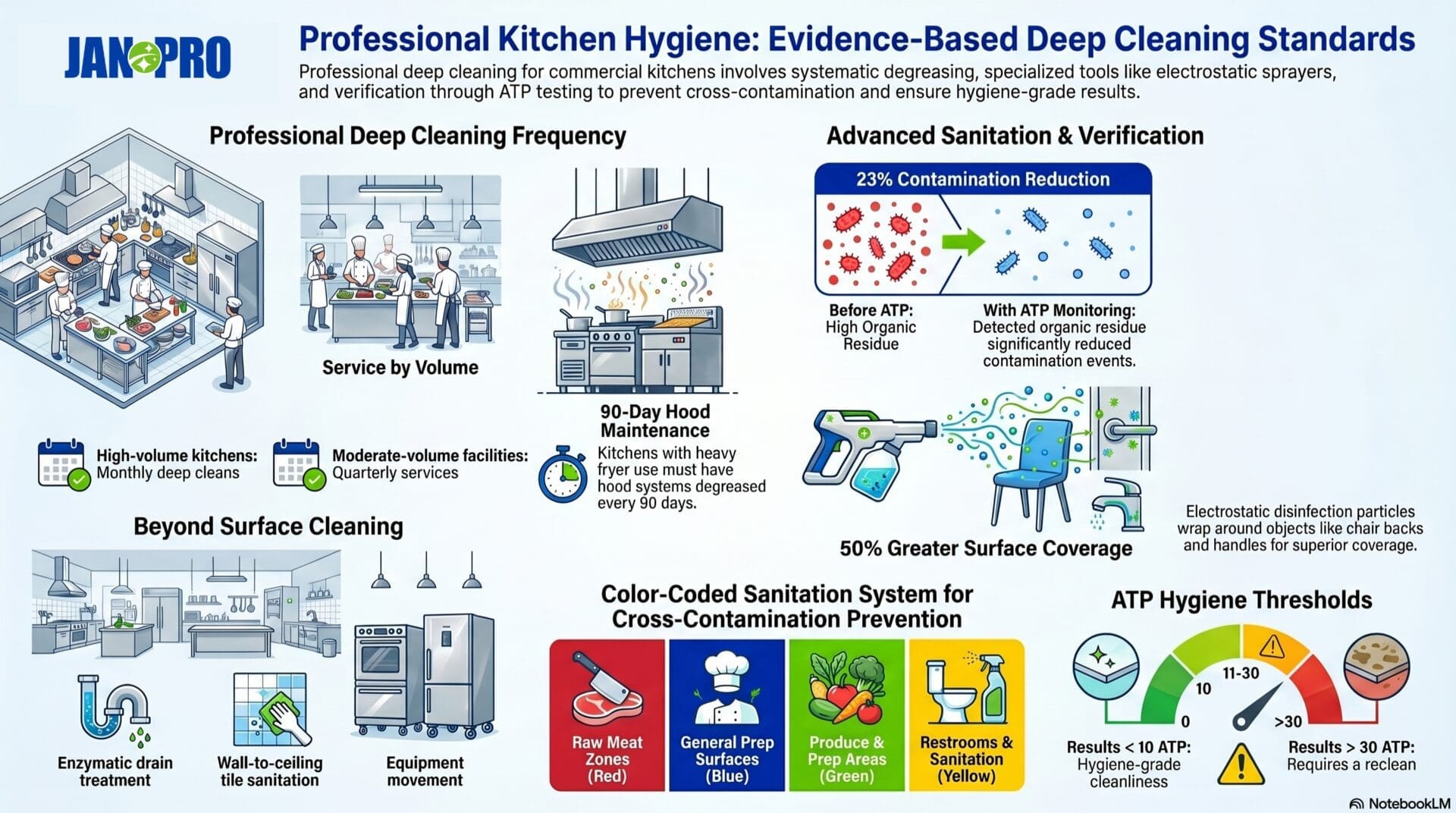
- Regular hood cleaning to remove grease buildup
- Ductwork inspections to prevent fire hazards
- Scheduled commercial kitchen grease trap cleaning
Grease accumulation can be a major safety risk in a commercial kitchen. Poor maintenance can lead to fire hazards and failed inspections.
Storage Areas and Walk-in Units
Storage areas must support food safety and organization.
Best practices include:
- Cleaning shelving and storage bins
- Maintaining proper temperature controls
- Supporting FIFO (first-in, first-out) inventory rotation
- Regularly cleaning walk-in coolers and freezers
Neglecting these areas can lead to spoilage, contamination, and compliance issues
Why Professional Commercial Kitchen Cleaning Services Matter
While in-house staff can manage daily cleaning tasks, many kitchens rely on professional commercial kitchen cleaning services to handle deeper, more complex requirements.
For busy operations, keeping up with every cleaning detail can be challenging. That’s where a structured, professional approach makes a difference.
Expertise and Equipment Advantages
Professional cleaning teams bring:
- Specialized training in food-safe cleaning protocols
- Commercial-grade equipment designed for heavy grease and buildup
- Knowledge of proper chemical use and safety standards
- Experience working with a wide range of kitchen equipment
At JAN-PRO Cleaning & Disinfecting, our certified franchisees are trained to handle these environments with precision, helping reduce risk while maintaining consistent cleaning results. Many clients also pair kitchen cleaning with restaurant cleaning services to ensure full facility coverage.
Compliance Documentation and Insurance Benefits
Professional services also help support compliance by:
- Maintaining detailed cleaning records
- Providing documentation for inspections
- Reducing liability risks tied to improper cleaning
- Supporting safer working conditions for staff
For businesses, this adds a layer of protection that goes beyond basic cleaning.

How to Choose the Right Commercial Kitchen Cleaning Company
Not all cleaning providers are equipped to handle commercial kitchens. Choosing the right partner can make a significant difference in both compliance and long-term costs.
Essential Qualifications and Certifications
Look for providers that offer:
- Trained and certified cleaning professionals
- Experience with food service environments
- Use of approved cleaning products for food contact surfaces
- Proper insurance and bonding
A strong provider should also understand industry expectations similar to those used in environments like medical facility cleaning standards, where cleanliness and compliance are critical.
Service Agreement Components and Pricing Factors
When evaluating a provider, consider:
- Cleaning frequency and scheduling flexibility
- Scope of services (daily vs. deep cleaning)
- Kitchen size and equipment complexity
- Emergency cleaning availability
Costs can vary, but investing in proper cleaning often reduces long-term expenses tied to repairs, violations, and downtime.
For those exploring the industry further, there are also opportunities in starting a commercial cleaning business or pursuing commercial cleaning franchise opportunities with established systems and support.
Common Commercial Kitchen Cleaning Mistakes to Avoid
Even well-run kitchens can run into problems when cleaning processes are rushed, inconsistent, or not properly documented. These mistakes are some of the most common reasons for failed inspections, equipment damage, and ongoing compliance issues.
Chemical Safety and Cross-Contamination Issues
Improper cleaning practices can quickly create contamination risks.
Common mistakes include:
- Using the wrong chemicals on food contact surfaces
- Failing to follow proper dilution ratios
- Cleaning multiple areas with the same tools or cloths
- Mixing chemicals that should never be combined
These errors can spread bacteria, create unsafe conditions, and lead to health code violations.
Equipment Damage and Maintenance Oversights
Incorrect cleaning methods can also shorten the life of expensive kitchen equipment.
Examples include:
- Using harsh or abrasive chemicals that corrode stainless steel
- Applying the wrong products to high-heat equipment
- Ignoring manufacturer cleaning guidelines
- Skipping routine maintenance cleaning
Over time, these mistakes can lead to breakdowns, voided warranties, and costly repairs.
Keep Your Kitchen Clean, Compliant, and Ready for Inspection
Maintaining a clean commercial kitchen isn’t just about appearance—it’s about protecting your staff, your customers, and your business. With the right processes and support, you can stay ahead of inspections and avoid costly disruptions.
If your team is struggling to keep up with cleaning demands, JAN-PRO Cleaning & Disinfecting can help. Our certified franchisees deliver customized cleaning plans designed for commercial kitchens of all sizes.
Start with a free inspection to assess your needs and build a cleaning program that keeps your kitchen operating at its best.
Frequently Asked Questions
How often should a commercial kitchen be deep cleaned?
Most kitchens require daily surface cleaning, with deeper cleaning performed weekly or monthly, depending on usage and local regulations. High-volume kitchens may need more frequent deep cleaning.
Can staff handle commercial kitchen cleaning, or are professionals needed?
Staff can manage daily tasks, but professional commercial kitchen cleaning services are often used for deep cleaning, grease management, and compliance support.
How much does commercial kitchen cleaning cost?
Costs vary based on kitchen size and scope, but deep cleaning typically ranges from $0.15–$0.30 per square foot or $200–$800 per visit.
What chemicals are safe to use in commercial kitchens?
Only EPA-registered cleaners approved for food contact surfaces should be used, including products designed specifically for commercial food service environments.