

Between Thanksgiving, Christmas parties, New Year’s Eve, and a college football weekend like the SEC Championship, Atlanta restaurants get busy fast. Bigger parties, longer hours, and back-to-back reservations mean more spills, more grease, and more people using your restrooms. The team still has to keep food moving, and cleaning is usually the first thing to slip.
The fix is a plan. If everyone knows what gets cleaned before the rush, during service, and after close, the restaurant stays in good shape even on your busiest nights.
Why Cleaning Matters Most When You’re Busiest
When tables turn faster and the kitchen runs longer, small messes pile up quickly. A greasy spot by the fryer, a sticky beverage station, or a full trash can by the back door is easy to ignore at 7 p.m. on a game night. By close, it’s a bigger job.
A steady cleaning routine helps you:
- Protect food safety. Clean, sanitized prep surfaces, utensils, and equipment lower the risk of contaminating food.
- Make a good impression. Guests notice clean tables, floors, and restrooms, even if they never say so.
- Keep the kitchen moving. A tidy line is faster and safer to work on.
- Protect your space. Wiping up spills and stains right away keeps floors and furniture from wearing out early.
- Keep standards steady. When everyone knows their job, quality doesn’t drop on a slammed shift.
Your Cleaning Plan: Before, During, and After
Before the Rush
Use the quiet time before the crowds arrive to handle the jobs you can’t get to once service starts:
- Clean and sanitize prep surfaces.
- Degrease the cooking line, backsplashes, and equipment handles.
- Wipe down tables, chairs, and booths.
- Scrub restrooms and stock soap, toilet paper, and paper towels.
- Clean floors, corners, and under movable furniture.
- Check the trash area and set up extra pickups if you expect more waste.
- Make sure your cleaning supplies are fully stocked.
- Walk the building and note anything that needs repair, like a leaking faucet or a cracked floor tile.
During Service
During service, cleaning has to fit around cooking and serving. Decide ahead of time what needs attention right away and what can wait until close.
| Area | What to watch for | What to do |
| Dining tables | Spills, crumbs, sticky spots | Clean and sanitize between parties |
| Kitchen prep areas | Leftover food, cross-contact | Clean, then sanitize, following your procedures |
| Floors and walkways | Spills, grease, wet spots | Wipe up right away; put out a wet floor sign |
| Restrooms | Messy fixtures, empty dispensers | Check often, clean, and restock |
| Doors and handles | Constant hand contact | Wipe down regularly with the right product |
| Trash areas | Full bins, spills | Empty often and clean up around the bins |
| Beverage stations | Sticky counters, drips | Wipe counters and dispensers on a schedule |
How often depends on your volume and your menu. On a game weekend, expect to check restrooms and beverage stations more than you normally would.
After Close
Once the last guest leaves, you can take on the bigger jobs:
- Take out leftover food and trash.
- Clean and sanitize food-contact surfaces.
- Degrease the cooking area and the outside of equipment.
- Sweep and mop, including under movable furniture where you can reach.
- Scrub restrooms, including sinks, partitions, and door handles.
- Clean sticky spots at the bar, beverage station, and service counters.
- Wipe down entry doors and glass.
- Have a manager walk through and note anything that was missed.
Kitchen Areas That Need Extra Attention
Cooking Equipment
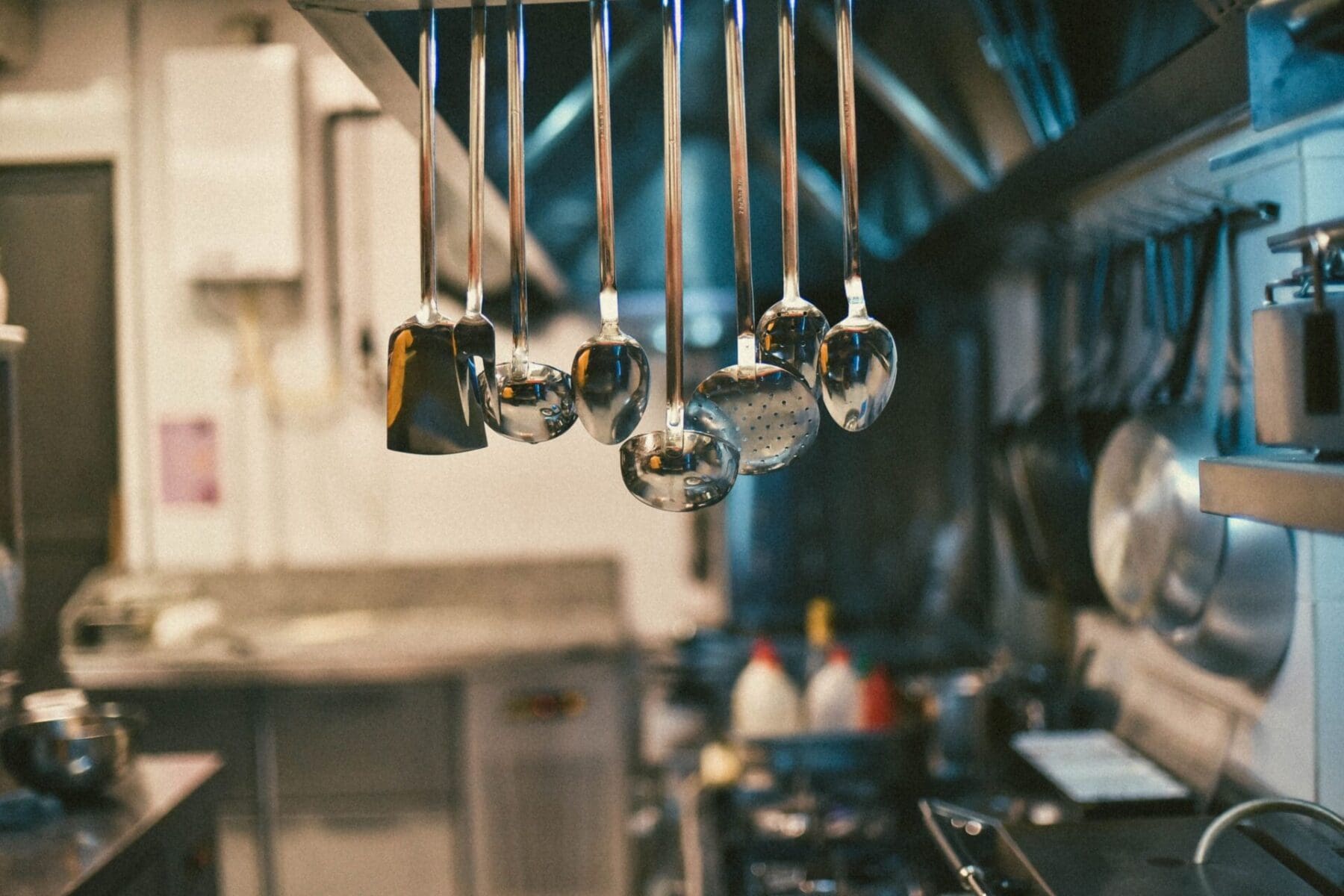
Ranges, griddles, fryers, and the counters around them collect grease and burnt-on food. The longer it sits, the harder it is to remove. Clean the areas your team can reach every day, and use products that are safe for each piece of equipment.
Hoods, filters, and exhaust systems are a different story. They collect grease inside the ductwork and are tied to fire safety rules, so they need a licensed hood-cleaning company, not your regular cleaning crew.
Prep Surfaces: Cleaning vs. Sanitizing
These are two separate steps, and both matter:
- Cleaning removes grease, spills, and leftover food from a surface.
- Sanitizing reduces germs on that surface to a safe level.
Sanitizer doesn’t work well on a dirty surface, so always clean first. Your local health department sets the exact rules. Most follow the FDA Food Code, which is the national model for food service.
Floors, Drains, and Hard-to-Reach Spots
Kitchen floors get greasy and wet, especially near the fryers, dish station, and walk-in. Use a cleaner that suits your floor type, wipe up spills quickly, and let floors dry so no one slips. Don’t forget the drains, the edges of the floor, and the spaces behind and under equipment. Those spots get missed when everyone’s focused on the middle of the floor.
Refrigeration and Beverage Equipment
Walk-ins, reach-ins, ice machines, and soda or beer dispensers each have their own cleaning instructions. Follow the manufacturer’s directions, sanitize anything that touches food or drinks, and take care around electrical parts.
What Restaurant Deep Cleaning Includes
Daily cleaning keeps you open. Deep cleaning catches what daily cleaning misses, such as baseboards, corners, grout lines, equipment bases, and the backs of shelves. A deep clean might include:
- Degreasing kitchen surfaces and the outside of equipment.
- Cleaning baseboards and behind or under movable furniture.
- Scrubbing grout lines and floor edges.
- Washing interior glass and walls.
- Detailing restrooms, including partitions and hard-to-reach spots.
- Removing sticky buildup at the bar, beverage stations, and storage areas.
What you need depends on the restaurant. A small café and a high-volume grill have very different needs.
How Often Should You Deep Clean?
There’s no single answer, but these guidelines can help:
| Your restaurant | What to consider |
| High volume | Heavy-use areas may need detailed cleaning more often |
| Lots of frying | Watch grease buildup closely and stay on top of exhaust cleaning |
| Hosting big events | Schedule extra cleaning right before or after the busy stretch |
| Outdoor patio | Include the patio and entrance in your plan |
| Little downtime overnight | Plan detailed work around your hours and equipment access |
Deep cleaning supports daily cleaning but never replaces it.
How to Build a Cleaning Checklist That Works
A good checklist matches your restaurant. It should have:
- Specific tasks. Say exactly what gets cleaned, how, and whether it needs sanitizing. Wiping a table between guests is not the same job as degreasing the range at close.
- A name next to each task. Whether it’s kitchen staff, servers, or an outside cleaning crew, everyone should know what’s theirs.
- The right timing. Separate what happens during service, at the end of each shift, weekly, and during periodic deep cleans.
- Product and equipment instructions. Use each cleaner as the label directs, train staff on equipment, and never mix chemicals.
- A way to check the work. A simple log with the date, area, task, who did it, and any follow-up lets a manager spot problems early.
Restroom Cleaning on Busy Days
On a holiday weekend or game day, a restroom that’s spotless at 5 p.m. can look rough by 8. Check it often and keep supplies stocked. Each time:
- Clean and disinfect sinks, toilets, urinals, and fixtures.
- Wipe door handles, dispensers, and partitions.
- Clean up spills and keep the floor dry.
- Empty the trash before it overflows.
- Restock soap, toilet paper, and paper towels.
Follow the disinfectant label, including how long it needs to stay wet on the surface, and keep it away from food-contact surfaces. For more tips, see our guide to restaurant restroom cleaning.
Common Mistakes During the Holiday Rush
- Treating cleaning and sanitizing as the same thing. Clean first, then sanitize.
- Skipping the hidden spots. Equipment bases, corners, and the floor under tables are where grease and grime quietly build up.
- Using the wrong product. The wrong cleaner can damage floors, leave streaks, or create a chemical hazard. Read the label.
- Putting everything on your team. Cooks and servers are already stretched. Keep daily upkeep with your staff, and hand the bigger jobs to a professional crew after hours.
- Not checking the work. A checked-off list doesn’t mean the job is done. Do a quick walk-through.
How JAN-PRO Cleaning & Disinfecting in Atlanta Can Help
Staying on top of cleaning during the holidays and SEC Championship weekend takes consistency. JAN-PRO Cleaning & Disinfecting in Atlanta provides commercial cleaning for businesses of all kinds, with a focus on consistent service, the right products, and personal accountability.
For a restaurant, that can mean:
- A walkthrough of your space to see your layout, surfaces, and trouble spots.
- A clear split between daily upkeep your staff handles and detailed cleaning our team handles.
- Cleaning methods matched to your floors, surfaces, and equipment exteriors.
- A schedule built around your hours, so we’re not in the way during service.
- Follow-up checks to make sure the work meets your standards.
The services we provide are based on what your restaurant needs and what we agree on together. Kitchen exhaust cleaning, equipment disassembly, and other specialized work usually require separate qualifications and a separate provider. To learn more, see our restaurant cleaning services in Atlanta.
Keep Your Restaurant Ready All Season
The holidays and SEC Championship weekend are good for business, but they also mean more spills, grease, and restroom traffic. A simple plan with regular cleaning during service, a full cleanup at close, periodic deep cleans, and a quick manager check keeps things from getting away from you.
To talk about what your restaurant needs, call the JAN-PRO Cleaning & Disinfecting Atlanta team at 770-955-9822 or stop by 881 Franklin Gateway SE, Suite 405.
Frequently Asked Questions About Restaurant Cleaning in Atlanta
1. Why is restaurant cleaning especially important during the holidays and SEC Championship weekend?
More guests means more food prep, more spills, busier restrooms, and more hands on shared surfaces. A steady cleaning schedule keeps your restaurant sanitary and presentable when it matters most.
2. What does restaurant cleaning typically include?
It usually covers dining areas, floors, restrooms, kitchen surfaces, trash removal, and frequently touched spots, plus cleaning and sanitizing of food-contact surfaces. The exact scope depends on your restaurant.
3. How often should a restaurant schedule deep cleaning?
It depends on your volume, how you cook, your hours, and the condition of the space. Busy restaurants and those with lots of frying may need detailed cleaning in some areas more often.
4. What’s the difference between restaurant cleaning and commercial kitchen cleaning?
Restaurant cleaning covers the whole building: dining room, restrooms, entrance, and service areas. Commercial kitchen cleaning focuses on the back of house, including prep areas, cooking equipment, greasy surfaces, and kitchen floors.
5. Does cleaning alone make food-contact surfaces safe?
Not always. Cleaning removes grease and leftover food. Sanitizing reduces germs to a safe level. Clean the surface first, then sanitize it.
6. Should restaurant cleaning happen during or after business hours?
Both. Handle spills and table upkeep throughout service, and save the bigger jobs for after close or whenever the area is out of use.
7. Can a commercial cleaning company help restaurants during big Atlanta events?
Yes. A commercial cleaning company can help you set a cleaning schedule, keep common areas in shape, and handle recurring cleaning. The scope depends on your needs, your hours, and the provider.
8. How do I choose a commercial cleaning company in Atlanta?
Look at their commercial experience, services, cleaning procedures, staff training, scheduling flexibility, and how they check their work. Also ask whether kitchen-specific services are included or handled by someone else.
About the Author
Carter James
 Carter James is Vice President of Strategy & Development, leading growth strategy, acquisitions, and multi-market expansion within a facility services platform. His background includes corporate strategy, M&A integration, and franchise development. He partners with senior leadership to drive disciplined execution, scalable operations, and long-term value through data-driven, high-accountability leadership.