Disinfecting kills 99.999% of pathogens on surfaces using EPA-registered chemicals, while sanitizing reduces bacteria to safe levels defined by public health standards—typically 99.9% reduction.
For Tacoma facility managers, choosing the right service depends on your industry requirements: healthcare and food service spaces typically need disinfection, while general office areas often require only sanitization.
Misunderstanding this distinction costs facility managers unnecessary expenses or, worse, inadequate pathogen control. Tacoma’s diverse commercial landscape—from Port of Tacoma warehouses to Multicare medical offices—demands customized cleaning protocols that align with both state health codes and operational budgets.
This guide clarifies when each process applies, which Tacoma industries require specific protocols, and how to evaluate service providers before signing a contract.
The Core Difference Between Disinfecting and Sanitizing
Disinfecting eliminates nearly all pathogenic organisms, including viruses, bacteria, and fungi, using EPA-registered chemicals with specific contact times. Sanitizing lowers microbial counts to levels deemed safe by public health authorities but doesn’t eliminate all pathogens.
| Factor | Sanitizing | Disinfecting |
| Pathogen reduction | 99.9% bacteria reduction | 99.999% kill rate (viruses, bacteria, fungi) |
| Typical contact time | 30-60 seconds | 3-10 minutes depending on the product |
| Regulatory requirement | Food service, childcare | Healthcare, laboratories, high-risk areas |
| Chemical strength | Lower concentration | EPA-registered disinfectants |
| Cost per service | Lower | Higher due to products and dwell time |
Washington State Department of Health requires disinfection in specific settings.
Healthcare facilities, including Tacoma General Hospital and smaller urgent care clinics, must follow CDC guidelines mandating the use of hospital-grade disinfectants. Food processing facilities near the Tideflats Industrial Area operate under FDA and USDA standards that specify when sanitizing suffices versus when disinfection becomes mandatory.
When Tacoma Facilities Require Disinfection
Certain environments demand disinfection rather than sanitization due to pathogen exposure risk, regulatory mandates, or population vulnerability. Understanding these triggers prevents compliance issues and protects occupants.
Industries That Must Disinfect
- Healthcare facilities: Medical offices, dental clinics, physical therapy centers, and urgent care locations must disinfect exam rooms, waiting areas, and high-touch surfaces between patients
- Food processing plants: Facilities handling raw protein or operating under HACCP plans require disinfection in processing zones
- Childcare centers: Washington State licensing requires disinfection of diaper-changing stations, food preparation areas, and toys mouthed by infants
- Laboratories: Research and diagnostic labs near Joint Base Lewis-McChord or the University of Washington Tacoma require disinfection protocols
- Senior living facilities: Memory care units and assisted living communities need daily disinfection due to resident immune vulnerability
Outbreak Response Scenarios
Even facilities that normally sanitize must shift to disinfection during confirmed illness outbreaks. Tacoma schools switch protocols when norovirus or influenza cases spike. Office buildings implement temporary disinfection when multiple employees report contagious illnesses.
When Sanitizing Is Sufficient and Cost-Effective
Many Tacoma commercial spaces function safely with regular sanitization rather than full disinfection. This approach reduces chemical exposure, shortens service times, and lowers costs without compromising safety when properly applied.
Appropriate Sanitization Applications
- General office spaces: Corporate offices in downtown Tacoma or Pacific Avenue business districts with healthy adult populations
- Retail environments: Stores, showrooms, and customer service areas where food preparation doesn’t occur
- Warehouses and distribution centers: Port of Tacoma logistics facilities and storage spaces with limited public contact
- Educational administrative areas: School offices, teacher lounges, and administrative buildings separate from classrooms
- Fitness center locker rooms: When combined with proper ventilation and member education about personal hygiene
Last month, we worked with a Tacoma property management company overseeing twelve office buildings. They had been paying for daily disinfection services across all properties. After reviewing actual risk factors and occupancy patterns, we redesigned their program: disinfection for the medical tenant suite and a law firm’s conference rooms during flu season, with sanitization for standard office areas. The adjustment maintained safety standards while reducing their monthly cleaning costs by nearly one-third.
How to Evaluate Commercial Cleaning Proposals
Facility managers receive proposals that use “disinfecting” and “sanitizing” interchangeably, creating confusion about what service you’re actually purchasing. Asking specific questions reveals whether a provider understands the distinction and can deliver compliant service.
Critical Questions for Service Providers
- Product verification: Request EPA registration numbers for all disinfectants and ask which pathogens each product targets on its label
- Contact time compliance: Ask how technicians ensure proper dwell time—many surfaces require 3-10 minutes of wetness for disinfectants to work
- Staff training documentation: Verify technicians complete bloodborne pathogen training and understand chemical safety data sheets
- Industry-specific protocols: Confirm the provider has worked in your industry and understands your regulatory requirements
- Verification systems: Ask about quality control measures such as ATP testing or third-party audits
Red Flags in Service Proposals
- Providers who can’t name specific disinfectant products or their active ingredients
- Proposals that promise “hospital-grade disinfection” at sanitization pricing
- Companies unable to provide certificates of insurance covering infectious disease exposure
- Services that don’t adjust protocols based on facility type or risk assessment
- Contractors unfamiliar with the Washington State Department of Health requirements for your industry
Building an Effective Cleaning Protocol for Your Tacoma Facility
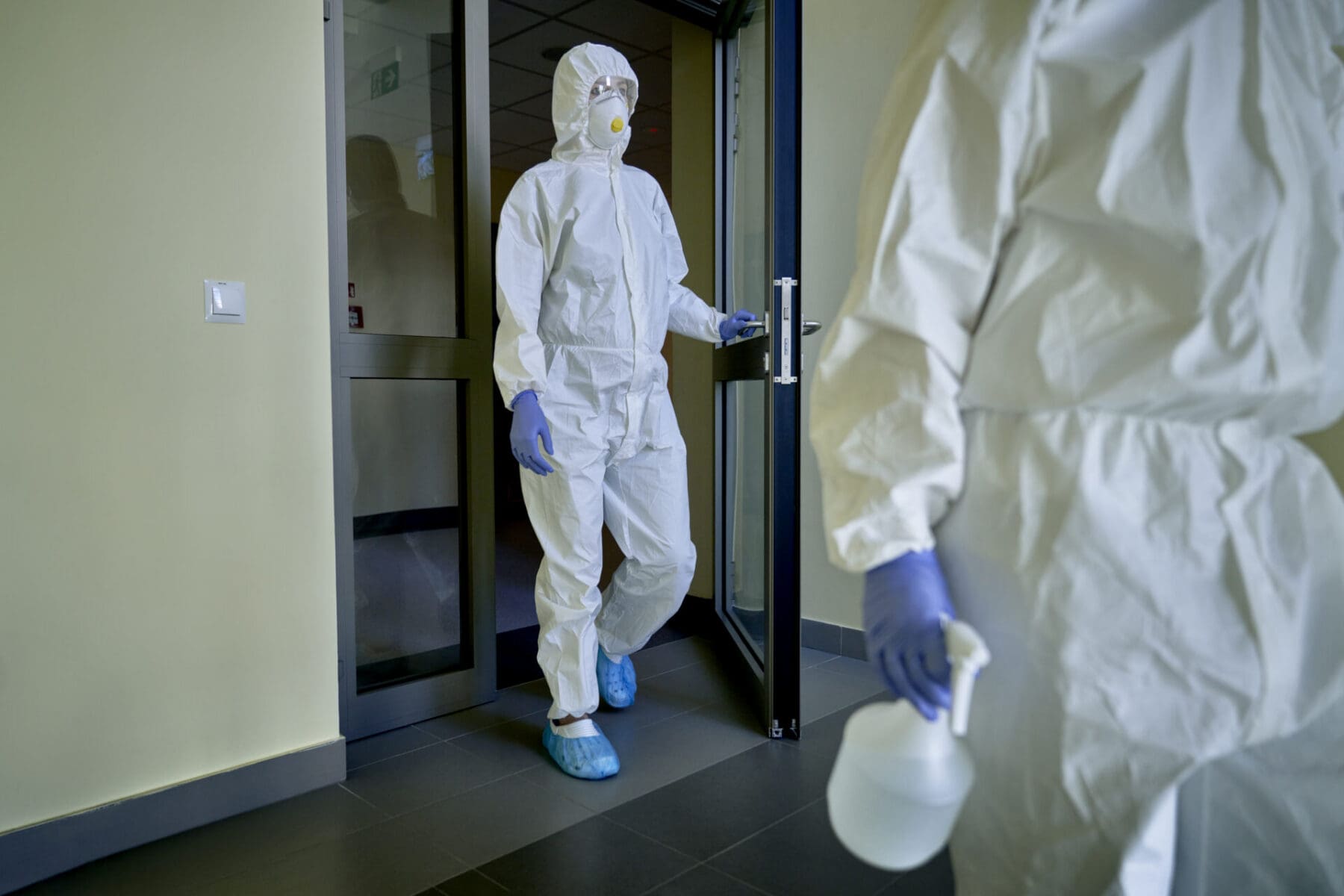
A functional protocol balances pathogen control, regulatory compliance, occupant safety, and budget constraints. It specifies which areas receive which treatment and adjusts seasonally based on illness trends.
Protocol Development Checklist
✓ Risk assessment: Identify high-touch surfaces, vulnerable populations, and areas with food or medical procedures
✓ Frequency determination: Match cleaning frequency to traffic volume and contamination risk
✓ Product selection: Choose EPA-registered products appropriate for target pathogens and surface materials
✓ Training schedule: Ensure cleaning staff understand application techniques and safety requirements
✓ Documentation system: Create logs that prove compliance during health department inspections
✓ Seasonal adjustments: Plan protocol intensification during regional flu peaks and norovirus season
✓ Communication plan: Inform occupants about cleaning schedules and any temporary access restrictions
For commercial disinfecting in Tacoma, protocols must account for Pierce County’s climate—our wet winters create conditions where viruses survive longer on surfaces, potentially requiring more frequent disinfection cycles than facilities in drier regions.
Zone-Based Approach
| Zone Type | Treatment Level | Frequency | Example Areas |
| Critical | Disinfection | After each use or daily | Exam rooms, food prep surfaces, infant areas |
| High-touch | Disinfection or intensive sanitizing | 1-2 times daily | Door handles, elevator buttons, shared equipment |
| Standard | Sanitization | Daily or as needed | Desks, conference tables, break room surfaces |
| Low-risk | Cleaning only | Weekly or less | Storage areas, private offices, decorative surfaces |
Frequently Asked Questions
Can the same cleaning service switch between sanitizing and disinfecting based on my needs?
Yes, qualified providers adjust protocols based on your facility’s changing requirements. Seasonal illness outbreaks, regulatory audits, or new tenant types may require temporary or permanent protocol shifts. Ensure your contract allows flexibility without requiring complete rebidding.
How can I verify that my cleaning company is actually disinfecting rather than just sanitizing?
Request documentation showing EPA registration numbers for products used, ask for photos of product labels, and observe whether staff allow proper contact time before wiping surfaces. Third-party ATP testing provides objective verification of surface cleanliness and microbial reduction.
Do green or eco-friendly products work as well as traditional disinfectants?
Many EPA-registered botanical disinfectants achieve the same pathogen kill rates as traditional chemicals while reducing environmental impact and occupant exposure. Verify that green products carry EPA registration and meet your specific pathogen-control requirements rather than assuming all natural products disinfect effectively.
What documentation should I keep to prove compliance during health inspections?
Maintain cleaning logs with dates, times, areas serviced, products used, and technician signatures. Keep safety data sheets for all chemicals on site. Document staff training dates and certification renewals. Retain service provider insurance certificates and any third-party audit reports.
How do Tacoma’s regulations differ from other Washington cities for commercial facilities?
While the Washington State Department of Health sets baseline standards, Tacoma-Pierce County Health Department may implement additional requirements for specific industries. Food establishments and childcare facilities should verify local health district requirements beyond state minimums, particularly regarding inspection frequency and acceptable products.
Partner With Proven Expertise in Commercial Facility Disinfection
Choosing between sanitizing and disinfecting affects your facility’s safety, regulatory compliance, and operating costs. The wrong protocol creates unnecessary risk or wasteful spending.
As a trusted commercial cleaning company in Puget Sound, JAN-PRO Cleaning & Disinfecting brings over 30 years of industry expertise to Tacoma facilities. Our certified franchisees understand Washington State health regulations, industry-specific requirements, and cost-effective protocol design. We use EPA-registered products, document every service, and adjust approaches as your facility’s needs change.
Whether you manage a healthcare clinic requiring daily disinfection, an office building needing strategic sanitization, or a mixed-use property with varying requirements across tenant spaces, we design protocols that protect occupants while respecting your budget.
Contact JAN-PRO Cleaning & Disinfecting in Puget Sound today at (253) 589-9110 or visit our office at 500 South 336th St #201, Federal Way, WA. Our team will assess your facility, clarify which services match your compliance requirements, and provide a transparent proposal that specifies exactly what you’re purchasing.
About the Author
Aaron Hurlburt
 Aaron Hurlburt is the Regional Developer for JAN-PRO, a commercial cleaning company. He is grateful for the opportunity to serve the Puget Sound these past 25 years. Aaron’s primary focus is operational excellence by pairing the ideal franchisee with the appropriate client. Mr. Hurlburt’s office deploys Field Service Consultants to routinely quality control the service and drive greater operational synergies.