
Indoor air quality plays a significant role in the health, comfort, and productivity of commercial workplaces. Offices, healthcare facilities, schools, and retail environments rely on heating, ventilation, and air conditioning (HVAC) systems to circulate air throughout indoor spaces. Over time, dust, debris, and contaminants can accumulate within ductwork, potentially affecting airflow efficiency and air cleanliness.
Commercial air duct cleaning refers to the professional removal of dust, debris, and microbial contaminants from HVAC duct systems in commercial buildings. This process typically involves specialized equipment designed to extract particles from ventilation pathways and restore proper air circulation.
For businesses in New Jersey and the Delaware Valley region, understanding the warning signs of duct contamination can help facility managers maintain healthier indoor environments and improve building maintenance practices.
What Is Commercial Air Duct Cleaning?
Commercial air duct cleaning is a specialized maintenance process focused on removing contaminants from ventilation systems in commercial facilities. HVAC duct systems distribute conditioned air throughout a building, which means any debris within these systems may circulate repeatedly through occupied spaces.
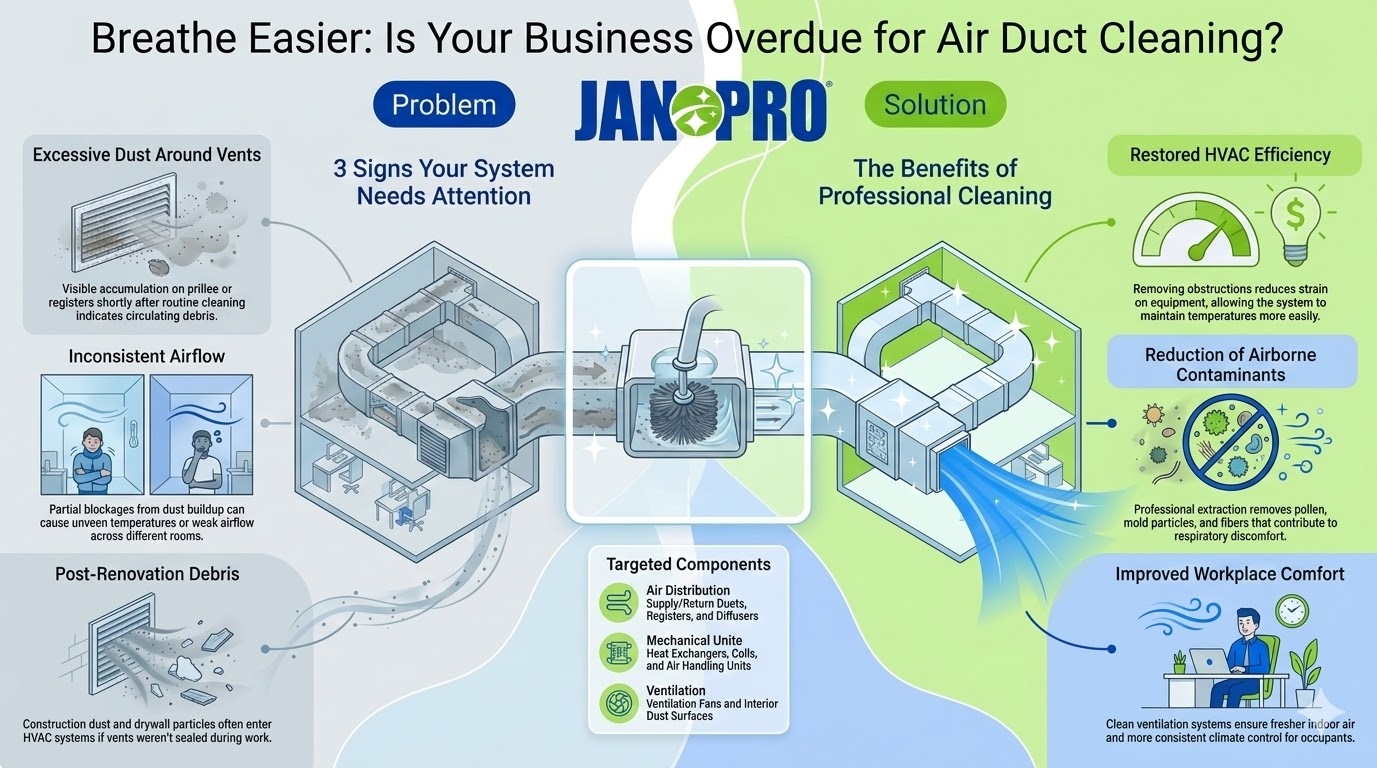
Professional duct cleaning generally targets several HVAC components, including:
- Supply and return air ducts
- Air registers and diffusers
- Heat exchangers and coils
- Air handling units
- Ventilation fans
Removing accumulated dust and debris helps improve airflow efficiency while reducing the amount of airborne particles circulating indoors.
According to guidance from the U.S. Environmental Protection Agency (EPA), indoor air quality can be affected by contaminants that accumulate in ventilation systems, including dust, pollen, and mold particles, which may circulate through indoor environments if HVAC systems are not properly maintained.
Why Indoor Air Quality Matters in Commercial Facilities
Indoor environments often contain multiple sources of airborne particles. In office buildings, dust, fibers from carpeting, cleaning residues, and outdoor pollutants can enter ventilation systems and gradually accumulate within ducts.
Poor indoor air quality may contribute to several operational challenges in commercial buildings, including:
- Increased dust accumulation on surfaces
- Reduced HVAC efficiency
- Persistent odors in indoor spaces
- Employee discomfort related to air quality
Maintaining clean ventilation systems is an important component of broader facility maintenance programs that aim to preserve workplace comfort and hygiene.
Many businesses combine HVAC maintenance with comprehensive facility sanitation programs, such as commercial cleaning services in South Jersey, to address both visible surface cleaning and hidden environmental factors affecting indoor spaces.
Common Signs a Business May Need Air Duct Cleaning
Although HVAC systems operate behind walls and ceilings, several visible or noticeable indicators may suggest the need for professional duct maintenance.
1. Excessive Dust Around Air Vents
One of the most common signs of duct contamination is visible dust accumulation around ventilation grilles and air registers. If vents repeatedly collect dust shortly after routine cleaning, it may indicate that debris is circulating through the duct system.
Dust buildup may include:
- Carpet fibers
- Paper particles from office materials
- Construction debris from renovations
- Outdoor pollutants entering the building
Professional duct cleaning helps remove these particles from the ventilation system rather than allowing them to recirculate indoors.
2. Inconsistent Airflow Across the Building
Uneven airflow in different areas of a building can sometimes indicate partial blockages within the duct system. Accumulated dust and debris may restrict airflow in certain sections of the ventilation network.
Signs of airflow issues may include:
- Rooms that feel warmer or cooler than others
- Weak airflow from certain vents
- HVAC systems running longer to maintain the temperature
Removing blockages and debris can help restore balanced airflow and improve HVAC performance.
3. Persistent Indoor Odors
Commercial facilities occasionally experience persistent odors that appear unrelated to visible cleaning issues. Ventilation systems can sometimes circulate odors caused by accumulated debris, mold growth, or trapped particles within ducts.
Air duct cleaning can help remove contaminants that contribute to recurring smells, particularly in buildings with older HVAC systems or high occupancy levels.
4. Recent Renovations or Construction
Building renovations often generate dust, drywall particles, and construction debris that may enter HVAC systems if vents are not properly sealed during construction.
Even after surface cleaning is completed, particles may remain inside ventilation systems. In these cases, professional duct cleaning can help remove debris introduced during construction activities.
5. Increased Allergy or Respiratory Complaints
Indoor air quality concerns occasionally become noticeable when occupants experience increased allergy symptoms or respiratory discomfort. While many factors influence indoor air quality, accumulated dust and allergens inside duct systems may contribute to the presence of airborne irritants.
Maintaining clean HVAC systems is one step organizations can take to support healthier indoor environments.
How Commercial Air Duct Cleaning Improves Indoor Air Quality
Professional duct cleaning contributes to healthier indoor environments by addressing hidden sources of airborne particles.
Reduction of Airborne Contaminants
Removing accumulated dust and debris reduces the amount of particulate matter circulating through indoor spaces. This helps minimize surface dust buildup and improves overall air cleanliness.
Improved HVAC System Efficiency
Debris inside duct systems can restrict airflow, forcing HVAC systems to work harder to maintain indoor temperatures. Clearing these obstructions allows air to circulate more efficiently throughout the building.
Improved airflow can support more consistent temperature control and reduce strain on HVAC equipment.
Better Workplace Comfort
Air quality directly affects occupant comfort in commercial environments. Clean ventilation systems contribute to fresher indoor air and help maintain a comfortable atmosphere for employees, clients, and visitors.
Equipment and Methods Used in Professional Duct Cleaning
Commercial air duct cleaning requires specialized equipment designed to reach deep into ventilation systems without damaging components.
Professional cleaning teams commonly rely on tools such as:
- High-powered vacuum extraction systems
- Rotary brushes designed for duct interiors
- Compressed air tools for dislodging debris
- HEPA filtration systems that capture fine particles
These systems help remove contaminants while preventing particles from dispersing into occupied areas during cleaning. Many commercial cleaning providers also utilize advanced professional cleaning tools and equipment designed for specialized facility maintenance tasks.
Best Practices for Maintaining Clean Ventilation Systems
Although professional duct cleaning plays an important role in maintaining HVAC systems, ongoing maintenance practices can help reduce contamination buildup between cleanings.
Facility managers commonly implement the following strategies:
- Replacing HVAC air filters regularly
- Scheduling routine HVAC inspections
- Monitoring dust levels around vents and registers
- Keeping air intake areas free from debris
- Coordinating duct cleaning after renovation projects
These preventative steps help maintain efficient ventilation systems while supporting long-term building maintenance goals.
How Professional Cleaning Providers Approach Air Duct Maintenance
Established commercial cleaning providers follow systematic processes when addressing HVAC contamination in commercial facilities.
Typical service procedures include:
1. Ventilation System Assessment
Technicians inspect air ducts and ventilation components to determine the level of debris accumulation.
2. Containment and Protection
Work areas are secured to prevent dust from spreading during cleaning procedures.
3. Debris Removal
Specialized vacuum systems and rotary brushes dislodge and extract contaminants from duct surfaces.
4. Airflow Verification
After cleaning, airflow performance may be evaluated to confirm improved ventilation efficiency.
These structured methods help ensure that duct cleaning is performed safely while minimizing disruption to facility operations.
JAN-PRO Cleaning & Disinfecting in Delaware Valley
Commercial facilities across South Jersey and the Delaware Valley region often incorporate air duct maintenance into broader building sanitation strategies. Professional cleaning providers help support indoor air quality through structured cleaning programs designed for commercial environments.
With more than 31 years of industry experience, JAN-PRO Cleaning & Disinfecting in Delaware Valley provides commercial cleaning expertise through certified franchisees trained in professional sanitation protocols and facility maintenance practices. These services support businesses across offices, medical facilities, schools, and other commercial environments.
Organizations seeking information about structured cleaning programs and facility sanitation services may contact JAN-PRO Cleaning & Disinfecting in Delaware Valley at 410 White Horse Pike, Haddon Heights, NJ, or call 856-547-5550 for additional details about commercial cleaning support in the region.
Conclusion
Maintaining healthy indoor environments requires attention to both visible surfaces and hidden infrastructure within commercial buildings. Commercial air duct cleaning plays an important role in removing dust, debris, and airborne contaminants that accumulate inside ventilation systems over time.
Recognizing early warning signs—such as excessive dust near vents, inconsistent airflow, persistent odors, or post-construction debris—can help facility managers address air quality concerns before they affect building performance or occupant comfort.
By integrating professional duct maintenance into broader facility cleaning programs, organizations in New Jersey can support improved indoor air quality, more efficient HVAC operation, and healthier commercial environments.
About the Author
 Jon Brodack
 Jon Brodack
Jonathan Brodack is Director of Sales & Marketing at JAN-PRO Franchise Development of the Delaware Valley. Holding an MBA from Rutgers University–Camden, he combines a data-informed approach with a focus on building enduring professional partnerships. He is dedicated to driving franchise growth and market expansion through a strategy centered on long-term relationship development.