A commercial cleaning contract defines the scope, responsibilities, and service expectations between a cleaning provider and a commercial facility. In business environments such as offices, healthcare facilities, retail locations, and educational institutions, structured cleaning agreements help ensure that cleaning tasks are performed consistently, safely, and according to established standards.
Organizations in Middletown, Delaware often rely on formal cleaning agreements to maintain hygienic workspaces, support employee wellness, and preserve building materials such as flooring, carpets, and fixtures. These agreements typically outline service schedules, cleaning procedures, reporting protocols, and facility-specific requirements that guide ongoing maintenance operations.
Understanding what is typically included in a commercial cleaning contract helps facility managers evaluate service providers, define operational expectations, and maintain compliance with health and sanitation guidelines.
What Is a Commercial Cleaning Contract?
A commercial cleaning contract is a written agreement that establishes how cleaning services will be delivered in a commercial property. It defines the operational details necessary for consistent facility maintenance.
The contract generally specifies:
- The cleaning tasks that will be performed
- The frequency of service
- The areas of the facility covered
- Quality assurance procedures
- Health and safety compliance requirements
By clearly documenting responsibilities, these agreements create a standardized framework that allows businesses to maintain organized cleaning schedules and measurable service outcomes.
In commercial environments, such contracts often support long-term facility maintenance strategies by outlining recurring cleaning procedures and specialized services when necessary.
Core Components Typically Included in a Cleaning Agreement
Most commercial cleaning contracts contain several standardized elements designed to establish clarity and accountability.
Scope of Work
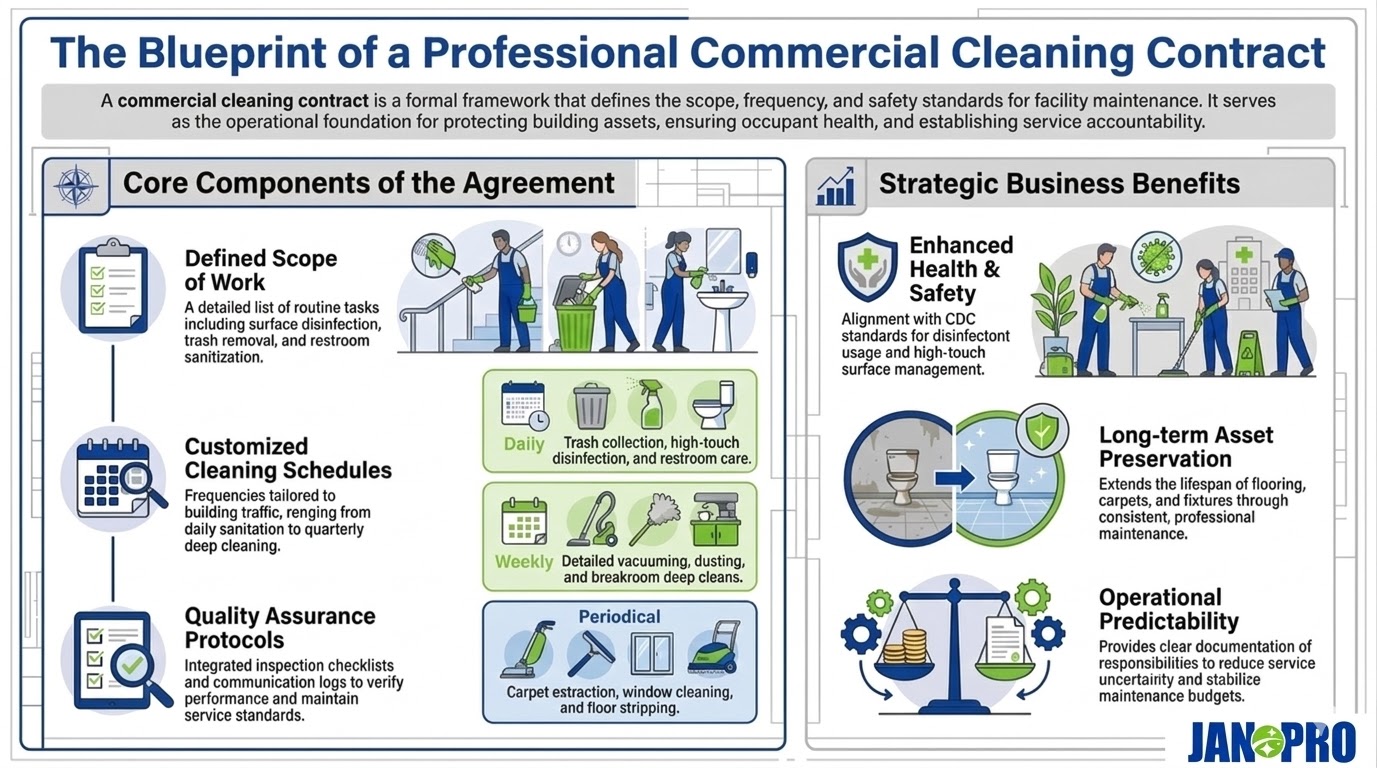
The scope of work defines exactly which cleaning tasks will be performed within the facility. This section typically lists all routine services, including:
- Surface dusting and disinfecting
- Trash collection and recycling removal
- Restroom cleaning and sanitization
- Floor maintenance, such as vacuuming or mopping
- Breakroom or kitchen cleaning
By outlining these tasks in detail, the scope of work prevents confusion about what services are included in the agreement.
Cleaning Schedule and Frequency
Commercial properties require different cleaning frequencies depending on building usage and occupancy levels. A contract usually specifies how often services occur, such as:
- Daily cleaning for high-traffic facilities
- Weekly or biweekly maintenance services
- Monthly or quarterly deep cleaning tasks
Facilities such as medical clinics, childcare centers, and retail spaces often require more frequent sanitation due to higher exposure to shared surfaces.
For example, environments like childcare centers require specialized sanitation protocols, as discussed in guidelines related to daycare cleaning and high-touch surface management.
Defined Service Areas
Commercial buildings contain a wide variety of spaces with different cleaning requirements. A contract usually identifies the specific areas that must be serviced, including:
- Offices and workstations
- Conference rooms
- Reception areas
- Restrooms
- Hallways and corridors
- Kitchens and breakrooms
Some agreements also identify restricted or specialized areas that require additional cleaning protocols, such as laboratories or medical treatment rooms.
Health and Safety Standards
A commercial cleaning contract often references compliance with health and sanitation standards established by recognized authorities. Maintaining hygienic indoor environments is essential for employee health and public safety.
For example, sanitation practices frequently follow recommendations from organizations such as the Centers for Disease Control and Prevention (CDC) regarding cleaning and disinfecting high-touch surfaces in workplaces.
These guidelines typically emphasize:
- Routine cleaning of frequently touched surfaces
- Proper disinfectant usage
- Safe chemical handling procedures
- Personal protective equipment (PPE) when necessary
Integrating these standards into a cleaning agreement helps ensure that facility sanitation aligns with recognized public health recommendations.
Cleaning Methods and Equipment
Professional cleaning providers commonly include a description of the cleaning methods and tools used during service.
These may include:
- Commercial-grade vacuum systems
- Microfiber cleaning technology
- Electrostatic disinfection systems
- Floor care equipment, such as scrubbers or buffers
- HEPA filtration systems for improved indoor air quality
By specifying the cleaning methods used, a contract helps ensure that maintenance practices match the needs of the facility and the materials present within the building.
Quality Control and Inspection Procedures
Reliable cleaning agreements often include quality assurance measures that help verify service performance. These processes allow facility managers and service providers to monitor cleaning outcomes over time.
Quality control components may include:
- Scheduled inspections
- Cleaning performance checklists
- Communication protocols for reporting concerns
- Documentation of completed tasks
Consistent inspection systems help maintain service accountability and support continuous improvement in cleaning performance.
Supply Management and Restocking
In many commercial cleaning agreements, the provider may also assist with supply management. This can include monitoring and restocking commonly used consumables such as:
- Paper towels
- Toilet paper
- Hand soap
- Trash liners
Some contracts outline how these supplies are monitored and who is responsible for purchasing or providing them.
Clear supply management policies help prevent disruptions in facility operations while maintaining sanitation standards.
Specialized Cleaning Services

While routine cleaning covers daily maintenance tasks, many contracts also include provisions for specialized services performed periodically.
Examples may include:
- Carpet extraction and deep cleaning
- Window cleaning
- Floor stripping and refinishing
- Tile and grout restoration
- High-dusting of vents and ceilings
These services help extend the lifespan of building materials and maintain the overall appearance of commercial facilities.
Organizations seeking structured maintenance solutions may explore comprehensive commercial cleaning services in Middletown that integrate routine and specialty cleaning procedures into a coordinated service program.
Communication and Reporting Protocols
A well-structured commercial cleaning contract also establishes communication processes between the facility and the cleaning provider.
These protocols often include:
- Designated contact persons for each party
- Procedures for reporting maintenance concerns
- Documentation of completed services
- Scheduled review meetings to evaluate performance
Clear communication guidelines ensure that service expectations remain aligned throughout the contract period.
How Professional Cleaning Providers Structure Service Agreements
Established commercial cleaning providers follow structured methodologies when developing cleaning contracts for business clients.
These processes generally involve:
- Facility assessment – evaluating the size, layout, and cleaning needs of the property
- Risk identification – determining areas with higher sanitation requirements or heavy traffic
- Service customization – creating a tailored scope of work that matches operational needs
- Scheduling design – establishing cleaning frequencies aligned with building usage
- Quality assurance planning – implementing inspection and reporting procedures
By applying systematic planning methods, cleaning providers can create service agreements that address both operational efficiency and long-term facility maintenance.
Why Structured Cleaning Contracts Matter for Businesses
Commercial cleaning contracts provide operational clarity and help organizations maintain consistent facility standards.
Key benefits of structured agreements include:
- Predictable cleaning schedules
- Clear documentation of responsibilities
- Improved sanitation and workplace hygiene
- Long-term maintenance of flooring, furniture, and fixtures
- Reduced uncertainty regarding service expectations
For facilities with high occupancy levels or strict sanitation requirements, detailed contracts help ensure that cleaning tasks are performed according to established procedures.
JAN-PRO Cleaning & Disinfecting in New Castle
Businesses across Delaware rely on experienced commercial cleaning providers to develop structured cleaning programs tailored to specific industries and facility requirements.
JAN-PRO Cleaning & Disinfecting in New Castle has supported commercial properties for more than 30 years through certified franchisees who deliver customized cleaning programs across a wide range of industries. These structured service agreements help facilities maintain consistent sanitation and operational efficiency.
Organizations seeking commercial cleaning expertise in the region can find JAN-PRO Cleaning & Disinfecting in New Castle at 2417 Lancaster Ave Ste. 101, Wilmington, or contact the office at 302-324-5240 for additional information about facility cleaning programs designed for professional environments.
Conclusion
A commercial cleaning contract serves as the operational foundation for maintaining professional, hygienic, and well-managed commercial facilities. By clearly outlining cleaning tasks, service frequencies, safety standards, and quality control procedures, these agreements help ensure that facility maintenance remains consistent and accountable.
For businesses in Middletown and throughout Delaware, understanding the structure and components of a cleaning contract can help facility managers evaluate service providers and maintain effective long-term cleaning strategies that support workplace health and building preservation.
About the Author
 Jon Brodack
 Jon Brodack
Jonathan Brodack is Director of Sales & Marketing at JAN-PRO Franchise Development of the Delaware Valley. Holding an MBA from Rutgers University–Camden, he combines a data-informed approach with a focus on building enduring professional partnerships. He is dedicated to driving franchise growth and market expansion through a strategy centered on long-term relationship development.