
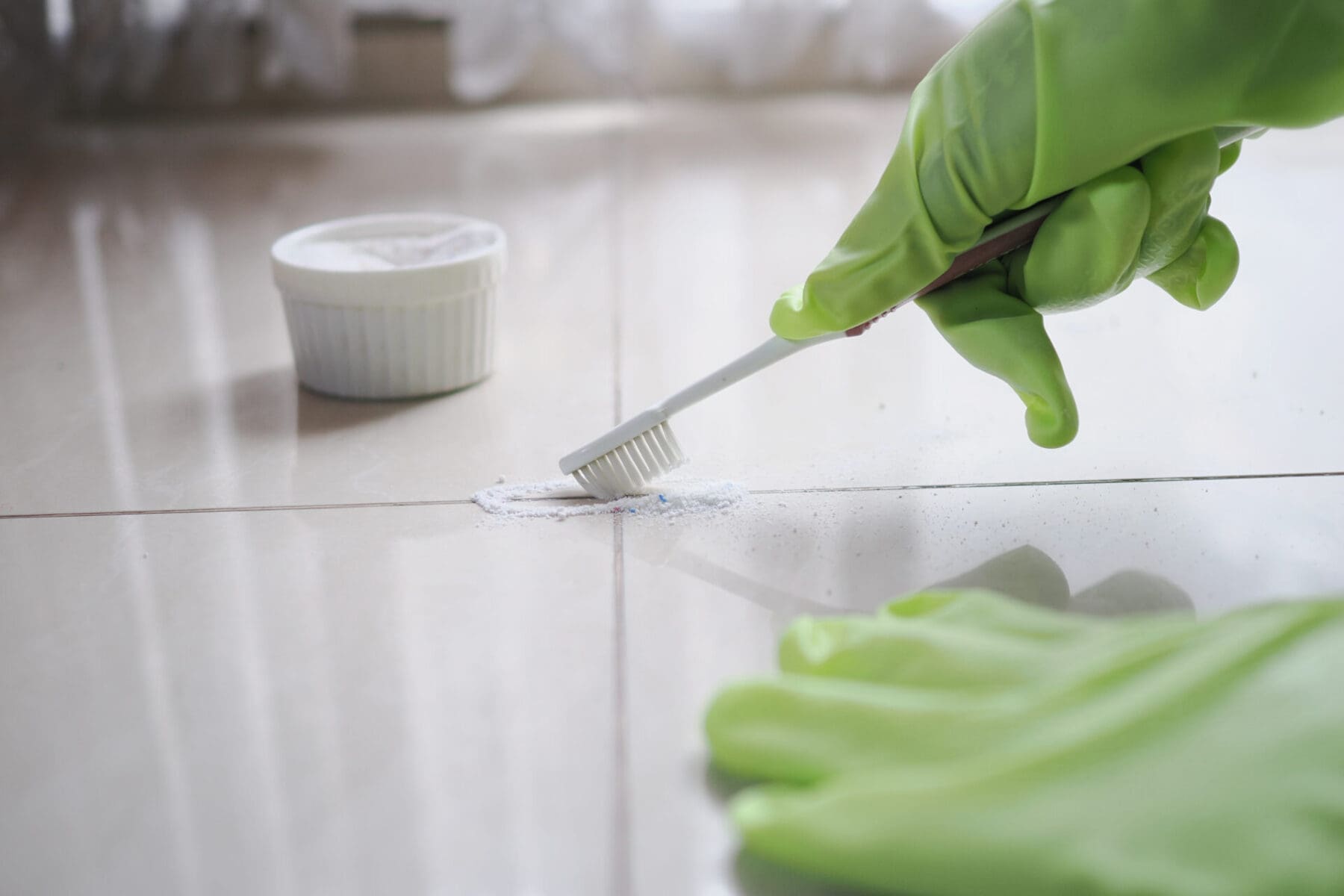
Professional grout cleaners use a combination of commercial scrubbing equipment, grout-specific brushes, extraction systems, and cleaning solutions selected according to the flooring material and type of soil. Depending on the surface and cleaning requirements, professional equipment may also include steam or other specialized cleaning systems.
The important distinction is that professional grout cleaning isn’t simply about finding a stronger cleaner. A technician has to determine what the floor is made of, what’s causing the discoloration, how much soil has accumulated, and which cleaning method is appropriate for the surface.
That’s a very different process from using a store-bought grout cleaner and a stiff brush on a small residential bathroom.
A commercial property might have thousands of square feet of tile, with grout exposed to foot traffic, food soil, grease, tracked-in dirt, moisture, and other contaminants every day. A medical office near Peachtree Road, a dealership along Cobb Parkway, and a restaurant in Buckhead can all have tile floors but require completely different cleaning approaches.
For businesses considering commercial cleaning services in Atlanta, here’s what professional grout cleaning equipment is designed to do and what our technicians consider before choosing a cleaning method.
What Equipment Do Professionals Use to Clean Grout?
Professional grout cleaning can involve several types of equipment. The right combination depends on the floor, grout condition, soil load, and facility requirements.
| Professional equipment | Primary purpose | Typical application |
| Rotary scrubbers | Provides mechanical agitation across larger areas | Commercial tile floors with accumulated soil |
| Oscillating scrubbers | Agitates flooring with controlled movement | Tile and grout maintenance |
| Grout brushes | Provides targeted agitation | Grout lines, edges, and detailed areas |
| Extraction equipment | Removes loosened soil and cleaning solution | Heavily soiled commercial floors |
| Steam or heated cleaning equipment | Uses heat and moisture for appropriate applications | Certain hard-surface cleaning situations |
| Commercial vacuums | Removes loose soil before wet cleaning | Entrances and high-traffic areas |
One thing we’ve learned from commercial floor care is that equipment selection matters as much as equipment power. A machine that works well on one floor can be the wrong choice for another.
That’s why professional cleaning isn’t simply a matter of bringing the most powerful machine available. The technician has to consider the flooring, the grout, and the soil before deciding how aggressive the cleaning should be.
Rotary and Oscillating Scrubbers
Hand-scrubbing every grout line isn’t practical when a commercial property contains thousands of square feet of tile.
Rotary and oscillating machines can provide consistent mechanical agitation over larger areas. The appropriate brush or pad depends on the flooring system and the type of cleaning required.
Mechanical agitation is particularly useful when routine mopping has removed surface soil but left heavier buildup in textured flooring or grout lines.
Grout-Specific Brushes
Machines can’t reach every location equally well.
Grout-specific brushes can be used for edges, corners, transitions, and areas where additional agitation is necessary. Professional cleaning often combines machine cleaning with targeted detail work rather than relying entirely on one piece of equipment.
Extraction Equipment
Agitation loosens soil, but that soil still needs to be removed.
Depending on the flooring system and cleaning method, extraction equipment can remove loosened soil and cleaning solution from the surface. This is one reason professional floor cleaning can produce a different result from simply applying cleaner and wiping it away.
Steam and Heated Cleaning Equipment
Steam cleaners and other heated cleaning systems can be useful for certain hard-surface cleaning applications, but they aren’t automatically appropriate for every commercial floor.
The flooring material, grout condition, equipment specifications, and facility requirements should all be considered before using heat or significant moisture.
More heat or pressure isn’t automatically better. The right method is the one that removes the soil without creating a new flooring problem.
What Cleaning Products Do Professional Grout Cleaners Use?
Professional cleaners don’t use one universal grout cleaner.
The cleaning solution should be selected according to the soil and the flooring material.
For example, a commercial kitchen may have grease and food-related soil, while an office entrance may primarily have tracked-in dirt and particulate matter.
Depending on the application, professional cleaning programs may use different types of commercial cleaning formulations, including products designed to address grease, general soil, mineral deposits, or other specific buildup.
The product’s label directions and the flooring manufacturer’s care recommendations should guide its use, including dilution, application, dwell time, and whether the product is appropriate for the surface.
Why the Flooring Material Matters
Tile and grout aren’t interchangeable surfaces.
Ceramic and porcelain tile have different characteristics from natural stone, while grout can vary in composition and condition.
Natural stone in particular may require careful product selection because certain cleaners can damage or dull sensitive surfaces.
One of the practical lessons in commercial floor care is that a product that performs well on one floor shouldn’t automatically be carried over to another. The surface comes first; the cleaner comes second.
That’s why a professional shouldn’t approach every commercial floor with the same chemical simply because it worked somewhere else.
What We’ve Learned About Commercial Grout Cleaning
A common assumption is that heavily discolored grout simply needs a stronger chemical and more scrubbing.
In practice, that’s not always the answer.
When a floor continues to look dirty after routine cleaning, the first question should be what is actually causing the discoloration?
For example, soil around a restaurant entrance may be largely tracked-in dirt, while grout near a kitchen work area can accumulate grease and food-related soil. A facility with recurring moisture may have a completely different maintenance issue.
We’ve learned that treating those situations as if they’re the same problem can lead to wasted labor and inconsistent results.
Our approach is therefore to look at the floor before deciding on the cleaning method. We consider the material, the condition of the grout, the type of soil, and how the space is used.
That assessment can also reveal when cleaning isn’t the right answer.
If grout is cracked or deteriorating, for example, increasing the pressure or using a stronger cleaner won’t repair it. The floor may need maintenance or repair instead.
This is one of the biggest differences between professional floor care and a DIY approach: the goal isn’t simply to clean what is visible. It’s to understand why the floor looks the way it does and choose a method that makes sense for the surface.
How Do Professionals Decide Which Grout Cleaner to Use?
The professional decision-making process can be summarized in four questions:
1. What is the floor made of?
The technician identifies the tile, grout, and other relevant flooring materials.
2. What is causing the discoloration?
Grease, tracked-in soil, mineral deposits, and other buildup can require different approaches.
3. What condition is the grout in?
Intact grout can be cleaned differently from grout that is already cracked, loose, or deteriorating.
4. What are the facility’s requirements?
A restaurant kitchen, medical office, retail store, and corporate office don’t necessarily have the same cleaning schedules, operating constraints, or surface-maintenance requirements.
This assessment is often more important than the specific brand of cleaner sitting on the technician’s cart.
What Does Professional Grout Cleaning Look Like in an Atlanta Commercial Facility?
Atlanta businesses encounter a variety of conditions that can contribute to visible floor soil.
During rainy periods, tracked-in dirt and clay can accumulate around building entrances. Spring pollen can also contribute to the particulate matter brought into commercial buildings.
In high-traffic areas, that soil can work its way into textured tile and grout lines where routine mopping may not remove everything.
The cleaning requirements then vary by property.
Restaurants and Commercial Kitchens
Restaurant kitchens can accumulate grease, food-related soil, moisture, and heavy foot traffic.
A kitchen floor may therefore require a different cleaning solution and mechanical approach from tile in the dining area or front entrance.
The objective isn’t to use the strongest available product. It’s to remove the specific soil while following appropriate procedures for the flooring.
Medical Offices
Medical facilities have cleaning requirements that extend beyond appearance.
Grout maintenance should fit within the facility’s broader environmental cleaning procedures, while any disinfecting products used on applicable surfaces should follow product-label directions and facility protocols.
Flooring manufacturer recommendations also remain important when selecting cleaning products and methods.
Auto Dealerships
Dealerships can have several distinct cleaning environments under one roof.
A showroom may have customer traffic and tracked-in soil, while service areas can encounter automotive-related dirt and other heavier soil.
That means the cleaning approach can vary from one part of the property to another.
Office Buildings
Office floors typically experience a different soil load from commercial kitchens, but entrances, corridors, break rooms, and other high-traffic areas can still develop noticeable grout discoloration.
Recurring maintenance can address these areas before buildup becomes more difficult to remove.
Fitness Centers and Locker Rooms
Fitness facilities can experience heavy foot traffic and increased moisture in locker rooms and other areas.
The appropriate cleaning frequency and method depend on the flooring material, traffic, moisture exposure, and the facility’s maintenance program.
When Should Grout Be Professionally Cleaned?
Professional grout cleaning may be worth considering when routine maintenance is no longer keeping up with visible buildup.
Common signs include:
Grout Remains Discolored After Routine Cleaning
If regular mopping and routine floor cleaning leave noticeable soil in the grout lines, the floor may require a more intensive cleaning approach.
Large Areas Have Accumulated Buildup
Hand-cleaning individual grout lines becomes increasingly inefficient as the affected area grows. Commercial equipment can provide more consistent mechanical cleaning across larger spaces.
The Grout Is Difficult to Clean Without Aggressive Scrubbing
Repeated aggressive scrubbing can be inappropriate for some flooring systems. A professional assessment can help determine whether a different combination of equipment and cleaning solution would be more suitable.
The Grout Is Cracked or Deteriorating
Cleaning doesn’t repair damaged grout.
If grout is loose, cracked, crumbling, or missing, additional maintenance or repair may be necessary before or instead of intensive cleaning.
How Often Should Commercial Grout Be Professionally Cleaned?
There isn’t a universal schedule.
A busy restaurant kitchen may need more frequent attention than a low-traffic office, while entrances and other high-traffic areas may require more frequent cleaning than surrounding flooring.
A maintenance schedule can take into account:
- Foot traffic
- Type of business
- Soil levels
- Flooring material
- Moisture exposure
- Existing daily or weekly cleaning
- Appearance requirements
The goal is to address buildup before the floor reaches a condition where increasingly intensive cleaning or repairs are required.
Professional Grout Cleaning vs. DIY Grout Cleaning
The difference isn’t simply the cleaning product.
| DIY approach | Professional commercial approach |
| Designed around a small area | Designed for larger commercial spaces |
| Often uses hand brushes | Can combine mechanical agitation and detail work |
| Limited equipment | Uses commercial floor-care equipment |
| General-purpose products may be used | Products can be selected according to soil and surface |
| Primarily focused on visible buildup | Considers material, soil, condition, and maintenance requirements |
| Usually performed as needed | Can be incorporated into a recurring maintenance program |
For a small area, DIY cleaning may be perfectly reasonable.
For a large commercial property, however, labor, consistency, equipment, surface compatibility, and downtime all become part of the decision.
What This Means for Your Business
Professional grout cleaning isn’t about finding the strongest chemical or most powerful machine. It’s about understanding the floor and choosing an appropriate combination of cleaning solution, mechanical agitation, moisture control, and soil removal.
That’s especially important in commercial buildings where thousands of square feet of flooring may be exposed to different types of soil every day. A planned floor-maintenance program can help address grout buildup before it becomes a larger appearance or maintenance issue.
Talk to JAN-PRO Cleaning & Disinfecting in Atlanta
JAN-PRO Cleaning & Disinfecting in Atlanta provides commercial cleaning programs designed around the needs of individual facilities, including floor and grout maintenance.
Our approach focuses on assessing the space, identifying the cleaning requirements, and selecting an appropriate method rather than treating every commercial floor the same way.
For a facility-specific quote, call 770-955-9822 or request a free estimate online.
FAQs
What do professional grout cleaners use?
Professional grout cleaners may use rotary or oscillating scrubbers, grout-specific brushes, extraction equipment, commercial cleaning solutions, and, for appropriate applications, steam or heated cleaning equipment. The specific combination depends on the tile, grout, soil type, and condition of the floor.
Do professional cleaners use steam cleaners on grout?
Steam or heated cleaning equipment can be appropriate for some hard-surface applications, but it isn’t suitable for every tile or grout system. Professionals consider the flooring material, grout condition, equipment specifications, and cleaning requirements before choosing a steam-based method.
What is the best cleaner for commercial grout?
There isn’t one cleaner that is best for every commercial grout floor. Professionals select cleaning products according to the flooring material and the type of soil being removed, while following product-label directions and applicable manufacturer recommendations.
How do professionals clean grout without damaging the tile?
They identify the flooring material and grout condition before selecting the cleaning product, brush, machine, and application method. This helps avoid using an incompatible product or overly aggressive cleaning method on a sensitive surface.
How do professionals clean large areas of grout?
Professionals can combine mechanical floor scrubbers, appropriate brushes, cleaning solutions, and extraction equipment to clean larger commercial areas more efficiently than manually scrubbing individual grout lines.
How often should commercial grout be professionally cleaned?
The appropriate frequency depends on traffic, soil levels, flooring material, moisture exposure, facility type, and the existing cleaning program. High-traffic areas such as restaurant kitchens, busy entrances, and locker rooms may require more frequent attention than lower-traffic office areas.
Can professional grout cleaning repair damaged grout?
No. Cleaning can remove soil and buildup, but it doesn’t repair grout that is cracked, loose, crumbling, or missing. Damaged grout may require repair or replacement in addition to cleaning.
About the Author
Carter James
 Carter James is Vice President of Strategy & Development, leading growth strategy, acquisitions, and multi-market expansion within a facility services platform. His background includes corporate strategy, M&A integration, and franchise development. He partners with senior leadership to drive disciplined execution, scalable operations, and long-term value through data-driven, high-accountability leadership.