Ask ten dental office managers in Denver what “cleaning” means for their practice, and you’ll get ten different pictures in their heads. Some are picturing a hygienist re-sterilizing instruments between patients. Others are picturing a janitorial crew mopping the reception floor after the last appointment leaves.
We’ve learned, from working with dental practices across the Denver area, that this mix-up isn’t harmless — it’s usually the exact spot where a facility’s cleaning plan quietly falls apart.
Here’s the short version: those are two completely different jobs, done by two completely different teams, and a good dental office cleaning partner should never blur the line between them.
The Line We Never Cross
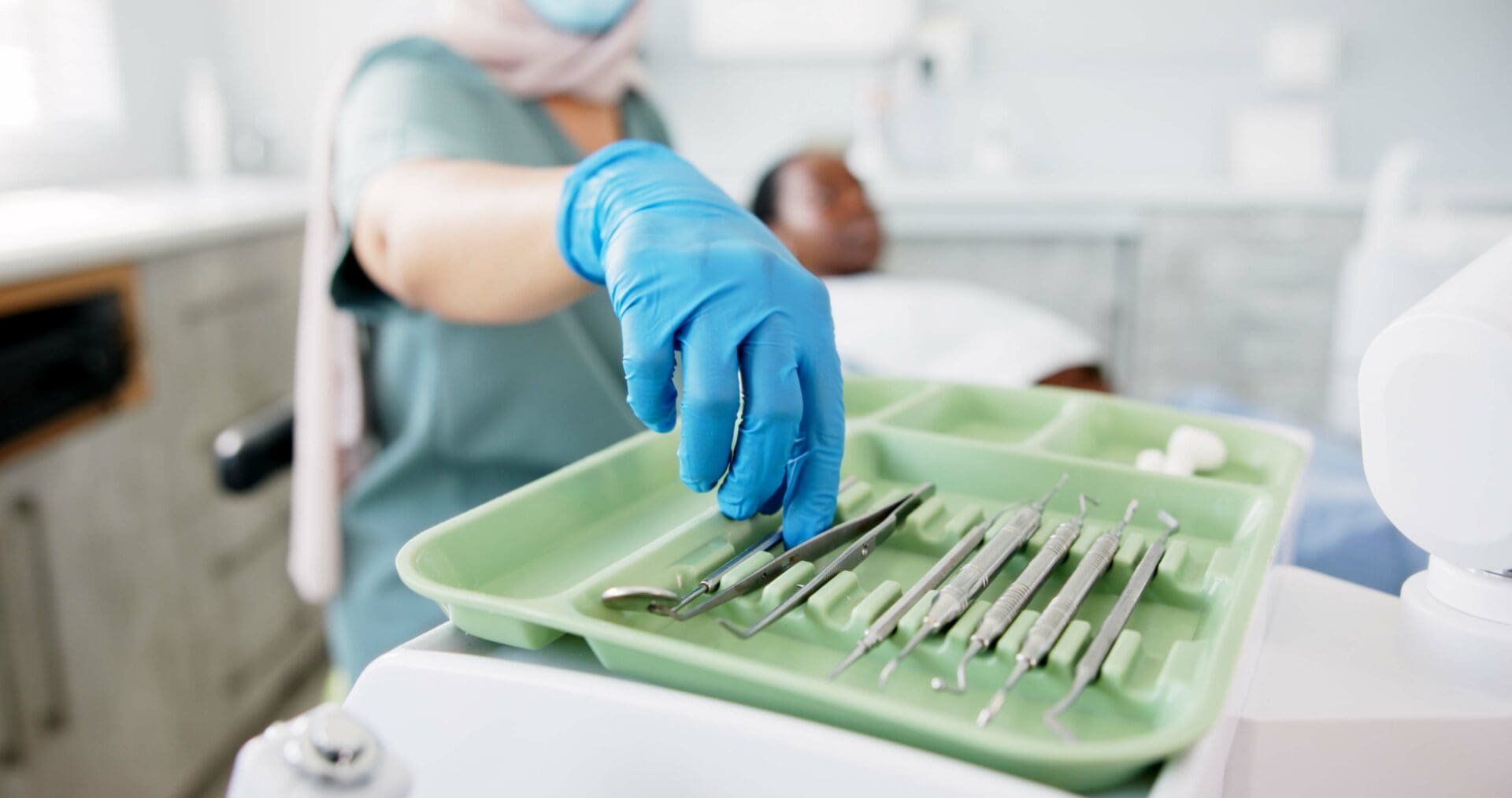
Instrument sterilization and autoclaving happen in the operatory, and they’re governed by OSHA’s Bloodborne Pathogens Standard and CDC infection-control guidance — that work belongs to your clinical staff, full stop. So does anything involving regulated medical waste.
A cleaning company like JAN-PRO Cleaning & Disinfecting in Colorado isn’t in that world at all. What we handle is everything a patient actually sees, touches, and breathes before and after they’re in the chair: reception, restrooms, break rooms, hallways, and the high-touch surfaces — door handles, counters, chair arms — that get touched by every single person who walks through your door.
We draw that line on purpose. We’ve seen what happens when a practice assumes a cleaning company will “handle everything,” and it’s rarely a good surprise — usually it’s a gap nobody noticed until something flagged it. Being upfront about scope, before day one, is the difference between a clean office and a false sense of security.
It’s also why our cleaning protocol is built to align with the same standards your practice already answers to — the Joint Commission, OSHA, the CDC, and AORN — so facility cleaning supports your compliance posture instead of sitting apart from it.
Why Dental Office Air Isn’t Like Office Air
Most office cleaning is about how a space looks. Dental office cleaning also has to be about how the air performs because dental procedures generate aerosols in a way a law office or an accounting firm simply doesn’t. That’s not a minor detail. It’s why HEPA filtration matters more here than almost anywhere else we clean, and it’s part of why our MedMetrix® program treats air quality as its own priority rather than an afterthought bolted onto vacuuming.
Denver adds its own wrinkle. The Front Range’s dry, high-altitude air means dust and static build up in a waiting room faster than they would in a more humid market — something we’ve had to adjust for directly, running HEPA vacuum passes on a shorter interval for Denver-area practices than we’d typically recommend elsewhere.
For a patient sitting in that waiting room between appointments, none of this is visible. Nobody compliments a well-filtered reception area. But people notice the opposite — a room that feels stuffy, or carries a faint clinical smell in the wrong way — and that impression forms before a hygienist ever says hello.
What Actually Works, Practice After Practice
Across the dental accounts we service throughout the Denver area, a few patterns show up again and again. Cleaning that happens before the first patient arrives or after the last one leaves, so it never competes with chair time.
Reception and check-in areas are treated as priority zones, not afterthoughts — because patients form an opinion about a practice in the sixty seconds between walking in and being called back, long before they’ve met a hygienist. And color-coded microfiber cloths and mop pads, kept separate by zone, so a cloth used in a restroom never ends up anywhere near a waiting-room chair arm.
That last one sounds small. It isn’t. Cross-contamination between zones is one of the easiest things to get wrong in any facility — and one of the easiest things to get right, if someone actually enforces it. Our microfiber cloths and mop pads use fibers far smaller than a human hair, which hold dirt, dust, and germs for a more effective clean than a standard cotton rag, and the color-coding is what keeps that advantage from being undone by a cloth going where it shouldn’t.
What to Ask Before You Sign
If you’re evaluating cleaning partners for a Denver dental practice, a few questions separate a company that understands healthcare-adjacent facilities from one that’s just quoting standard office rates.
Ask exactly which rooms and surfaces are included — and just as importantly, which ones aren’t — so there’s no ambiguity about where your clinical team’s responsibilities pick up. Ask what training crews get before they’re assigned to a dental account, since cleaning a reception area next to an operatory calls for more awareness than cleaning a law firm’s lobby.
Ask how disinfecting products are chosen, and whether safety data sheets are available for your compliance file if an inspector ever asks. And ask how scheduling actually works around your patient hours — not just “we can do evenings,” but whether the same crew shows up consistently enough that your front desk staff doesn’t have to re-explain your practice’s layout every visit.
None of these questions are complicated. But we’ve noticed that practices who ask them upfront end up with a cleaning plan that actually matches how their office runs — and the ones who skip that step tend to be the ones renegotiating scope six months in.
Quick Answers
How often should a Denver dental practice be professionally cleaned?
Most Denver-area practices we work with are cleaned nightly for reception, restrooms, and break rooms, with a deeper weekly pass for floors and HEPA vacuuming. Higher patient volume usually means nightly service across the board.
Does dental office cleaning cost more than standard office cleaning?
It depends on scope, not just square footage — frequency, restroom count, and whether HEPA vacuuming or EnviroShield disinfecting is included all factor in. That’s why we start every dental account with a walkthrough instead of a flat per-square-foot rate.
Is EnviroShield disinfecting safe for use in patient-facing areas?
Yes. Product selection is matched to the facility type, and for dental practices that means accounting for patient-facing and equipment-adjacent areas specifically. If your practice needs the product data sheet on file for compliance, your account representative can provide it.
Can cleaning be scheduled around extended hours or weekend appointments?
Yes — crews can work around extended hours, weekend appointments, or any patient schedule that doesn’t match a standard 9-to-5, since the goal is to never overlap with chair time.
If you’re not sure where that line falls for your own practice — what your team should be doing versus what a cleaning partner should — that’s exactly what a walkthrough is for. Learn more about our dental office cleaning services in Denver, or call JAN-PRO Cleaning & Disinfecting in Colorado at (720) 962-9060, and we’ll show you exactly where it sits for your office.
About the Author
Scott Hockensmith IV
 Scott Hockensmith IV, owner of JAN-PRO Franchise Development in Colorado, is an entrepreneur dedicated to helping individuals build successful commercial cleaning businesses. With more than 23 years of industry experience, he is passionate about people, growth, and creating opportunities for long-term success. His work focuses on empowering others and supporting sustainable business ownership.