

Most office cleaning routines overlook the high-touch surfaces where bacteria colonies multiply fastest—door handles collect 400 times more bacteria than toilet seats, and keyboard spaces harbor up to 20,000 microbes per square inch, according to University of Arizona research.
In Tucson’s desert climate, dust infiltration through HVAC systems compounds these issues, making comprehensive cleaning protocols essential for maintaining healthy workspaces across our business district corridors from Broadway to Grant Road.
1. HVAC Vents and Air Returns: Tucson’s Hidden Dust Collectors
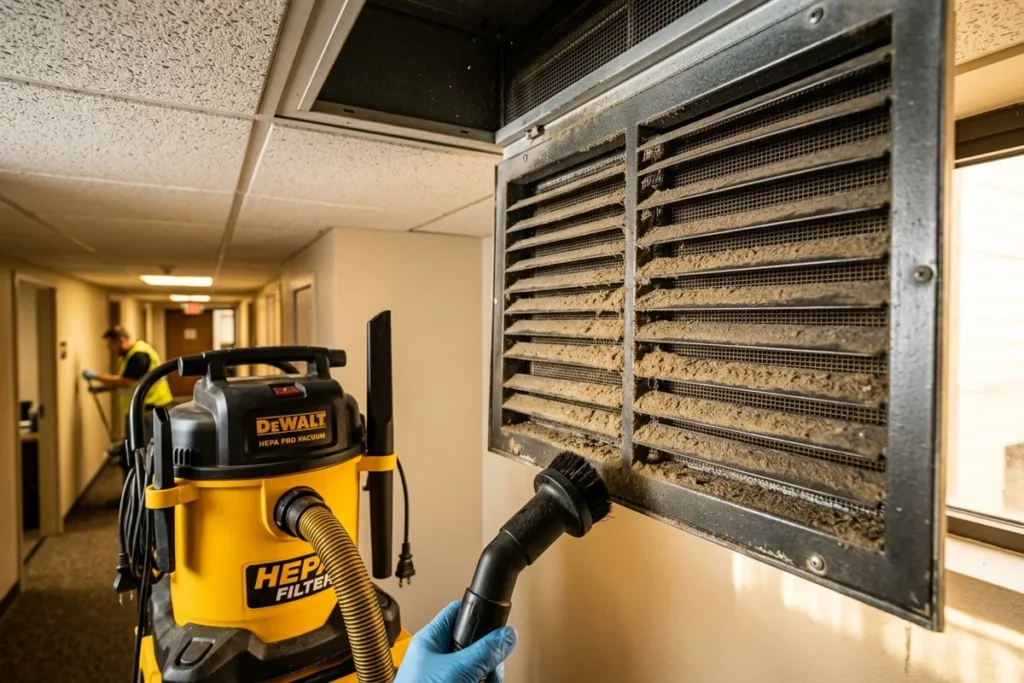
Air returns and supply vents accumulate Sonoran Desert particulates at accelerated rates due to our average annual dust storm count of 3-5 haboobs. These vents distribute airborne contaminants throughout your entire office when neglected. Clean supply vents monthly and air returns every two weeks during March through September when dust storms peak. Use HEPA-filtered vacuums to prevent redistributing particles into the air.
The EPA identifies indoor air quality as a top-five environmental health risk, with dirty HVAC systems circulating allergens, mold spores, and bacteria. Buildings near major thoroughfares like I-10 or Speedway Boulevard experience higher particulate buildup requiring more frequent attention.
2. Keyboard and Mouse Surfaces: Bacterial Hotspots

Office keyboards contain an average of 7,500 bacteria per swab, according to a CBT Nuggets hygiene study—significantly more than cafeteria tables. Compressed air removes debris between keys, while alcohol-based disinfectant wipes eliminate surface bacteria without damaging electronics. Target these devices during evening cleaning when employees have logged off.
Shared workstations and hot-desking arrangements common in co-working spaces along Congress Street require disinfection between each user to prevent cross-contamination.
3. Light Switch Plates and Thermostats
These vertical surfaces trap oils from repeated hand contact, creating breeding grounds for pathogens. A single light switch can host 217 bacteria per square inch based on NSF International testing. Disinfect with quaternary ammonium compounds or EPA-registered disinfectants that kill 99.9% of germs within contact time specifications.
Conference rooms see particularly heavy switch usage during business hours. Prioritize these spaces during mid-day touchpoint cleaning in addition to nightly services.
4. Office Phone Handsets and Headsets
Telephones harbor bacteria from respiratory droplets and skin contact, with studies showing phones can carry up to 25,000 germs per square inch. Remove debris from speaker grilles using soft brushes, then disinfect all contact surfaces. For shared phones in reception areas or conference rooms, implement disinfection after each extended call.
Medical offices and healthcare administration buildings throughout Tucson’s medical corridor on Alvernon Way face stricter requirements due to HIPAA-compliant cleaning standards.
5. Window Sills and Interior Glass
Tucson receives 286 days of sunshine annually, meaning windows accumulate dust, insect remains, and UV-degraded particles faster than most climates. Monthly interior window cleaning prevents buildup that reduces natural light penetration by up to 30%. Desert winds deposit fine particulates that bond to glass surfaces when combined with occasional monsoon moisture.
South-facing windows require more frequent attention due to intense solar exposure and higher temperatures that bake contaminants onto glass surfaces.
6. Break Room Refrigerator Handles and Coffee Maker Surfaces
Refrigerator handles rank among the most-touched surfaces in any office, accumulating E. coli, Salmonella, and Listeria according to NSF research. Beyond handles, clean rubber gaskets monthly to prevent mold growth in Tucson’s low-humidity environment, where condensation patterns differ from humid climates.
Coffee makers develop biofilm in water reservoirs within weeks. Descaling solutions remove mineral deposits from our hard water (Tucson averages 150-250 ppm hardness), while vinegar treatments eliminate bacterial buildup.
7. Bathroom Faucet Handles and Soap Dispensers
Restroom fixtures contacted before handwashing become contamination transfer points. Faucet handles require disinfection multiple times daily in high-traffic offices. Soap dispenser nozzles also need attention—refilling without cleaning creates bacterial reservoirs that contaminate fresh soap.
Touchless fixtures reduce contamination risks but require different maintenance protocols focused on sensor lenses and battery compartments that collect dust.
8. Under-Desk Cable Management and Power Strips
Cable clusters trap dust and provide harborage for desert insects, including cockroaches and scorpions that seek indoor refuge during extreme temperature periods. HEPA vacuums with crevice tools extract debris without disconnecting equipment. Inspect quarterly for signs of pest activity, particularly in ground-floor offices.
Buildings constructed before 1990 often lack proper cable channels, creating more significant dust accumulation challenges requiring specialized attention.
9. Elevator Buttons and Handrails
Multi-story buildings concentrate touchpoint contamination in elevators where dozens of employees contact identical surfaces daily. Elevator buttons can harbor norovirus for up to two weeks on untreated surfaces. Disinfect buttons and handrails every four hours during business operations in buildings with 50+ occupants.
Downtown high-rises along Congress and Broadway see particularly heavy elevator traffic requiring intensified protocols.
10. Office Chair Armrests and Pneumatic Lift Controls
Armrests absorb skin oils and bacteria through fabric or plastic surfaces that rarely receive cleaning attention. These contact points require weekly disinfection with appropriate cleaners—fabric requires enzyme-based solutions while hard surfaces tolerate stronger disinfectants.
Chairs in reception areas and waiting rooms cycle through multiple daily users, demanding more frequent sanitization than private office seating.
11. Water Cooler Dispensers and Ice Machine Bins
Water cooler spigots develop biofilm within 30 days without proper sanitation. The International Association of Plumbing and Mechanical Officials recommends weekly disinfection of all contact surfaces. Ice machines require monthly deep cleaning—our hard water accelerates mineral buildup on evaporator plates and in storage bins.
Tucson Water delivers drinking water averaging 180 ppm total dissolved solids, necessitating more aggressive descaling than facilities in soft water regions.
12. Exterior Door Thresholds and Entry Mats
Entry points accumulate desert sand, pollen, and debris that spreads throughout the facility when overlooked. Floor mats trap up to 80% of incoming dirt when properly maintained—but saturated mats become contamination sources. Vacuum commercial entry mats daily and deep-clean weekly using hot water extraction.
Monsoon season (July through September) doubles tracked-in debris, requiring increased threshold attention. Facilities near unpaved areas or construction zones face additional challenges.
Creating a Tucson-Specific Cleaning Schedule
Seasonal variations demand schedule adjustments. Increase HVAC vent cleaning from monthly to biweekly during spring and summer dust storm season. After monsoon rains, inspect for water infiltration around doors and windows—humidity spikes create mold growth opportunities within 24-48 hours despite our typically arid climate.
Medical facilities, dental offices, and healthcare administrative spaces require CDC-compliant protocols exceeding standard commercial requirements. Financial institutions and legal offices handling sensitive documents need protocols that protect confidential materials during cleaning operations.
Why Professional Commercial Cleaning Matters
Professional services implement systematic approaches, ensuring consistency across all critical touchpoints. JAN-PRO Cleaning & Disinfecting in Tucson uses a Medi-Clean® system backed by certification and ongoing quality assurance. Franchisees serving Tucson businesses undergo training in proper disinfectant contact times, cross-contamination prevention, and desert-specific challenges.
For offices throughout Midtown, the Foothills, and Oro Valley, partnering with certified professionals ensures compliance with health standards while freeing staff to focus on core business activities.
Frequently Asked Questions
How often should high-touch surfaces be disinfected in Tucson offices?
High-traffic offices require touchpoint disinfection every 4-6 hours during business operations, with comprehensive evening cleaning covering all surfaces. Smaller offices with under 20 employees can reduce frequency to twice daily—once mid-day and once after hours—though door handles, light switches, and bathroom fixtures need more attention.
What cleaning adjustments are necessary during Tucson’s monsoon season?
Increase entry mat maintenance to twice-daily vacuuming and weekly extraction cleaning during July through September. Monitor humidity levels—if indoor humidity exceeds 50%, add dehumidification and increase mold prevention protocols. Check for water intrusion after significant storms, particularly around exterior doors and older window seals.
Are standard cleaning products effective in Tucson’s hard water conditions?
Most disinfectants remain effective, but hard water reduces the efficiency of soap-based cleaners and leaves mineral deposits. Use chelating agents or water softeners for floor cleaning equipment. Descaling solutions for coffee makers, ice machines, and water fixtures need application every 2-3 weeks rather than monthly schedules appropriate for soft water regions.
Partner With JAN-PRO for Comprehensive Office Cleaning
JAN-PRO Cleaning & Disinfecting provides industry-leading office cleaning services in Tucson, serving local businesses with customized cleaning programs that address desert-specific challenges—from dust infiltration to hard water complications. Our certified franchisees deliver consistent quality backed by regular inspections and the Medi-Clean® disinfection system, proven effective against bacteria, viruses, and pathogens.
Whether you operate a medical center requiring CDC-compliant protocols, an auto dealership managing showroom presentation, or professional offices throughout metropolitan Tucson, our teams develop cleaning schedules matching your facility’s unique requirements.
Contact JAN-PRO Tucson today at (520) 398-4401 to schedule a free facility assessment and discover how professional commercial cleaning protects your employees, impresses your clients, and maintains the healthy workspace your business deserves.
About the Author
Carter James
 Carter James is Vice President of Strategy & Development, leading growth strategy, acquisitions, and multi-market expansion within a facility services platform. His background includes corporate strategy, M&A integration, and franchise development. He partners with senior leadership to drive disciplined execution, scalable operations, and long-term value through data-driven, high-accountability leadership.