Manufacturing facilities in Baton Rouge face recurring cleaning challenges including oil and chemical residue accumulation, dust control in high-volume production areas, regulatory compliance pressure from OSHA and FDA inspections, and maintaining sanitation in employee break rooms and restrooms.
These issues stem from the city’s concentration of petrochemical plants, food processing operations, and heavy industrial manufacturing that generate demanding cleaning environments requiring specialized protocols and trained personnel.
We’ve worked with manufacturers across Louisiana for over three decades, and the obstacles we encounter in Baton Rouge facilities reflect both the region’s industrial character and the humid Gulf Coast climate that accelerates contamination and microbial growth.
Oil, Grease, and Chemical Residue That Standard Cleaning Can’t Handle
Industrial facilities along the Mississippi River corridor accumulate petroleum-based residues that require degreasing agents and techniques beyond typical janitorial work. Standard mopping and wiping simply spread these contaminants rather than removing them.
The petrochemical manufacturing concentration in Baton Rouge means many facilities process or use oil-based products daily. This creates persistent buildup on floors, machinery surrounds, and high-traffic walkways.
What Makes Industrial Residue Different
- Bonding strength: Petroleum and chemical residues chemically bond to concrete and metal surfaces
- Safety hazards: Greasy floors create slip risks that increase workplace injury rates
- Equipment damage: Residue attracts abrasive dust particles that wear down machinery
- Odor persistence: Chemical compounds release vapors that standard ventilation cannot eliminate
- Regulatory exposure: Visible contamination triggers citations during safety inspections
Our industrial cleaning services in Baton Rouge address these issues with pH-balanced degreasers, pressure washing systems, and technicians trained in chemical safety protocols.
Dust Control in High-Production Manufacturing Environments
Production facilities generating sawdust, metal shavings, plastic particles, or food ingredients face constant dust accumulation that standard sweeping cannot control. Airborne particles settle on horizontal surfaces within hours of cleaning.
One food processing client we serve runs three production shifts daily. Before partnering with us, they struggled with flour dust coating overhead structures, light fixtures, and ventilation grilles despite nightly cleaning efforts. The issue wasn’t cleaning frequency—it was methodology.
Effective Dust Management Requires
| Challenge | Ineffective Approach | Professional Solution |
| Fine particulate matter | Dry sweeping that redistributes dust | HEPA-filtered vacuums that capture particles |
| Elevated surface accumulation | Ignoring areas above eye level | Scheduled high-dusting with extension tools |
| Ventilation system contamination | Surface cleaning only | Vent cover removal and interior cleaning |
| Continuous particle generation | Once-daily cleaning | Shift-aligned cleaning synchronized with production |
Humidity in Baton Rouge compounds dust problems. Moisture causes particles to clump and adhere to surfaces, making removal more difficult and creating conditions for mold growth on organic dust.
Meeting OSHA, FDA, and Industry-Specific Compliance Standards
Regulatory agencies inspect Baton Rouge manufacturing facilities regularly, and cleaning deficiencies frequently appear in violation notices. Compliance requires documented cleaning schedules, proper chemical usage, and verifiable sanitation in specific zones.
Common Compliance Gaps We Address
- Inadequate sanitation records: Facilities lack written proof of cleaning frequency and methods
- Cross-contamination risks: Using the same equipment in food-contact and non-food areas
- Chemical storage violations: Cleaning products stored improperly near production zones
- Restroom sanitation failures: High-touch surfaces cleaned irregularly or without approved disinfectants
- Waste handling issues: Improper segregation of regular trash and hazardous materials
As a commercial cleaning company in Louisiana, we maintain compliance documentation for every service visit, providing the audit trail inspectors expect.
Documentation That Protects Your Facility
Our certified franchisees provide written records including task completion logs, chemical safety data sheets, and disinfectant contact time verification. This documentation proves due diligence during inspections and litigation.
Break Room and Restroom Sanitation That Protects Employee Health
Employee common areas receive intense use across multiple shifts, creating sanitation challenges that impact workforce health and morale. Restrooms and break rooms require frequent attention with hospital-grade disinfection protocols.
Manufacturing environments compound these challenges. Workers entering break rooms carry production residues on clothing and hands, introducing contaminants that standard office cleaning doesn’t address.
High-Priority Sanitation Zones
- Door handles, light switches, and vending machine buttons touched hundreds of times daily
- Microwave controls, refrigerator handles, and coffee station surfaces
- Toilet flush handles, faucet controls, and paper towel dispensers
- Table surfaces where employees eat meals in close proximity
- Floor areas near sinks and restroom entrances that collect moisture and tracked debris
We implement color-coded cleaning systems that prevent cross-contamination between restrooms and food preparation areas. Separate microfiber cloths, mops, and buckets stay designated for specific zones.
Production Floor Safety and Appearance Between Shifts
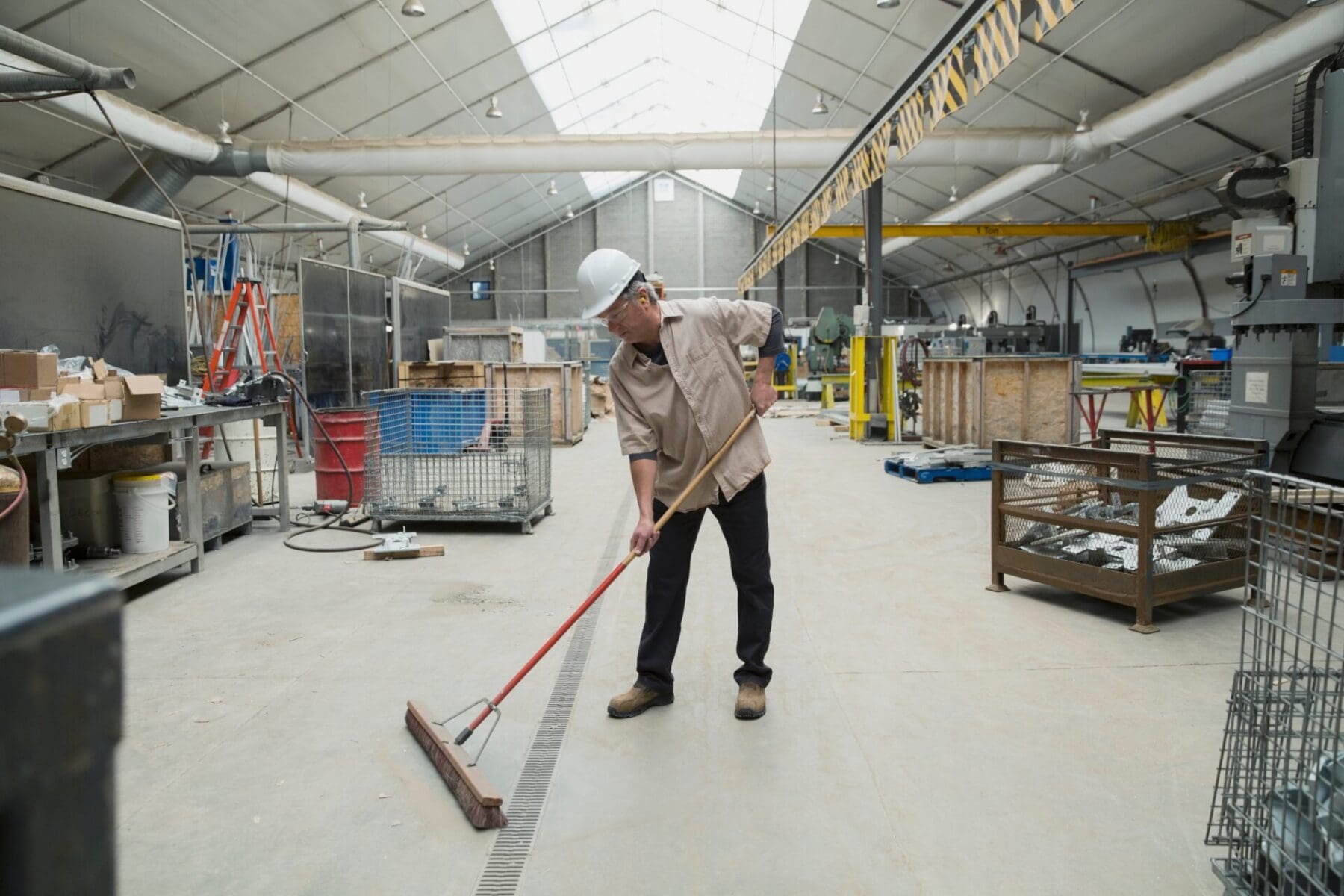
Twenty-four-hour manufacturing operations create tight cleaning windows between shift changes. Production floors must be cleaned quickly without disrupting operations or compromising safety standards.
Rapid Turnover Cleaning Protocol
- Pre-shift assessment: Walk-through identifies spills, debris accumulation, and safety hazards
- Priority zone cleaning: Focus on walkways, forklift paths, and employee stations first
- Waste removal: Clear production debris and empty trash receptacles
- Floor maintenance: Sweep or scrub high-traffic areas using quick-dry methods
- Final inspection: Verify clear pathways and dry floors before workforce arrival
This systematic approach ensures the next shift enters a clean, safe environment without production delays. Our teams coordinate with facility managers to understand equipment locations, restricted areas, and lockout-tagout requirements.
Professional Insight: The most successful manufacturing cleaning programs integrate with production schedules rather than working around them. When cleaning teams understand production flow, they anticipate problem areas and prevent issues rather than reacting to them.
Frequently Asked Questions
How often should manufacturing facilities in Baton Rouge schedule professional cleaning?
Most production facilities require daily cleaning for restrooms and break rooms, with production floor cleaning aligned to shift schedules. Heavy industrial operations benefit from twice-daily service, while administrative areas typically need three-times-weekly attention. Cleaning frequency should match production intensity and regulatory requirements specific to your industry.
What certifications should I look for in a manufacturing cleaning company?
Verify that cleaning providers maintain OSHA safety training, bloodborne pathogen certification, and industry-specific credentials like food safety training for food processing environments. Technicians should understand lockout-tagout procedures, confined space protocols, and proper chemical handling. Request documentation proving ongoing training and certification renewals.
Can professional cleaning help reduce workplace injury rates?
Consistent professional cleaning directly reduces slip-and-fall incidents by eliminating grease, controlling dust, and maintaining dry walkways. Proper sanitation also decreases illness-related absences by reducing pathogen transmission in common areas. Many manufacturers report measurable safety improvements within three months of implementing structured cleaning programs.
How do cleaning companies handle hazardous materials in manufacturing facilities?
Professional teams follow your facility’s hazardous waste protocols and maintain separate handling procedures for contaminated materials. We coordinate with environmental health and safety managers to ensure compliance with EPA and OSHA requirements. Hazardous waste never mixes with regular trash, and disposal follows documented chain-of-custody procedures.
What’s the difference between janitorial service and industrial cleaning?
Industrial cleaning addresses manufacturing-specific challenges like chemical residue, metal shavings, and regulatory compliance that standard janitorial work doesn’t cover. Industrial technicians train in safety protocols, use specialized equipment like pressure washers and industrial vacuums, and understand production environments. Janitorial service focuses on offices, while industrial cleaning handles production floors and process areas.
Partner With Experienced Manufacturing Cleaning Professionals
The cleaning challenges in Baton Rouge manufacturing facilities require more than basic janitorial service. They demand trained technicians who understand industrial environments, regulatory requirements, and the safety protocols that protect your workforce and your business.
JAN-PRO Cleaning & Disinfecting in Louisiana has served commercial and industrial clients for over 12 years. Our certified franchisees deliver consistent results through quality products, proven processes, and personal accountability.
We understand the unique demands of Louisiana’s manufacturing sector—from petrochemical facilities along the river corridor to food processors serving regional and national markets. Our teams work on your schedule, maintain compliance documentation, and provide the specialized cleaning your facility requires.
Ready to solve your facility’s cleaning challenges? Contact JAN-PRO Cleaning & Disinfecting in Louisiana at (504) 434-3949. We’ll assess your facility’s specific needs and create a cleaning program that protects your employees, maintains compliance, and supports your production goals.
About the Author
Carter James
 Carter James is Vice President of Strategy & Development, leading growth strategy, acquisitions, and multi-market expansion within a facility services platform. His background includes corporate strategy, M&A integration, and franchise development. He partners with senior leadership to drive disciplined execution, scalable operations, and long-term value through data-driven, high-accountability leadership.