Luxury Vinyl Plank (LVP) flooring has become one of the most widely used materials in modern commercial interiors. Office buildings, medical facilities, retail stores, and educational spaces increasingly rely on LVP because of its durability, water resistance, and aesthetic versatility. However, maintaining these surfaces requires proper vinyl floor cleaning techniques to preserve appearance and prevent premature wear.
Unlike traditional hardwood or ceramic tile, vinyl flooring has unique maintenance requirements. Improper cleaning methods can damage protective coatings, dull the surface finish, or create buildup that attracts more dirt over time. In commercial environments with constant foot traffic, structured cleaning programs are essential to protect these floors.
Understanding the correct procedures for maintaining vinyl floors helps facility managers extend the lifespan of the flooring while maintaining professional workplace environments.
What Is LVP Flooring?
LVP is a resilient flooring material designed to replicate the appearance of hardwood while offering greater resistance to moisture and wear. It is composed of several layered components that contribute to its durability:
- Protective wear layer
- Printed design layer
- Vinyl core layer
- Backing layer for stability
The protective wear layer is particularly important because it shields the surface from scratches, stains, and chemical damage. Proper vinyl floor cleaning methods help preserve this layer and maintain the floor’s appearance over time.
Because of these protective layers, LVP floors require cleaning solutions and techniques specifically designed for resilient flooring materials.
Why Vinyl Floors Are Popular in Office Buildings
Commercial offices often choose LVP flooring because it balances durability with visual appeal. Compared with other flooring options, vinyl plank floors offer several operational advantages.
Common benefits include:
- Resistance to water and moisture
- Durability in high-traffic areas
- Lower maintenance compared with hardwood
- Noise reduction in busy work environments
- Design flexibility for modern office interiors
These advantages make LVP a practical choice for corporate offices, coworking spaces, healthcare facilities, and educational buildings. Businesses searching for office cleaning in Lafayette often include vinyl floor maintenance as part of their overall facility cleaning programs.
Common Contaminants Found on Office Vinyl Floors
Office environments generate a wide range of debris and contaminants that accumulate on flooring surfaces throughout the workday.
Typical contaminants include:
- Dust and airborne particles
- Dirt tracked indoors from parking lots and sidewalks
- Food crumbs and beverage spills
- Oils from shoes and office equipment
- Residue from cleaning products
These materials gradually build up on the floor surface and along plank seams. Without proper cleaning procedures, contaminants may scratch the wear layer or create dull patches across the floor.
Recommended Steps for Vinyl Floor Cleaning in Offices
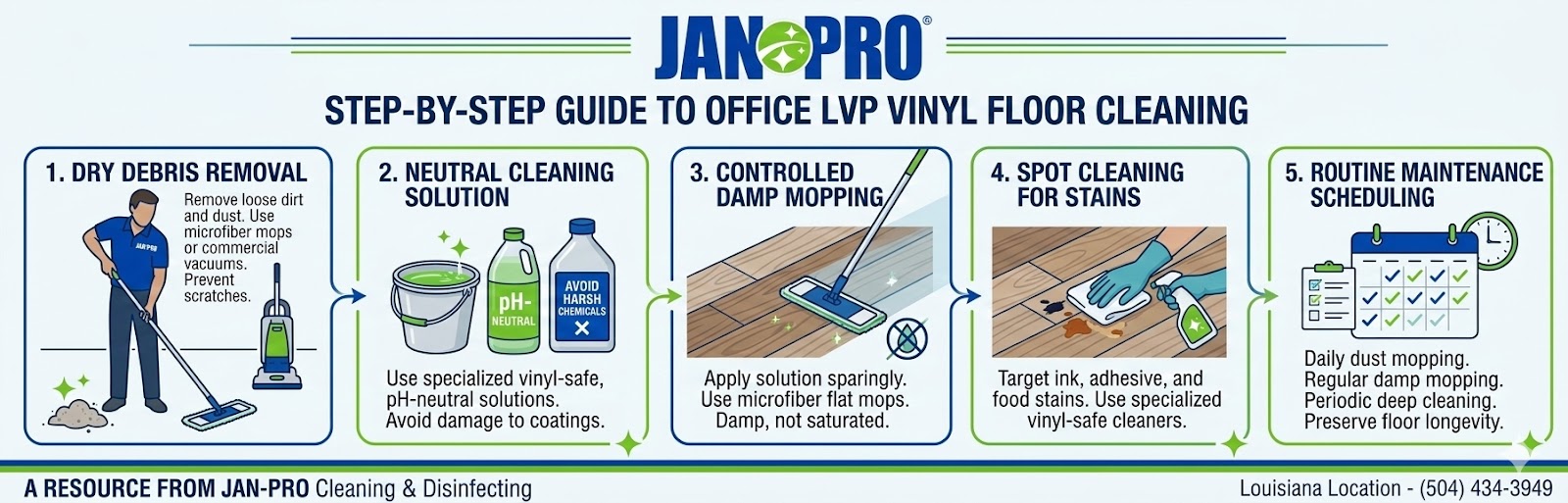
Professional cleaning teams typically follow structured cleaning procedures designed to protect resilient flooring materials.
Step 1: Dry Debris Removal
The first step involves removing loose dirt and dust using microfiber dust mops or commercial vacuums designed for hard surfaces. This step prevents abrasive debris from scratching the wear layer during wet cleaning.
Step 2: Neutral Cleaning Solution
Vinyl floors should be cleaned using pH-neutral cleaning solutions specifically formulated for resilient flooring. Harsh chemicals or abrasive cleaners can damage protective coatings. Cleaning solutions are usually diluted according to the manufacturer’s specifications to avoid residue buildup.
Step 3: Controlled Damp Mopping
Excess water should be avoided when cleaning LVP floors. Instead, microfiber mops or flat mop systems are used to apply controlled amounts of cleaning solution. Damp mopping removes soil without allowing water to seep into seams or edges.
Step 4: Spot Cleaning for Stains
Some contaminants require targeted cleaning methods.
Examples include:
- Ink marks
- Adhesive residue
- Food stains
Specialized vinyl-safe cleaners are often used to remove these stains without affecting the protective layer.
Step 5: Routine Maintenance Scheduling
Routine cleaning schedules help prevent soil accumulation and protect flooring longevity.
Common maintenance frequencies include:
- Daily dust mopping in high-traffic areas
- Regular damp mopping
- Periodic deep cleaning
Facilities implementing janitorial services in Louisiana typically incorporate vinyl floor maintenance into structured cleaning routines.
Cleaning Methods to Avoid on Vinyl Flooring
Certain cleaning techniques commonly used for other floor types can damage LVP surfaces.
Cleaning professionals generally avoid:
- Steam cleaning, which may warp vinyl planks
- Harsh chemical degreasers
- Abrasive scrub pads
- Excessive water saturation
- Wax coatings not designed for vinyl
Improper floor care can gradually degrade the wear layer and reduce the floor’s resistance to stains and scratches.
How Environmental Conditions Affect Vinyl Floors in Louisiana
Louisiana’s climate presents unique challenges for flooring maintenance. High humidity levels, frequent rainfall, and heavy foot traffic introduce moisture and debris into commercial buildings.
Environmental factors that affect vinyl flooring include:
- Moisture tracked indoors during storms
- Increased dust from construction or outdoor activity
- Mud and debris entering through building entrances
These conditions require consistent maintenance routines to prevent surface damage.
Organizations such as the U.S. Environmental Protection Agency (EPA) emphasize the importance of routine cleaning to reduce indoor pollutants and maintain healthy building environments. Effective floor cleaning programs help remove dust and contaminants that may otherwise accumulate inside workplaces.
Integrating Vinyl Floor Maintenance Into Facility Cleaning Programs
Vinyl floor cleaning is rarely performed as a standalone service in commercial environments. Instead, it is typically integrated into broader facility maintenance strategies.
Comprehensive programs may include:
- Daily janitorial cleaning
- Restroom sanitation
- Trash removal
- Surface disinfecting
- Hard floor maintenance
Many organizations rely on customized commercial cleaning programs that adapt cleaning procedures to specific building layouts and operational needs. This structured approach ensures that flooring systems receive appropriate maintenance without disrupting daily business operations.
Conclusion
Luxury Vinyl Plank flooring has become a popular choice for office buildings due to its durability, water resistance, and modern appearance. However, maintaining these surfaces requires specialized vinyl floor cleaning techniques designed to protect the material’s wear layer.
Routine debris removal, pH-neutral cleaning solutions, and controlled damp mopping are essential practices for preserving vinyl floors in high-traffic commercial environments. Avoiding harsh chemicals, excessive moisture, and abrasive cleaning tools also helps extend the lifespan of these floors.
By incorporating structured maintenance routines into broader facility cleaning programs, commercial buildings can maintain clean, professional environments while protecting their flooring investments.
JAN-PRO Cleaning & Disinfecting and Commercial Floor Care
Commercial buildings often require structured maintenance plans that address flooring, sanitation, and daily cleaning tasks. JAN-PRO Cleaning & Disinfecting in Louisiana has supported facility maintenance for more than 30 years through professional cleaning systems and trained franchisees.
Certified franchisees follow detailed procedures when performing vinyl floor cleaning, helping remove debris and maintain the condition of resilient flooring materials commonly found in offices and commercial facilities.
JAN-PRO Cleaning & Disinfecting in Louisiana operates from 200 Commercial Sq, Slidell, LA, and can be reached at (504) 434-3949, supporting businesses across the region with organized cleaning programs designed for commercial environments.
About the Author
Carter James
 Carter James is Vice President of Strategy & Development, leading growth strategy, acquisitions, and multi-market expansion within a facility services platform. His background includes corporate strategy, M&A integration, and franchise development. He partners with senior leadership to drive disciplined execution, scalable operations, and long-term value through data-driven, high-accountability leadership.