In Louisiana offices, mold often starts in places employees rarely notice first: under break room sinks, behind refrigerators, around restroom plumbing, inside janitorial closets, and within HVAC vents. In high-humidity environments like Slidell, even small moisture problems can quickly turn into indoor air quality issues that affect employee comfort, create persistent odors, damage building materials, and increase maintenance costs.
According to the EPA, mold can begin growing on damp surfaces within 24–48 hours. Louisiana’s humid subtropical climate creates constant moisture pressure on commercial facilities, especially in office bathrooms, shared kitchens, employee break rooms, medical offices, and high-traffic workspaces where condensation and poor ventilation allow airborne mold spores to spread.
Preventing mold in commercial buildings requires more than surface cleaning. Effective prevention depends on humidity control, rapid leak response, HVAC management, ventilation, moisture monitoring, and consistent facility maintenance designed specifically for Gulf Coast climate conditions.
Why Louisiana Offices Face Higher Mold Risk
Louisiana’s climate creates ideal conditions for mold growth. The state receives 60+ inches of annual rainfall and consistently high humidity, which challenge HVAC systems.
Bathrooms and break rooms become particularly vulnerable because they add moisture from sinks, toilets, and appliances to already humid air. The combination of poor ventilation, condensation on cold surfaces, and organic materials like drywall creates perfect breeding grounds for mold spores that exist naturally in indoor environments.
Commercial buildings in Slidell and surrounding areas face additional challenges from seasonal flooding and proximity to Lake Pontchartrain. Water intrusion from storms, roof leaks, or plumbing failures can saturate hidden areas behind walls and under flooring, where mold colonies establish themselves before visible signs appear.
Control Humidity Through HVAC Management
Keep indoor humidity between 30-50% relative humidity to prevent mold growth. HVAC systems must run continuously to dehumidify air, not just cool it. Set systems to maintain consistent temperatures rather than using setback modes that allow humidity to spike during off-hours. Replace HVAC filters monthly during humid months and quarterly during drier periods to maintain airflow efficiency.
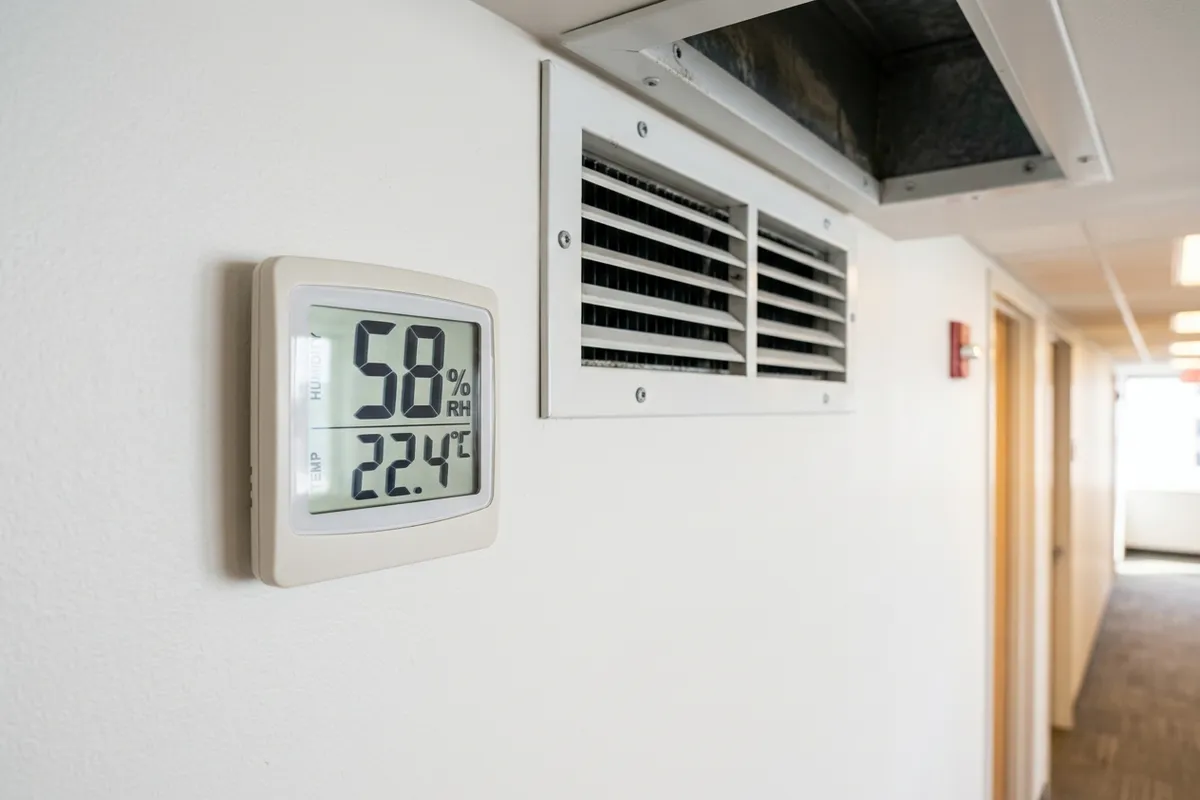
Install hygrometers in bathrooms and break rooms to monitor humidity levels. When readings exceed 55%, investigate whether HVAC capacity is adequate or if additional dehumidification is needed. Consider adding exhaust fans rated for commercial use that remove at least 50 cubic feet per minute (CFM) in bathrooms and 100+ CFM in break rooms with dishwashers.
Fix Water Leaks and Plumbing Issues Immediately
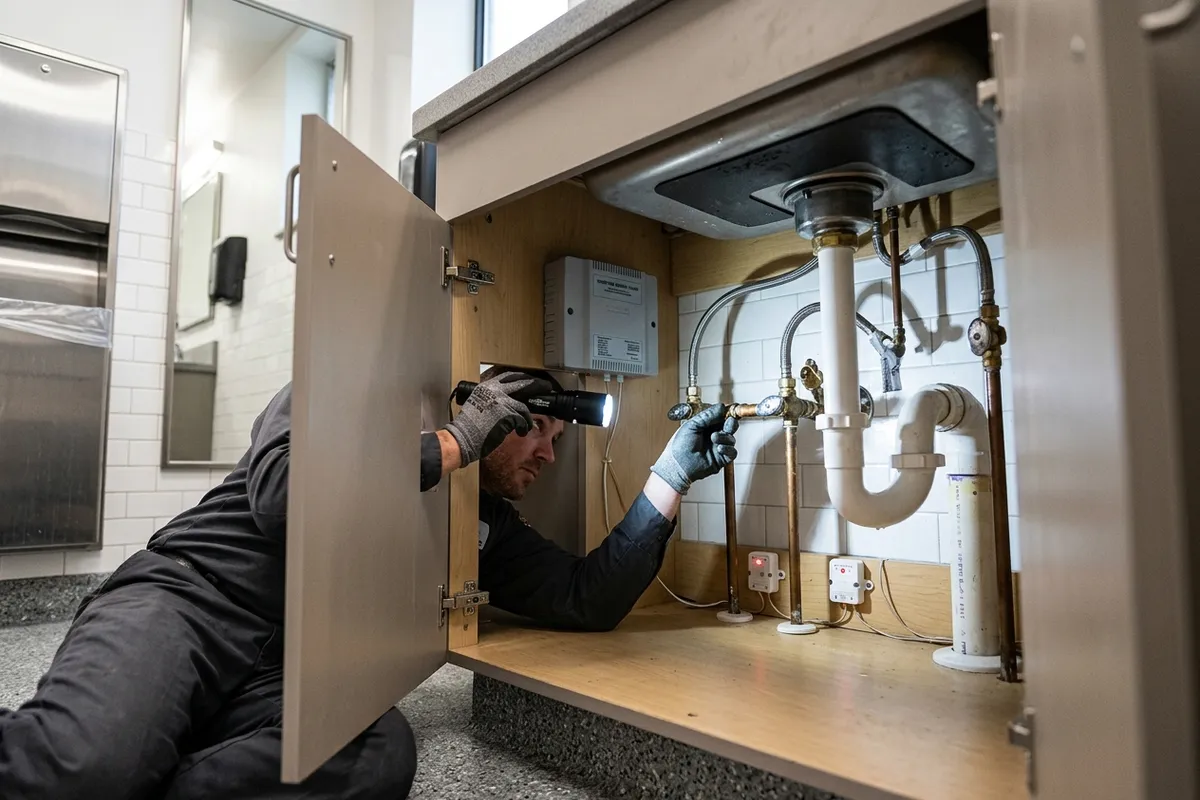
Address all water leaks within 24 hours to prevent mold colonization. According to the CDC, materials that remain wet for more than 48 hours are likely to produce mold growth. Check under sinks weekly for signs of moisture, corroded pipes, or water stains. Inspect toilet seals and supply lines quarterly, as slow leaks often go unnoticed until significant damage occurs.
Common problem areas include refrigerator water lines in break rooms, which can leak behind appliances where water pools undetected. Ice maker connections, particularly prone to failures, should be inspected monthly. Install water detection alarms in areas with appliances or plumbing concentrations to catch leaks during nights and weekends.
Improve Ventilation and Air Circulation
Run exhaust fans for 20 minutes after bathroom use and continuously during break room occupancy. Proper ventilation removes moisture-laden air before condensation forms on surfaces. Keep bathroom doors open when facilities aren’t in use to promote air exchange with climate-controlled hallways.
Position air returns strategically to pull humid air from bathrooms and break rooms. Blocked returns or inadequate return air pathways cause moisture to linger. Ensure supply vents aren’t blowing directly onto cold surfaces like mirrors or windows where condensation will form.
Establish Daily Cleaning Protocols
Wipe down all wet surfaces after each use to remove standing water where mold spores can germinate. Focus on countertops around sinks, faucet bases, toilet exteriors, and floor areas near fixtures. Use microfiber cloths that absorb more water than traditional cleaning rags.
Clean drain traps weekly with enzymatic cleaners that break down organic material without harsh chemicals. Mold grows rapidly in the biofilm that forms inside drains. Remove and sanitize drain covers monthly to eliminate buildup that traps moisture and provides nutrients for mold colonies.
Use Mold-Resistant Materials and Coatings
Replace damaged drywall with mold-resistant versions that use fiberglass facing instead of paper. Paper-faced drywall provides nutrients that feed mold growth, while fiberglass-faced products resist colonization. Paint walls with antimicrobial coatings designed for high-moisture environments.
Install tile or solid surface materials in areas prone to splashing. Grout should be sealed annually to prevent water penetration. Consider epoxy grout in shower areas and around sinks, as it resists moisture penetration better than traditional cement-based grout.
Address Condensation on Cold Surfaces
Condensation forms when warm, humid air contacts cold surfaces like metal fixtures, mirrors, or inadequately insulated walls. Install insulation around cold water pipes to prevent condensation from dripping onto floors or into wall cavities. Wrap exposed pipes with foam insulation rated for at least R-3.
Add heat sources near cold exterior walls in bathrooms and break rooms. Small electric heaters or heated towel racks can raise surface temperatures above the dew point where condensation forms. In Slidell’s climate, this is particularly important during the summer months when air conditioning creates significant temperature differentials.
Maintain Break Room Appliances
Clean refrigerator drip pans monthly to remove standing water and organic debris. These pans collect condensation that evaporates under normal conditions, but in humid climates, water can accumulate and grow mold. Pull refrigerators away from walls quarterly to check for water damage on flooring and walls.
Inspect dishwasher seals and connections for leaks. Run empty cleaning cycles monthly with dishwasher cleaner to remove buildup inside the unit. Check that dishwashers drain completely after each cycle, as standing water indicates drainage problems that require immediate attention.
Train Staff on Prevention Practices
Educate employees to report water leaks, musty odors, or visible mold immediately. Post signage in bathrooms reminding users to run exhaust fans and report drips. Provide contact information for facility management so issues can be addressed quickly.
Assign break room monitors who ensure appliances are functioning correctly and surfaces stay dry. Simple actions like wiping up spills immediately and running exhaust fans during coffee maker use significantly reduce mold risk.
Schedule Professional Inspections
Quarterly inspections by professional office cleaning services in Louisiana identify problems before they become visible mold growth. Trained technicians check hidden areas like above ceiling tiles, inside HVAC systems, and behind wall-mounted fixtures where moisture accumulates unnoticed.
Professional cleaning teams use commercial-grade disinfectants and moisture meters that detect elevated readings through surfaces. They can spot early warning signs like discoloration, musty odors, or moisture stains that indicate developing problems.
Professional Janitorial Services Across Louisiana
If your facility experiences recurring restroom odors, persistent humidity, visible condensation, ceiling stains, or unexplained moisture around break rooms and plumbing fixtures, hidden mold growth may already be developing behind walls, under flooring, or inside ventilation systems.
JAN-PRO Cleaning & Disinfecting helps Louisiana businesses reduce mold risk through proactive cleaning, moisture-control practices, restroom sanitation, and high-touch facility maintenance tailored for Gulf Coast humidity conditions. Certified cleaning franchisees work with offices, medical facilities, schools, industrial workspaces, and commercial properties to identify high-risk moisture areas before they become larger indoor air quality or structural problems.
Consistent service from the same reliable cleaning team helps facility managers maintain accountability, monitor developing moisture issues, and improve long-term building cleanliness in bathrooms, kitchens, break rooms, and other high-humidity areas.
Contact JAN-PRO Cleaning & Disinfecting at (504) 434-3949 or visit the Slidell office at 200 Commercial Sq, Slidell, LA to discuss a customized commercial cleaning and mold prevention plan for your facility.
Frequently Asked Questions
How quickly can mold grow in Louisiana office bathrooms?
Mold can begin growing within 24-48 hours on damp surfaces in Louisiana’s humid climate. High ambient humidity levels above 75% accelerate colonization, making an immediate response to water issues critical for prevention.
What humidity level prevents mold in commercial buildings?
Maintain indoor humidity between 30-50% relative humidity to prevent mold growth. Levels above 60% create conditions where mold spores can germinate and establish colonies on organic materials like drywall, wood, and fabric.
How often should commercial bathrooms be cleaned to stop mold?
Commercial bathrooms require daily cleaning with surface disinfection and weekly deep cleaning of drains, grout lines, and hidden areas. High-traffic facilities may need multiple daily cleanings to remove moisture and organic material that supports mold growth.
About the Author
Carter James
 Carter James is Vice President of Strategy & Development, leading growth strategy, acquisitions, and multi-market expansion within a facility services platform. His background includes corporate strategy, M&A integration, and franchise development. He partners with senior leadership to drive disciplined execution, scalable operations, and long-term value through data-driven, high-accountability leadership.