Medical cleaning in OKC refers to the process of cleaning and disinfecting healthcare environments using regulated protocols designed to reduce pathogens such as MRSA and prevent cross-contamination between patients, staff, and surfaces. In Oklahoma City clinics, where patient turnover and seasonal illness trends influence contamination risk, these protocols are essential for maintaining safe clinical environments.
Facilities across Oklahoma City—including outpatient clinics, urgent care centers, and specialty practices—must follow strict hygiene standards aligned with federal guidance. According to the Centers for Disease Control and Prevention (CDC), proper environmental cleaning is a critical component in reducing healthcare-associated infections. This article explains how medical cleaning works, how MRSA spreads, and how clinics in Oklahoma City apply structured disinfection practices to reduce risk.
What Is Medical Cleaning in OKC?
Medical cleaning is a controlled disinfection process that uses EPA-registered products, defined workflows, and regulatory compliance to reduce healthcare-associated pathogens and prevent contamination in clinical environments.
Unlike general janitorial services, medical cleaning is designed specifically for infection control. It follows guidance from the Centers for Disease Control and Prevention (CDC), the Occupational Safety and Health Administration (OSHA), and the Environmental Protection Agency (EPA). These frameworks define how high-touch surfaces, medical equipment, and patient areas must be disinfected.
Core elements include:
- Use of hospital-grade disinfectants approved by the EPA
- Strict adherence to dwell times for pathogen elimination
- Separation of cleaning zones to avoid cross-contact
- Documentation for compliance and audit readiness
In clinical environments, medical office cleaning is defined by its focus on infection prevention rather than appearance. For Oklahoma City, this means applying repeatable cleaning workflows in facilities experiencing fluctuating patient volumes, particularly during peak illness periods in late fall and winter.
How Does MRSA Spread in Clinical Settings?
MRSA spreads in clinical settings through contact with contaminated surfaces, shared medical equipment, and direct human interaction, making consistent disinfection protocols essential to interrupt transmission.
Methicillin-resistant Staphylococcus aureus (MRSA) is resistant to multiple antibiotics and can survive on surfaces for extended periods. This increases the likelihood of indirect transmission in healthcare environments.
Common transmission pathways include:
- High-touch surfaces such as door handles, exam tables, and waiting room seating
- Shared devices like thermometers and blood pressure cuffs
- Incomplete disinfection caused by improper dwell time
For Oklahoma City clinics, even small inconsistencies in cleaning execution can increase contamination risk. This is especially relevant in high-traffic facilities such as those associated with major healthcare systems like INTEGRIS Health and OU Health, where patient flow requires rapid but controlled disinfection between visits.
In practice, outpatient surgical centers often face tight turnover windows. Without proper disinfectant contact time, pathogens such as MRSA may persist, increasing exposure risk for subsequent patients.
What Protocols Define Healthcare Facility Disinfection in OKC?
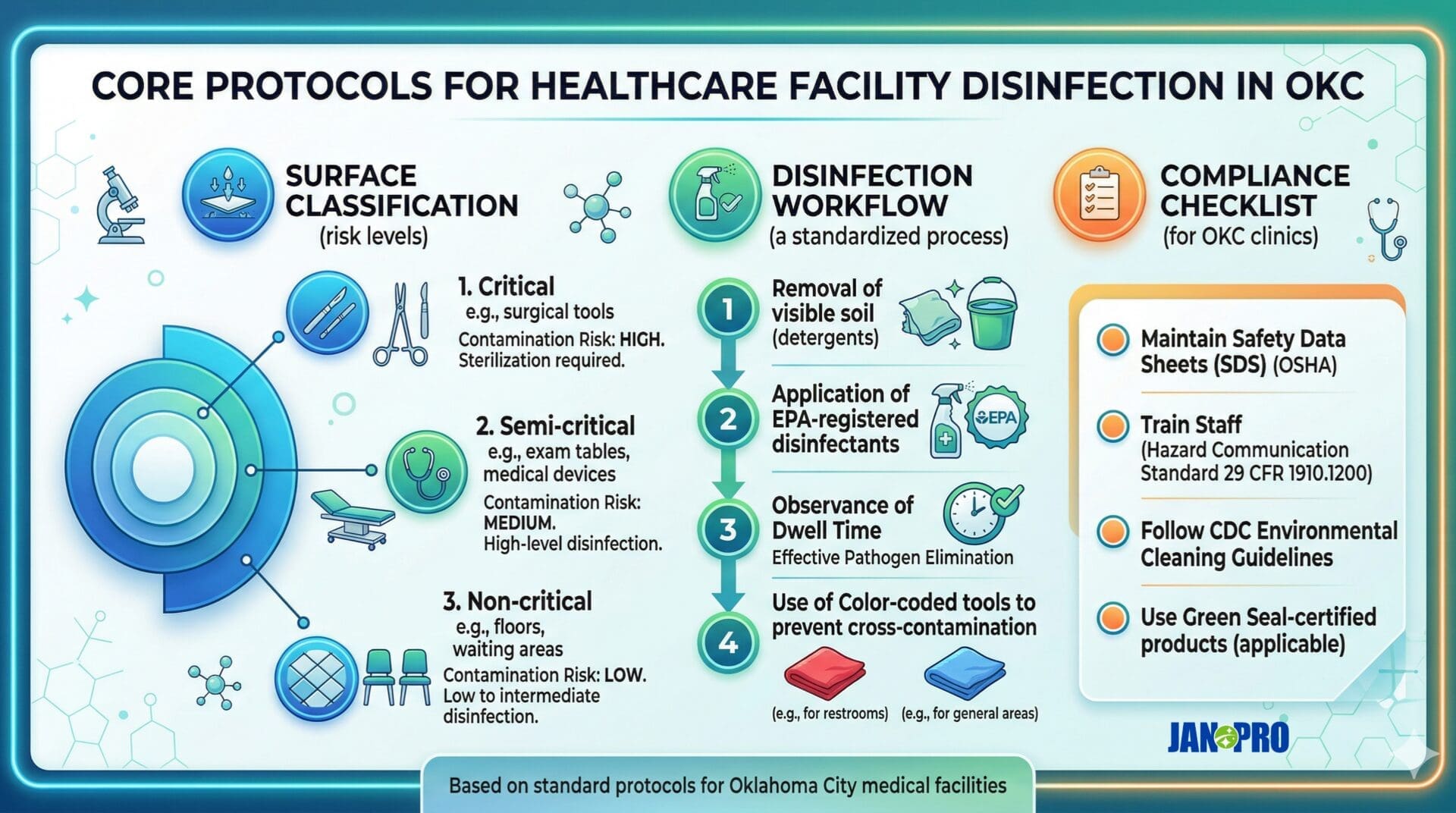
Healthcare facility disinfection in OKC is defined by structured protocols that classify surfaces by risk level, standardize cleaning workflows, and ensure compliance with CDC and OSHA guidelines to reduce pathogen transmission.
Effective disinfection programs rely on clearly defined steps aligned with industry standards such as the ISSA Clean Standard and Cleaning Industry Management Standard (CIMS).
Surface Risk Classification
- Critical surfaces: surgical instruments and invasive devices
- Semi-critical surfaces: exam tables and diagnostic tools
- Non-critical surfaces: floors, walls, and administrative areas
Standard Disinfection Workflow
- Remove visible soil using detergents
- Apply EPA-registered disinfectant
- Allow proper dwell time
- Use designated tools for each zone
Compliance Requirements
- Maintain Safety Data Sheets (SDS) per OSHA standards
- Train staff under Hazard Communication Standard (29 CFR 1910.1200)
- Follow CDC environmental cleaning recommendations
- Use certified products such as those meeting Green Seal criteria
For Oklahoma City, this means implementing cleaning systems that can scale across facilities ranging from small neighborhood clinics in areas like Moore and Edmond to larger multi-specialty practices.
Medical Cleaning in OKC: Risk Zones and Disinfection Frequency
Healthcare cleaning in OKC aligns cleaning frequency with contamination risk levels, ensuring that high-touch and high-risk areas receive more frequent disinfection to reduce pathogen transmission.
The table below outlines how disinfection frequency typically corresponds to risk zones in Oklahoma healthcare environments:
| Facility Area | Risk Level | Recommended Frequency | Key Pathogens Targeted | Source Basis |
| Exam Rooms | High | After each patient | MRSA, Influenza | CDC Guidelines |
| Waiting Areas | Medium | Every 2–4 hours | Respiratory viruses | CDC + Oklahoma trends |
| Restrooms | High | Hourly during peak use | E. coli, Norovirus | EPA + CDC |
| Administrative Offices | Low | Daily | General bacteria | Industry standards |
| Medical Equipment | High | After each use | MRSA, C. diff | CDC Guidelines |
This framework reflects how clinics adjust cleaning frequency based on patient volume, seasonal illness patterns, and surface risk levels.
Why Professional Cleaning Systems Improve Infection Control Outcomes
Professional cleaning systems improve infection control outcomes by standardizing disinfection processes, reducing variability, and ensuring consistent compliance with healthcare regulations across clinical environments.
Structured systems incorporate:
- Color-coded microfiber tools to isolate contamination zones
- Electrostatic application methods for uniform disinfectant coverage
- Routine inspections and documentation for accountability
- Ongoing training aligned with industry standards
This approach is particularly relevant in multi-tenant medical buildings and high-density healthcare corridors, where shared spaces such as elevators and waiting areas require coordinated cleaning practices.
In practice, inconsistencies in cleaning execution often occur in facilities without defined systems. Standardized programs reduce these gaps by ensuring repeatable processes across all areas. Many clinics integrate these protocols with commercial cleaning services in Oklahoma City to maintain consistency beyond clinical spaces.
How Cross-Contamination Is Prevented in Clinic Cleaning
Cross-contamination in clinic cleaning is prevented by separating cleaning zones, following directional workflows, and using properly managed tools and disinfectants to limit pathogen transfer between surfaces.
Prevention strategies include:
- Assigning color-coded tools to specific areas
- Cleaning from low-risk to high-risk zones
- Disposing of contaminated materials correctly
- Maintaining strict hand hygiene between tasks
High-risk areas include exam tables, medical carts, door handles, and waiting room seating. In Oklahoma City clinics, seasonal increases in respiratory illness—particularly during colder months—can elevate contamination levels in shared spaces.
Facilities focused on medical care often implement additional controls, such as isolation room protocols and enhanced personal protective equipment (PPE). According to the EPA, disinfectants must be used exactly as labeled to ensure effectiveness, particularly against resistant pathogens.
Get Reliable Healthcare Cleaning in OKC
Healthcare facilities in Oklahoma City depend on structured medical cleaning to reduce risks associated with MRSA and cross-contamination. JAN-PRO Cleaning & Disinfecting provides disinfection programs aligned with CDC and OSHA guidelines, using EPA-approved products and defined workflows for clinical environments.
Services are delivered across multiple areas throughout Oklahoma City, including Edmond, Moore, Bethany, Del City, among others, supporting clinics, outpatient centers, and medical offices with consistent infection control practices. JAN-PRO Cleaning & Disinfecting, located at 1105 Sovereign Row, Oklahoma City, OK, can be contacted at (405) 606-3300.
Conclusion
Medical cleaning in OKC is a specialized process focused on infection control, regulatory compliance, and consistent execution in healthcare environments. MRSA prevention depends on proper disinfection techniques, including dwell time adherence, surface classification, and standardized workflows.
Effective cleaning programs align frequency with risk levels, reduce variability through structured systems, and prevent cross-contamination using disciplined processes. These elements define how clinics in Oklahoma City maintain safe and compliant environments for patients and staff.
About the Author
Carter James
 Carter James is Vice President of Strategy & Development, leading growth strategy, acquisitions, and multi-market expansion within a facility services platform. His background includes corporate strategy, M&A integration, and franchise development. He partners with senior leadership to drive disciplined execution, scalable operations, and long-term value through data-driven, high-accountability leadership.