
Restaurant cleaning in Norman is not just about making a dining room look presentable before opening. For restaurant owners and managers near Campus Corner, Downtown Norman, Main Street, Sooner Mall, and the University of Oklahoma (OU), cleaning affects customer experience, food safety routines, employee workflow, odor control, and inspection readiness.
One missed restroom check, one greasy kitchen path, or one sticky entryway can quickly become a guest complaint or a safety concern. The checklist below is designed to help Norman restaurants organize cleaning by area, frequency, and operational risk, so managers can see what should be handled daily, weekly, monthly, and seasonally without guessing.
Restaurant Cleaning in Norman: Daily, Weekly, Monthly, and Seasonal Checklists
A restaurant cleaning checklist should separate high-frequency guest-facing tasks from deeper back-of-house cleaning. Dining areas, restrooms, kitchen floors, food prep zones, storage rooms, trash areas, and entryways all need different cleaning frequencies based on traffic, grease, moisture, and seasonal conditions.
Use this checklist as a working guide for managers, shift leads, and cleaning teams. It is not meant to replace health department requirements or internal food safety procedures, but it does give restaurants a more organized way to manage cleaning expectations.
Norman Restaurant Cleaning Frequency Checklist
| Area | Daily Tasks | Weekly Tasks | Monthly / Seasonal Tasks | Why It Matters |
| Entryways & Front Doors | Sweep, mop, clean glass, wipe handles, check mats | Detail corners, clean thresholds, inspect mat condition | Increase cleaning during rain, red dirt tracking, pollen season, and OU event traffic | Entryways are the first cleanliness signal customers notice |
| Dining Room | Sanitize tables after each guest, wipe chairs/booths, sweep/mop floors, remove trash | Detail booth seams, chair legs, baseboards, window ledges, and décor | Machine-clean floors or detail high-traffic lanes as needed | Crumbs, sticky floors, and dusty ledges affect guest perception |
| Restrooms | Check multiple times daily, clean toilets, sinks, mirrors, handles, floors, and dispensers | Detail grout, partitions, vents, corners, and fixture bases | Review odor sources, drains, and deep-clean tile during high-traffic seasons | Restrooms are one of the fastest ways customers judge a restaurant |
| Kitchen Prep Areas | Clean and sanitize prep tables, counters, sinks, splash zones, and handles | Detail wall areas, shelving edges, and under-counter spaces | Review chemical storage, product labels, and cleaning procedures | Supports safer food handling and smoother kitchen workflow |
| Cookline & Kitchen Floors | Degrease and mop floors, especially near fryers, grills, and dish areas | Scrub corners, floor edges, and under-equipment zones where accessible | Schedule deep degreasing based on menu type and grease load | Grease buildup can create odor, slip risk, and pest attraction |
| Walk-Ins & Storage Areas | Clean spills immediately, remove debris, keep pathways clear | Mop floors, wipe shelving, clean handles and doors | Inspect for moisture, packaging buildup, and hard-to-reach residue | Storage areas can quietly collect food debris and moisture |
| Trash, Mop, and Service Areas | Empty trash, clean around bins, rinse spills, keep mop sink clear | Clean bin exteriors, surrounding floors, and service corridors | Increase attention during summer heat or heavy patio use | Odor and residue often start in back-of-house zones |
| Patios & Exterior Seating | Clean tables, chairs, visible debris, and trash areas when in use | Sweep or wash high-use patio surfaces | Increase cleaning during spring pollen, storms, wind, and outdoor dining periods | Norman weather can quickly bring dust, pollen, and debris into outdoor seating |
In practice, a restaurant near Campus Corner may need extra attention to restrooms, entry glass, and dining room floors during OU football weekends, graduation season, or large campus events.
A restaurant near Interstate 35 or a retail corridor may deal with more tracked-in dirt, parking lot debris, and takeout traffic around the front counter. The right checklist should adjust to those patterns instead of treating every day the same.
What Should Be Cleaned Every Day in a Restaurant?
Daily restaurant cleaning should focus on areas touched by guests and staff, surfaces connected to food preparation, floors exposed to spills or grease, and spaces that can create odors. The goal is to prevent small issues from becoming visible complaints, safety concerns, or closing-time cleaning backlogs.
Daily cleaning is the foundation of restaurant maintenance. If these tasks are inconsistent, weekly or monthly deep cleaning becomes harder and more expensive because buildup has already formed.
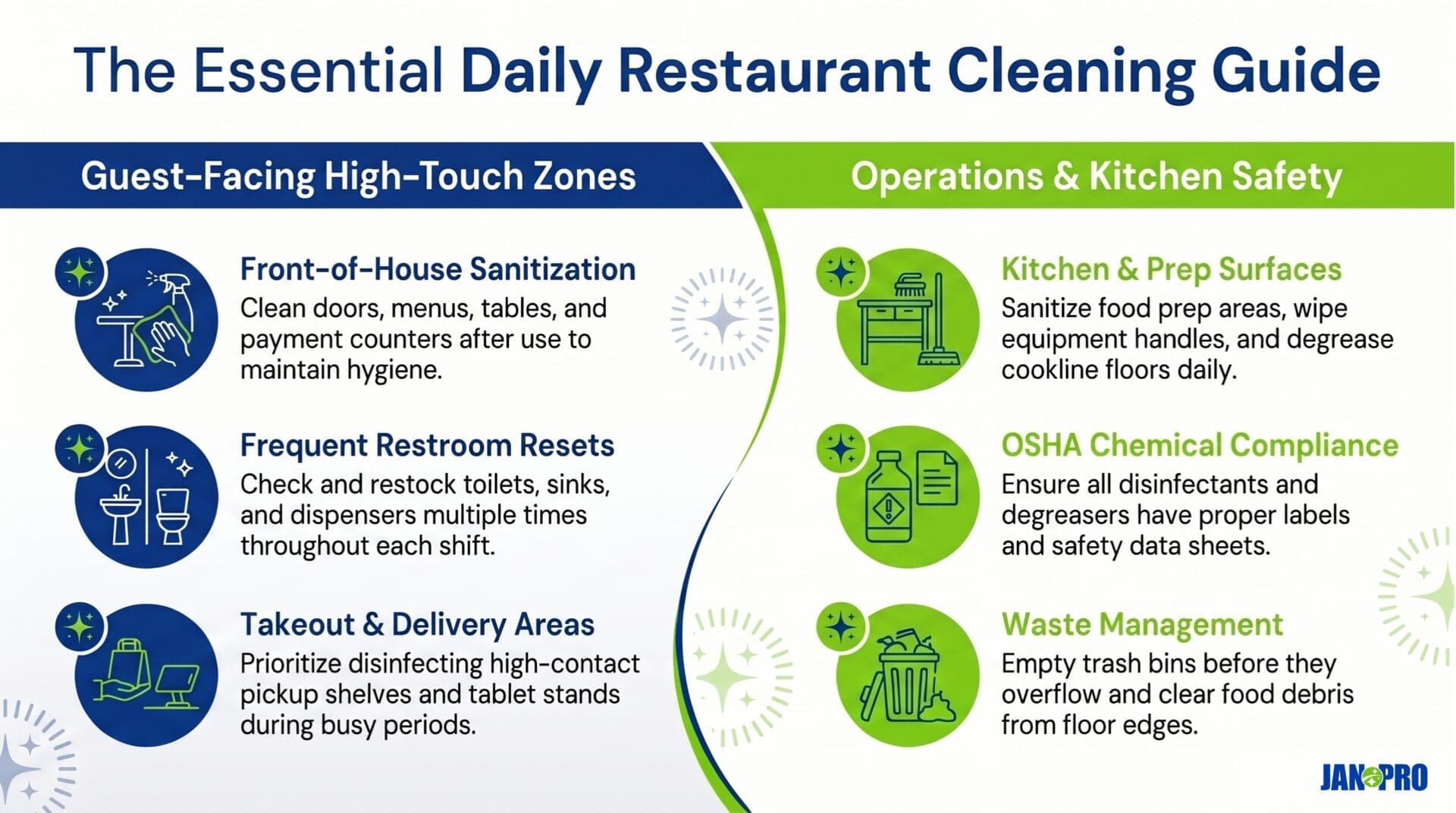
Daily Front-of-House Checklist
Restaurant managers should confirm these areas are cleaned every day:
- Front door glass, handles, push plates, and vestibule areas
- Host stand, reception counter, menus, and waiting area surfaces
- Dining tables after each guest use
- Chairs, booths, high chairs, and booster seats
- Floors under tables and along main walking paths
- Trash cans and surrounding floor areas
- Windowsills, ledges, and visible dust points
- Payment counters, pickup shelves, and other high-touch areas
For restaurants with takeout and delivery traffic, the pickup area deserves special attention. Delivery shelves, payment counters, tablet stands, and front-door handles can become high-contact surfaces throughout the day, even when the dining room is not full.
Daily Restroom Checklist
Restrooms should not be treated as a once-a-day task. During busy periods, they should be checked and reset throughout the shift.
Daily restroom cleaning should include:
- Toilets and urinals
- Sink basins and faucets
- Counters and mirrors
- Door handles and stall locks
- Dispensers and restocking needs
- Floors, corners, and base areas
- Trash removal
- Odor checks
A simple restroom log can help managers avoid guesswork. For example, the shift lead can check restrooms before lunch, mid-afternoon, before dinner, and before closing. During high-traffic days, the frequency should increase.
Daily Kitchen and Back-of-House Checklist
Kitchen cleaning should happen throughout the day, not only after closing.
Daily kitchen tasks should include:
- Cleaning and sanitizing prep surfaces
- Wiping handles, switches, and equipment exteriors
- Cleaning sinks and splash areas
- Degreasing cookline floors
- Removing food debris from floor edges
- Cleaning dish area floors, and surrounding surfaces
- Emptying trash before bins overflow
- Cleaning spills in walk-ins and storage rooms immediately
- Keeping mop sinks and cleaning tools organized
According to the Occupational Safety and Health Administration (OSHA), the Hazard Communication Standard requires employers to communicate chemical hazards through labels, safety data sheets, and employee training. This matters in restaurants because degreasers, disinfectants, floor cleaners, and sanitizers must be handled and stored correctly (OSHA 29 CFR 1910.1200).
How Often Should Restaurant Cleaning in Norman Include Deep Cleaning?
Restaurant cleaning should include daily maintenance, weekly detail work, monthly deep cleaning, and seasonal adjustments. Deep cleaning frequency depends on guest volume, menu type, flooring, restroom usage, patio activity, and how much grease, moisture, dust, or debris the facility collects.
Deep cleaning is where restaurants usually need the most structure. Daily employees may wipe visible surfaces, but they may not have the time, tools, or schedule flexibility to detail baseboards, grout, floor edges, under-equipment areas, vents, or trash zones.
Weekly Deep Cleaning Priorities
Weekly detail work should focus on buildup-prone areas:
- Booth seams and chair legs
- Baseboards and wall edges
- Restroom partitions and fixture bases
- Floor corners and edges
- Kitchen splash zones
- Shelving in dry storage and walk-ins
- Door frames and push plates
- Trash bin exteriors
- Mop sink areas
- Patio furniture and exterior entry points
Monthly Deep Cleaning Priorities
Monthly restaurant cleaning should go beyond surface resets.
Useful monthly tasks include:
- Machine scrubbing hard floors
- Deep degreasing kitchen floor edges
- Detailing restroom grout and drains
- Cleaning window tracks and ledges
- Reviewing storage room buildup
- Cleaning under movable equipment
- Checking odor-prone service areas
- Reviewing cleaning product storage and labels
Seasonal Cleaning Adjustments for Norman Restaurants
Central Oklahoma weather can affect restaurant cleaning schedules. Spring wind and pollen can increase dust around entryways, patios, and window ledges. Summer heat can make odor control more difficult around trash areas and mop sinks. Stormy weather can bring mud, red dirt, and wet floor risks into entryways.
The Environmental Protection Agency (EPA) notes that indoor air quality can be affected by pollutants from both indoor and outdoor sources. Cleaning does not replace ventilation maintenance, but consistent dust, moisture, and odor control can support a healthier indoor environment.
For example, a full-service restaurant with patio seating near Downtown Norman may need seasonal patio cleaning during spring pollen and after storms. The patio may look fine from a distance, but tables, railings, chair legs, and floor edges can collect pollen and debris quickly.
What Is the Difference Between Cleaning, Sanitizing, and Disinfecting in a Restaurant?
Cleaning removes visible soil, grease, dust, and food residue. Sanitizing reduces microorganisms on food-contact surfaces to safer levels. Disinfecting targets specific pathogens on non-food-contact surfaces. Restaurant managers need to understand the difference because each process uses different products, procedures, and contact times.
This is one of the most useful distinctions for restaurant teams. Many cleaning issues happen because employees use the right word but the wrong process.
Cleaning
Cleaning is the physical removal of soil, crumbs, grease, dust, and residue. Examples include sweeping floors, wiping counters, scrubbing spills, and removing trash.
Cleaning is usually the first step before sanitizing or disinfecting because dirt and residue can interfere with product performance.
Sanitizing
Sanitizing is used for food-contact surfaces such as prep tables, cutting areas, and certain kitchen surfaces. The product must be appropriate for the surface and used according to label directions.
Sanitizing is not the same as spraying a general disinfectant everywhere. Food-contact surfaces require careful product selection and procedure.
Disinfecting
Disinfecting is usually used for non-food-contact surfaces such as restroom handles, stall locks, counters, door handles, and other high-touch areas where pathogen reduction is the goal.
The Centers for Disease Control and Prevention (CDC) explains that cleaning removes most germs, dirt, and impurities from surfaces, while disinfecting uses chemicals to kill germs on surfaces after cleaning.
Practical Example for a Restaurant Shift
A prep counter with food residue should be cleaned first to remove visible debris, then sanitized using the correct food-contact sanitizer. A restroom door handle should be cleaned if visibly dirty, then disinfected using an appropriate product with the required contact time. A greasy kitchen floor should be cleaned and degreased, not treated like a food-contact surface.
The International Sanitary Supply Association (ISSA) also emphasizes structured cleaning systems and measurable cleaning outcomes through its cleaning standards and professional facility maintenance resources. For restaurant managers, the practical lesson is simple: cleaning should be repeatable, assigned, and checked, not left to memory.
How Can Restaurant Managers Make Cleaning Easier to Manage Across Shifts?
Restaurant managers can make cleaning easier by assigning tasks by shift, using simple checklists, documenting completion, separating staff duties from professional cleaning tasks, and reviewing problem areas weekly. A restaurant cleaning system works better when it is visible, repeatable, and realistic during busy service periods.
A checklist only helps if the team can actually use it. If the list is too vague, employees interpret it differently. If it is too long, it gets ignored. If no one checks it, tasks become optional.
Use a Shift-Based System
A simple restaurant cleaning system can be divided like this:
Opening Shift
- Check front doors, entry mats, and dining room floors
- Confirm restrooms are stocked and clean
- Wipe host stand and visible counters
- Inspect pickup shelves and payment areas
- Check for overnight odors or trash issues
Mid-Shift
- Reset restrooms
- Spot mop spills and high-traffic floor areas
- Empty trash as needed
- Wipe high-touch surfaces
- Check dining room corners and under tables
- Inspect pickup and delivery areas
Closing Shift
- Complete full dining room cleaning
- Clean and degrease kitchen floors
- Remove trash and clean around bins
- Clean restrooms in detail
- Wipe high-touch areas
- Complete manager signoff
Weekly Manager Review
- Identify recurring guest complaints
- Review restroom issues
- Check kitchen floor buildup
- Inspect entryways and mats
- Review cleaning supply levels
- Schedule deep cleaning needs
Decide What Staff Should Handle vs. What a Cleaning Provider Should Handle
Restaurant employees are usually responsible for food-contact procedures, spill response, table resets, and shift-based cleaning. A professional cleaning provider can help with recurring janitorial work, restroom detail cleaning, floor care, after-hours cleaning, deep cleaning, and consistency across multiple locations.
This division matters because restaurant employees are often focused on food, guests, and closing duties. When deep cleaning is added to an already busy shift, it may be rushed or skipped. That is where scheduled support from a restaurant cleaning company in Norman can help keep the facility consistent without pulling staff away from core operations.
What Should Restaurant Owners Look for in a Cleaning Plan?
Restaurant owners should look for a cleaning plan that defines frequency, scope, products, responsibilities, documentation, and high-risk areas. The plan should reflect the restaurant’s actual traffic, menu, flooring, restroom usage, storage layout, and seasonal cleaning needs instead of using a generic building checklist.
A useful cleaning plan should answer practical questions:
- Who cleans each area?
- How often is each task completed?
- Which tasks happen during the day?
- Which tasks happen after closing?
- Which products are used in each area?
- How are food-contact and non-food-contact surfaces treated differently?
- How are issues documented?
- What areas require weekly or monthly detail work?
Areas That Should Be Customized
A restaurant cleaning plan should be adjusted based on:
- Restaurant type: Quick-service, full-service, café, bar, bakery, or catering kitchen
- Flooring: Tile, polished concrete, vinyl, carpeted dining areas, or mixed surfaces
- Menu: Fryer-heavy menus usually create more grease buildup
- Guest volume: Higher traffic means more frequent restroom and floor checks
- Hours: Late-night restaurants may need stronger closing and odor-control routines
- Patio use: Outdoor seating adds pollen, dust, and weather-related debris
- Location: Restaurants near OU, Downtown Norman, retail corridors, or I-35 may face different traffic patterns
For restaurants that need more than food service cleaning, broader janitorial services in Oklahoma can help align dining areas, offices, restrooms, and shared commercial spaces under one maintenance plan.
Conclusion
Restaurant cleaning in Norman should start with a clear checklist, not a vague reminder to “clean everything.” Daily cleaning protects guest-facing areas, weekly detail work prevents buildup, monthly deep cleaning resets problem zones, and seasonal adjustments help restaurants respond to pollen, storms, heat, and event traffic. A useful plan should separate cleaning, sanitizing, and disinfecting while assigning tasks by shift and documenting what was completed.
When Cleaning Issues Keep Coming Back
If your restaurant is dealing with recurring restroom complaints, sticky floors, visible dust, entryway debris, kitchen grease buildup, or inconsistent closing tasks, it may be time to implement a cleaning plan tailored to your traffic, layout, menu, and service schedule.
JAN-PRO Cleaning & Disinfecting in Oklahoma provides commercial cleaning services across Norman, Oklahoma City, Edmond, Moore, and surrounding communities. To align your restaurant cleaning strategy with your operating needs, call (405) 606-3300 or visit 1105 Sovereign Row, Oklahoma City.
About the Author
Carter James
 Carter James is Vice President of Strategy & Development, leading growth strategy, acquisitions, and multi-market expansion within a facility services platform. His background includes corporate strategy, M&A integration, and franchise development. He partners with senior leadership to drive disciplined execution, scalable operations, and long-term value through data-driven, high-accountability leadership.