Working with a commercial cleaning company for the first time often means handing over a critical part of your operations—while still dealing with the risk of inconsistent results during the transition. In North Mississippi, from office spaces near downtown Tupelo to schools and medical facilities around New Albany and along the Tallahatchie River corridor, cleanliness directly impacts health, compliance, and daily workflow.
For many facility managers, the first month sets the tone. You’re evaluating consistency, communication, and whether the cleaning plan actually fits your space. Whether you manage a busy retail corridor or a multi-tenant office building, understanding what should happen week by week helps you measure performance, avoid misalignment, and ensure your cleaning partner delivers operational value—not just surface-level results.
What Happens in the First Month with a Commercial Cleaning Company?
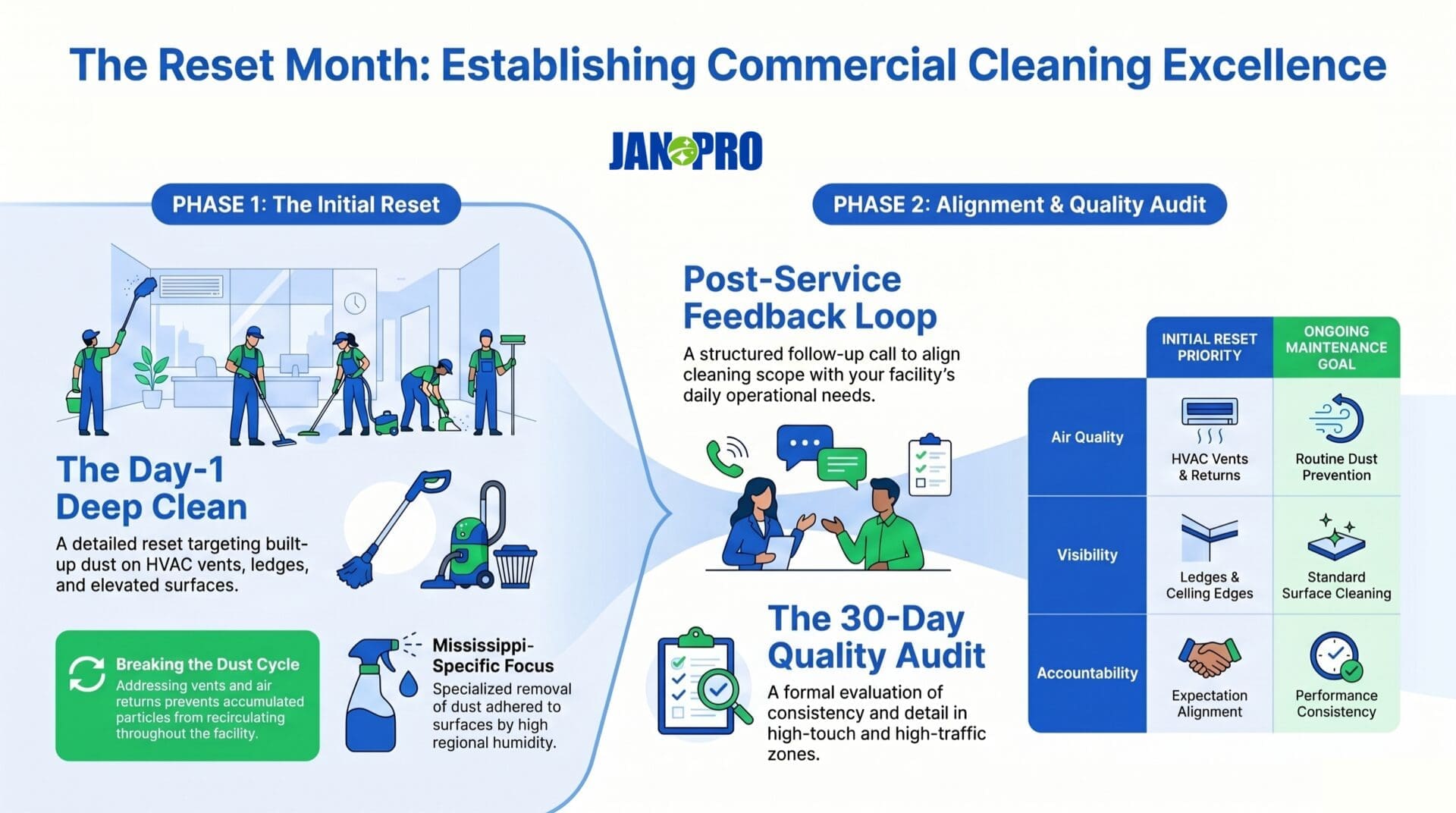
JAN-PRO Cleaning & Disinfecting in Mississippi structures the first month around three core actions: an initial “reset clean,” a post-service follow-up, and a formal quality audit within the first 30 days.
This process is designed to remove built-up dust, align expectations quickly, and establish consistent performance early in the partnership—an approach aligned with industry frameworks like ISSA’s Cleaning Industry Management Standard (CIMS), which emphasizes measurable outcomes and consistency.
Rather than starting with routine maintenance, the focus is on correcting what has accumulated over time—especially in areas that are often overlooked but directly impact indoor conditions.
Initial Reset (First Clean): Targeting Built-Up Dust from Day One
The first cleaning visit is more detailed and time-intensive than recurring service. It serves as a reset point, bringing the facility up to a consistent baseline before ongoing maintenance begins.
Key Day-1 priorities include:
- HVAC vents and air returns
- Ledges, ceiling edges, and elevated surfaces
- Corners and low-visibility areas often missed in routine cleaning
These locations tend to accumulate dust over extended periods, particularly when previous cleaning programs focused primarily on visible surfaces. Once disturbed, this buildup can circulate through the facility and affect overall indoor air conditions.
In practice, facilities transitioning to a new provider often see immediate improvements after this initial reset, particularly in areas like air vents and high surfaces that influence how dust spreads throughout the building.
Post-First Clean Follow-Up: Aligning Expectations Early
After the initial service, JAN-PRO Mississippi conducts a structured follow-up to confirm that the cleaning approach matches the facility’s expectations and operational needs.
This typically includes:
- A follow-up phone call to review satisfaction
- Direct feedback on specific areas or concerns
- Minor adjustments to scope, frequency, or focus areas
This early communication step ensures that any gaps are addressed immediately, rather than becoming recurring issues. It also helps refine the cleaning plan based on how the space is actually used day-to-day.
First Quality Audit: Evaluating Performance Within the First 30 Days
Within the first month, a formal quality audit is conducted to evaluate how well the cleaning program is performing in real conditions.
The audit focuses on:
- Consistency across all serviced areas
- Detail in high-touch and high-traffic zones
- Alignment with the defined scope of work
While timing may vary slightly depending on the facility and service schedule, the goal is to assess performance early—before routines become fixed. This allows for targeted adjustments that improve long-term consistency.
Mississippi-Specific Priorities: Why Dust Control Comes First
Facilities across Mississippi often share a common early challenge: dust accumulation, particularly from HVAC systems and air circulation.
During the first month, priority is given to:
- Dust buildup in vents and returns
- Fine particles settling on elevated surfaces
- Conditions influenced by regional humidity
Humidity levels in Mississippi can cause dust to adhere more easily to surfaces, making it harder to remove through standard cleaning alone. Combined with HVAC circulation, this creates a cycle where dust redistributes if not addressed at the source.
A common scenario in office buildings and schools across areas like New Albany and Tupelo involves persistent dust returning shortly after cleaning. By focusing on vents, air returns, and elevated surfaces during the initial reset, JAN-PRO Mississippi helps break that cycle early—leading to more stable indoor conditions over time.
How Is Your Facility Evaluated at the Start?
A professional commercial cleaning company evaluates your facility based on usage patterns, surface types, compliance risks, and traffic density. This assessment ensures the cleaning plan targets high-impact areas first, rather than applying a generic checklist that may overlook critical zones.
This evaluation phase is where most long-term success is determined. A detailed walkthrough identifies not just what needs cleaning, but how often and with what method.
Key Factors Assessed
- Foot traffic patterns: Entryways, hallways, shared spaces
- Surface materials: Carpet, tile, VCT flooring, glass
- Industry requirements: Healthcare, education, industrial
- High-touch points: Door handles, restrooms, breakrooms
- Environmental conditions: Humidity and seasonal changes
In Mississippi, humidity levels can influence cleaning frequency, especially in facilities near river systems or areas with limited ventilation.
Situational Example
A medical office in Tupelo may require more frequent disinfection of exam rooms and waiting areas compared to a standard office. This is not just a preference—it aligns with guidance from the Centers for Disease Control and Prevention on reducing cross-contamination in healthcare environments.
What Standards and Certifications Shape the Cleaning Process?
Commercial cleaning companies follow established standards such as OSHA safety regulations, Environmental Protection Agency (EPA) disinfectant guidelines, and ISSA cleaning frameworks. These standards ensure cleaning practices are consistent, compliant, and effective across different facility types.
A structured approach grounded in recognized standards separates a professional operation from inconsistent service providers.
Core Industry Standards
- OSHA (Occupational Safety and Health Administration): Workplace safety and chemical handling
- EPA (Environmental Protection Agency): Approved disinfectants and environmental safety
- ISSA (Worldwide Cleaning Industry Association): Cleaning best practices and training
- CIMS (Cleaning Industry Management Standard): Operational consistency and quality systems
According to the Environmental Protection Agency, using EPA-registered disinfectants is essential for effectively reducing pathogens on surfaces.
Why This Matters in Month One
During the first month, your cleaning partner establishes:
- Safe chemical usage protocols
- Standardized cleaning procedures
- Documentation for compliance
These systems ensure your facility isn’t just clean—it’s aligned with recognized health and safety expectations.
Mississippi Facility Types vs. Cleaning Priorities
Cleaning priorities in Mississippi vary significantly by facility type, driven by climate, usage, and regulatory requirements. The table below outlines how cleaning focus areas shift across common commercial environments in the region.
| Facility Type | Primary Cleaning Focus | Frequency Priority | Compliance Driver | Mississippi-Specific Factor |
| Office Buildings | Workstations, restrooms | Daily–Weekly | OSHA | High humidity affects indoor air quality |
| Medical Offices | Disinfection, exam rooms | Multiple times daily | CDC, OSHA | Infection control protocols |
| Schools | Classrooms, cafeterias | Daily | State health guidelines | High student density |
| Industrial Facilities | Floors, machinery areas | Weekly–Daily | OSHA | Dust and debris accumulation |
| Retail Spaces | Entrances, touchpoints | Daily | Local health codes | High foot traffic in shopping corridors |
This framework reflects regional operational realities rather than generic cleaning advice. For example, facilities near high-traffic retail zones or transportation routes often require more frequent entryway cleaning due to tracked-in debris.
How Are Communication and Quality Control Established?
During the first month, a commercial cleaning company sets up communication channels, inspection systems, and feedback loops to ensure consistent service. These systems allow facility managers to track performance, request adjustments, and maintain accountability without micromanaging daily tasks.
Clear communication is often the difference between a service that works and one that creates friction.
Key Systems Introduced
- Regular inspections: Scheduled quality checks
- Reporting tools: Digital logs or checklists
- Point of contact: Dedicated account manager
- Feedback channels: Immediate issue resolution
Quality Control Checklist
A professional cleaning partner should implement:
- Documented cleaning schedules
- Verified completion logs
- Routine supervisor inspections
- Immediate correction protocols
- Ongoing performance reviews
These elements align with ISSA’s CIMS framework for maintaining consistent service delivery.
How Long Does It Take to See Consistent Results?
Most facilities begin to see noticeable improvements within the first two to four weeks, but full consistency typically develops after the initial month. This timeline allows for adjustments, staff familiarity, and alignment between cleaning protocols and real-world facility usage.
Immediate results often come from the initial deep cleaning, while long-term improvements depend on consistency.
What Improves First
- Visual cleanliness (floors, surfaces)
- Odor control
- Restroom sanitation
What Takes Longer
- Dust reduction in HVAC-influenced areas
- Long-term floor maintenance results
- Workflow efficiency between staff and cleaning teams
For instance, facilities with older ventilation systems may require multiple cleaning cycles before noticeable improvements in air quality occur, especially in humid regions like Mississippi.
What Should You Expect from a Long-Term Cleaning Partnership?
A commercial cleaning company evolves its service over time by refining schedules, improving efficiency, and adapting to seasonal or operational changes. The first month establishes the foundation, but long-term value comes from continuous optimization.
After onboarding, the focus shifts from setup to performance and scalability.
Long-Term Improvements
- More efficient cleaning routes
- Reduced supply waste
- Better alignment with business hours
- Proactive issue identification
Businesses that start with structured onboarding tend to experience fewer disruptions and more predictable results over time.
Standardize Your Cleaning Process for Better Results
If uneven cleaning, lingering odors, or missed high-touch areas are affecting daily operations, implementing a structured cleaning plan can restore consistency and reduce disruption across your facility.
JAN-PRO Cleaning & Disinfecting in Mississippi works with businesses in Oxford, Tupelo, Columbus, Starkville, and surrounding areas to align cleaning programs with real facility demands—from offices to high-traffic environments requiring school cleaning protocols. By applying proven systems, facilities can improve accountability and performance from the first month.
To move forward, contact the local team at (662) 534-4448 or visit 226 Starlyn Ave, New Albany, MS 38652, and explore commercial cleaning services in Mississippi to align your cleaning strategy with your operational needs.
About the Author
Chrystal Coleman
 Chrystal Coleman is a business owner at JAN-PRO of Mississippi, leading a dedicated team that has expanded the company across Central Mississippi and the Coast. Raised in a close-knit community, she combines a strong work ethic with a passion for entrepreneurship, building a reputation for excellence in commercial cleaning and customer satisfaction.