
Flu season cleaning is the planned cleaning and disinfection of healthcare environments to help maintain hygienic conditions during periods of increased influenza activity. For medical offices in Jackson, Mississippi, preparation involves more than adding extra cleaning tasks: it requires identifying high-touch surfaces, setting appropriate cleaning frequencies, confirming product instructions, and establishing a process to verify that assigned work is completed.
Medical offices bring together patients, healthcare personnel, visitors, and administrative staff throughout the day. A cleaning plan designed for an ordinary office may not adequately reflect the different uses of exam rooms, waiting areas, restrooms, and shared clinical spaces.
With more than three decades of experience in commercial cleaning, JAN-PRO Cleaning & Disinfecting in Central Mississippi applies structured cleaning processes, appropriate products, and accountability to a variety of commercial environments. Before flu season, these principles can help medical office managers assess whether their environmental cleaning routines are specific, consistent, and suited to the facility.
Why Flu Season Requires a Closer Look at Medical Office Cleaning
Influenza prevention in healthcare settings depends on multiple measures, including vaccination, respiratory hygiene, appropriate patient management, hand hygiene, and environmental infection control. Cleaning is an important part of this broader effort, but it cannot prevent influenza transmission on its own.
During periods of increased respiratory illness, medical offices may experience changes in patient volume, more frequent use of waiting areas, and additional pressure on staff and facilities. A cleaning program should account for these operational conditions rather than simply repeat the same schedule regardless of circumstances.
Before flu season, facility managers should review three questions:
- Are high-touch surfaces clearly identified? Frequently touched surfaces near patients require particular attention.
- Does the schedule reflect how spaces are used? A waiting room with continuous patient traffic may require a different routine from an administrative office.
- Can completed work be verified? Assigned tasks, product procedures, and inspection responsibilities should be documented clearly.
The CDC’s guidance on preventing influenza transmission in healthcare settings identifies environmental cleaning and disinfection as components of a comprehensive infection-prevention strategy.
Which Areas Should Be Prioritized Before Flu Season?
A useful flu-season cleaning plan distinguishes areas according to patient contact, surface use, visible contamination, and the activities taking place in each room.
1. Waiting Rooms and Reception Desks
Waiting rooms are shared spaces where patients and visitors may spend time before receiving care. Reception counters and other frequently touched surfaces may also be used repeatedly throughout the day.
The cleaning checklist should identify relevant surfaces, such as:
- Reception counters and check-in surfaces.
- Chair arms and shared tables.
- Door handles and light switches.
- Frequently touched surfaces around entrances.
- Restroom access points and other shared touchpoints.
The appropriate cleaning frequency depends on actual use, facility policy, and the condition of the environment. In high-traffic areas, a single end-of-day cleaning may not address every operational need.
Cleaning schedules should also coordinate with patient flow so that tasks can be performed without unnecessarily disrupting care.
2. Exam Rooms and Patient-Care Areas
Exam rooms need procedures that reflect the surfaces patients and healthcare personnel touch during appointments. Depending on the room and the facility’s protocols, these may include examination tables, counters, door handles, and other frequently touched surfaces.
The sequence matters. Cleaning removes soil and organic material; disinfection uses an appropriate product to inactivate specified microorganisms when used according to its label. A disinfectant should not be wiped away before its required contact time has elapsed.
Cleaning teams should follow the facility’s defined responsibilities for patient-care areas. Medical devices and reusable equipment may require specific products or procedures and should be handled only by personnel authorized and trained to perform those tasks.
3. Restrooms and Hand-Hygiene Areas
Restrooms require consistent attention to fixtures, faucets, flush handles, dispensers, door handles, and floors. Cleaning plans should also include checking that essential supplies are available, according to the facility’s responsibilities.
Hand-hygiene stations deserve operational attention as well. Soap, disposable towels, and hand sanitizer should be replenished by the designated personnel so that patients and staff can use them when needed.
Cleaning tools used in restrooms should not be transferred to patient-care areas without appropriate procedures. Clear separation of supplies helps reduce the risk of carrying contamination between zones.
4. Staff Rooms and Administrative Areas
Staff break rooms, offices, and shared workspaces are not identical to clinical environments, but they still require routine cleaning. Desks, shared equipment, tables, handles, and frequently touched surfaces should be addressed according to their use.
A facility-specific plan avoids two common problems: applying the same procedure indiscriminately to every surface, or overlooking shared spaces because they are not directly involved in patient examinations.
What Should a Flu-Season Cleaning Checklist Include?
A practical checklist turns broad expectations into tasks that can be assigned, completed, and reviewed. Before flu season, a medical office should verify the following items.
| Checklist item | What should be confirmed | Why it matters |
| High-touch surfaces | Surfaces and locations are explicitly listed | Prevents important touchpoints from being overlooked |
| Cleaning frequency | Schedules reflect room use and patient traffic | Aligns work with actual operating conditions |
| Disinfectant selection | Products are appropriate for the intended surfaces and use | Supports correct disinfection procedures |
| Contact time | Staff follow the product label | Ensures the product is used as directed |
| Tools and supplies | Procedures define separation between areas | Helps reduce cross-contamination risks |
| Spill response | Responsibilities and procedures are established | Supports appropriate handling of potentially infectious material |
| Quality checks | Completion and deficiencies are documented | Makes recurring gaps easier to identify and address |
| Staff responsibilities | Clinical and cleaning duties are clearly distinguished | Reduces confusion over who handles specialized tasks |
The checklist should be reviewed with the appropriate facility personnel. It does not replace infection-control policies, clinical protocols, or applicable regulatory requirements.
Common Mistakes in Flu-Season Cleaning Plans
Even a detailed cleaning schedule can have gaps if it focuses on appearance rather than process.
Treating cleaning and disinfection as interchangeable
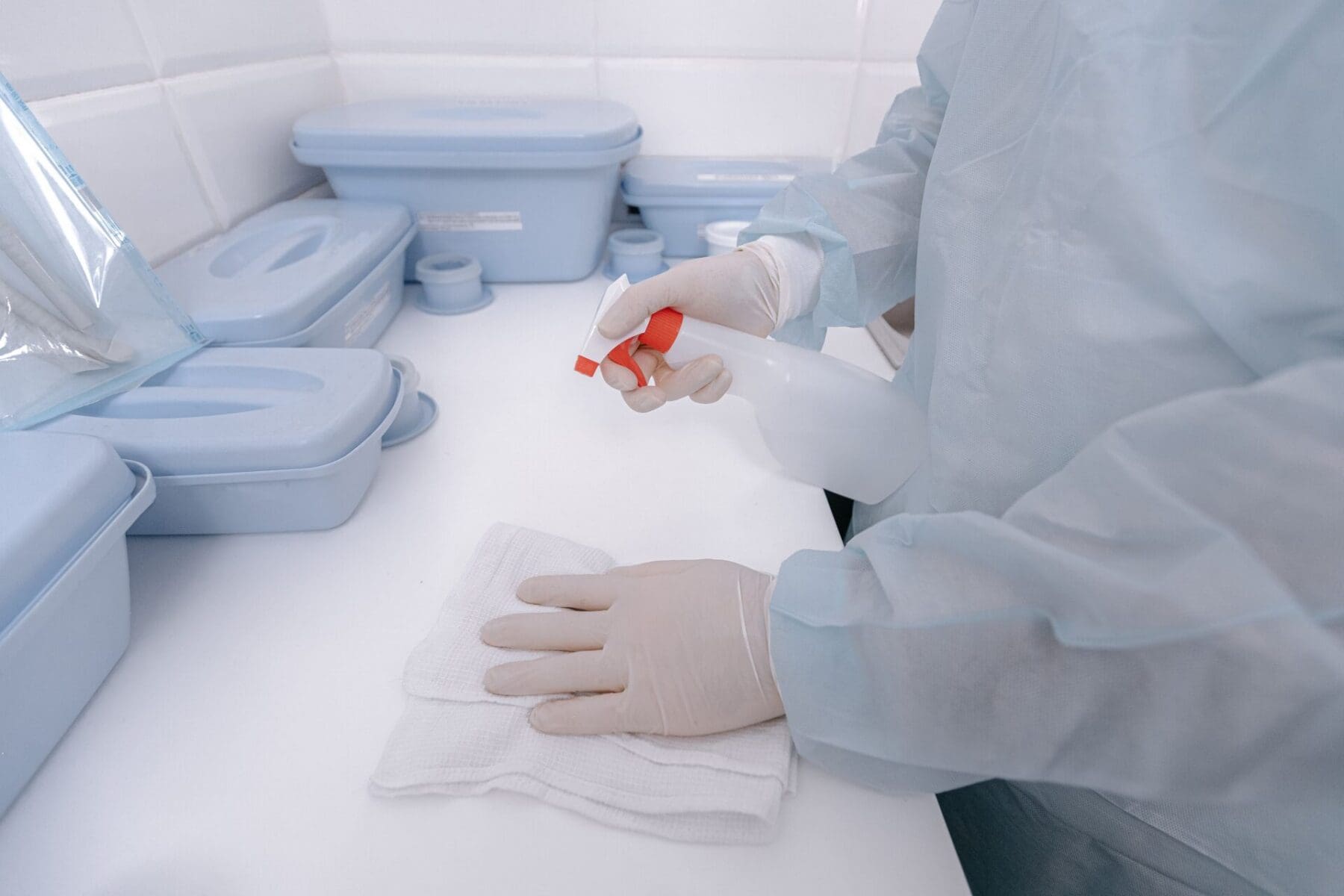
Removing visible dust or soil does not necessarily mean that a surface has been disinfected. Where disinfection is required, the correct product and application procedure must be followed.
Assuming every surface needs the same frequency
The surfaces closest to patients and those touched frequently may require more frequent attention than less-used administrative areas. A schedule should reflect the level of patient contact and the degree of soiling.
Overlooking product instructions
Disinfectants differ in their approved uses, dilution requirements, contact times, and material compatibility. Staff should follow the manufacturer’s instructions rather than assuming every product works the same way.
Treating cleaning as the entire flu-prevention strategy
Environmental cleaning supports infection prevention, but it does not replace hand hygiene, respiratory hygiene, vaccination, appropriate precautions, or other facility policies.
Failing to review recurring inspection findings
If the same surface or room repeatedly appears on inspection reports, the underlying issue may involve unclear responsibilities, insufficient time, an impractical task sequence, or inadequate training. Reviewing patterns is more useful than simply repeating the checklist without investigating why tasks are missed.
How JAN-PRO Approaches Medical Office Cleaning in Jackson, MS
JAN-PRO Cleaning & Disinfecting in Central Mississippi brings more than 30 years of commercial cleaning experience to the maintenance of professional environments. Its approach emphasizes consistent processes, appropriate cleaning products, technology, and personal accountability.
For a medical office preparing for flu season, a structured service plan can help define:
- Which areas and surfaces fall within the cleaning scope.
- Which tasks require routine cleaning and which require disinfection.
- How frequently designated areas should be serviced.
- Which products and application procedures are appropriate.
- How cleaning supplies are managed across different zones.
- How completed work is inspected and deficiencies are communicated.
These decisions should reflect the facility’s size, patient flow, operating hours, and service requirements. They should also distinguish general cleaning from clinical tasks that require specialized training or authorization.
When evaluating a medical office cleaning company in Jackson, MS, healthcare facilities should clarify the proposed scope of service, staff responsibilities, product procedures, and quality-control process. This makes it easier to determine whether the provider’s approach fits the facility’s actual needs.
Medical offices also differ from conventional office buildings in their patient-contact patterns and cleaning requirements. A clear distinction between clinical and administrative areas helps ensure that the cleaning plan reflects how the building is used.
Preparing a Medical Office for Flu Season: Key Takeaways
Flu-season readiness starts with a cleaning plan that is specific, practical, and verifiable. Medical offices in Jackson should prioritize high-touch surfaces, establish appropriate schedules, follow disinfectant instructions, separate cleaning tools where required, and document the completion of assigned tasks.
These measures support a broader infection-prevention program rather than replacing it. JAN-PRO Cleaning & Disinfecting in Central Mississippi provides commercial cleaning services for facilities seeking a structured approach to maintaining their environments. The local team can be contacted at (601) 900-3000 or at 104 Business Park Cove, Suite Hi, to discuss facility cleaning requirements.
Frequently Asked Questions About Flu Season Cleaning
What is flu-season cleaning?
Flu-season cleaning is a planned approach to maintaining healthcare environments during periods of increased influenza activity. It includes routine cleaning, appropriate disinfection of designated surfaces, clear task schedules, and quality checks. It complements other infection-prevention measures.
Which surfaces should receive the most attention during flu season?
Frequently touched surfaces and surfaces close to patients should receive particular attention. Depending on the setting, these may include reception counters, door handles, chair arms, exam-room surfaces, light switches, and restroom fixtures. Frequency should reflect use, soiling, and facility policy.
How often should a medical office be cleaned during flu season?
There is no single frequency appropriate for every medical office. The schedule should reflect patient volume, room function, surface contact, visible soil, and the facility’s infection-control procedures. High-traffic or frequently touched areas may need attention more often than administrative spaces.
Does routine cleaning eliminate the risk of influenza transmission?
No. Cleaning and disinfection are components of a broader infection-prevention strategy. They should be combined with appropriate hand hygiene, respiratory hygiene, vaccination, patient-management practices, and other measures established by the healthcare facility.
What should a medical office verify before hiring a cleaning provider?
The facility should verify the scope of service, training and responsibilities, cleaning and disinfection procedures, product use, separation of supplies, inspection processes, and the provider’s ability to work within the facility’s operating schedule. Specialized clinical procedures should be clearly distinguished from general janitorial work.
Can a commercial cleaning company replace a healthcare facility’s infection-control team?
No. A commercial cleaning provider can support environmental cleaning within an agreed scope, but the healthcare facility remains responsible for its infection-prevention policies and clinical protocols. Specialized medical equipment handling and other clinical procedures require appropriate personnel and procedures.
About the Author
Chrystal Coleman
 Chrystal Coleman is a business owner at JAN-PRO of Mississippi, leading a dedicated team that has expanded the company across Central Mississippi and the Coast. Raised in a close-knit community, she combines a strong work ethic with a passion for entrepreneurship, building a reputation for excellence in commercial cleaning and customer satisfaction.