

Commercial grout cleaning mistakes destroy tile lines through acidic cleaners that dissolve grout, excessive pressure washing that creates pitting, and improper sealing that traps moisture. These errors cause permanent discoloration, bacterial growth, and costly floor replacement within months.
Businesses across Ridgeland—from medical offices to restaurant chains—lose thousands annually on premature tile failure because maintenance crews unknowingly use methods that erode rather than protect grout integrity.
We’ve witnessed firsthand how a healthcare facility serving patients near Merit Health Madison replaced its entire lobby floor just 18 months after installation. The culprit wasn’t heavy foot traffic or age—it was the repeated use of acidic cleaners that gradually broke down the grout.
Understanding these preventable errors protects your investment and maintains the professional appearance your clients expect when they walk through your doors.
Why Most Commercial Grout Damage Starts With the Wrong Cleaning Products
Acidic and alkaline cleaners create chemical reactions that permanently compromise grout structure. The porous nature of standard cement-based grout absorbs these solutions, leading to internal breakdown that manifests as surface staining, cracking, and crumbling within weeks of repeated exposure.
Many facilities purchase multi-surface cleaners without checking pH levels. Grout requires neutral pH solutions (between 6.5 and 8.5) to avoid chemical erosion.
Products That Destroy Grout Integrity:
- Vinegar-based cleaners: Acetic acid dissolves cement bonds and leaves grout porous and weakened
- Bleach solutions: Sodium hypochlorite oxidizes grout, causing yellow or brown discoloration on light-colored lines
- Ammonia-based products: Create alkaline damage that softens grout and attracts dirt particles
- Generic “all-purpose” sprays: Often contain phosphoric or citric acid that etches grout over time
- Hydrogen peroxide concentrations above 3%: Break down grout sealer and allow stain penetration
A Ridgeland retail complex we service switched from big-box cleaning supplies to pH-neutral solutions. Within three months, their grout lines stopped showing the progressive darkening that had plagued their entranceways for years.
How Improper Pressure and Technique Accelerate Grout Deterioration
Excessive water pressure physically erodes grout from tile joints, creating gaps where bacteria and mold colonize. Standard pressure washers operate between 1,500 and 3,000 PSI—far beyond the 500 PSI maximum that grout can withstand without surface damage.
The damage compounds when cleaning crews hold nozzles too close to floors or use concentrated stream patterns instead of fan tips.
Mechanical Damage Warning Signs:
| Damage Type | Visual Indicator | Long-Term Consequence |
| Surface pitting | Small craters along grout lines | Water infiltration beneath tiles |
| Grout recession | Tile edges appear raised | Loose tiles and trip hazards |
| Color inconsistency | Lighter patches in high-traffic zones | Permanent staining and replacement need |
| Hairline fractures | Spider-web patterns in grout | Complete grout line failure |
We responded to an urgent call from a medical office building where an inexperienced cleaning contractor had used a 2,800 PSI pressure washer on ceramic tile. The grout lines showed visible gouging after just two cleaning sessions, requiring complete regrouting of 4,000 square feet.
Professional grout cleaning services in Ridgeland use controlled extraction methods that remove contaminants without damaging grout structure.
The Hidden Cost of Skipping Professional Sealing After Deep Cleaning
Unsealed grout absorbs spills, foot traffic residue, and cleaning solution remnants that create permanent discoloration. Deep cleaning opens grout pores by removing surface contaminants, but without immediate sealing, those pores trap new dirt within hours of the cleaning.
This creates a cycle where floors look worse weeks after expert cleaning than they did before the service.
What Happens to Unsealed Grout:
- Hour 1-24: Cleaned pores begin absorbing airborne particles and moisture from foot traffic
- Week 1: Visible darkening appears in high-traffic pathways as organic matter penetrates
- Month 1: Bacterial colonies establish in porous grout, creating odor and health concerns
- Month 3: Staining becomes permanent as contaminants bond with cement at a molecular level
- Month 6: Grout requires replacement rather than cleaning due to structural compromise
Office buildings along Highland Colony Parkway, restaurants around Renaissance at Colony Park, and retail businesses throughout Madison County often experience the fastest grout deterioration because of constant customer traffic and frequent cleaning.
Why Commercial Grout Wears Faster in Central Mississippi
Commercial tile floors don’t deteriorate at the same rate in every part of the country. Businesses throughout Ridgeland and Madison County face environmental conditions that can accelerate grout wear compared to drier climates.
Several local factors contribute to faster grout deterioration:
- High humidity slows drying times, allowing moisture to remain in porous grout longer.
- Frequent rain means employees and customers track more water and debris into buildings throughout the year.
- Mississippi’s clay soils can leave behind fine dirt particles that settle into grout lines and become difficult to remove.
- Heavy foot traffic in healthcare facilities, restaurants, retail centers, and office buildings compounds the problem by pushing dirt and moisture deeper into the grout.
These conditions make routine maintenance and proper sealing especially important for businesses across Central Mississippi. Addressing grout issues early helps preserve the appearance of commercial flooring while reducing the likelihood of costly restoration or replacement.
Why Inconsistent Maintenance Schedules Multiply Grout Problems
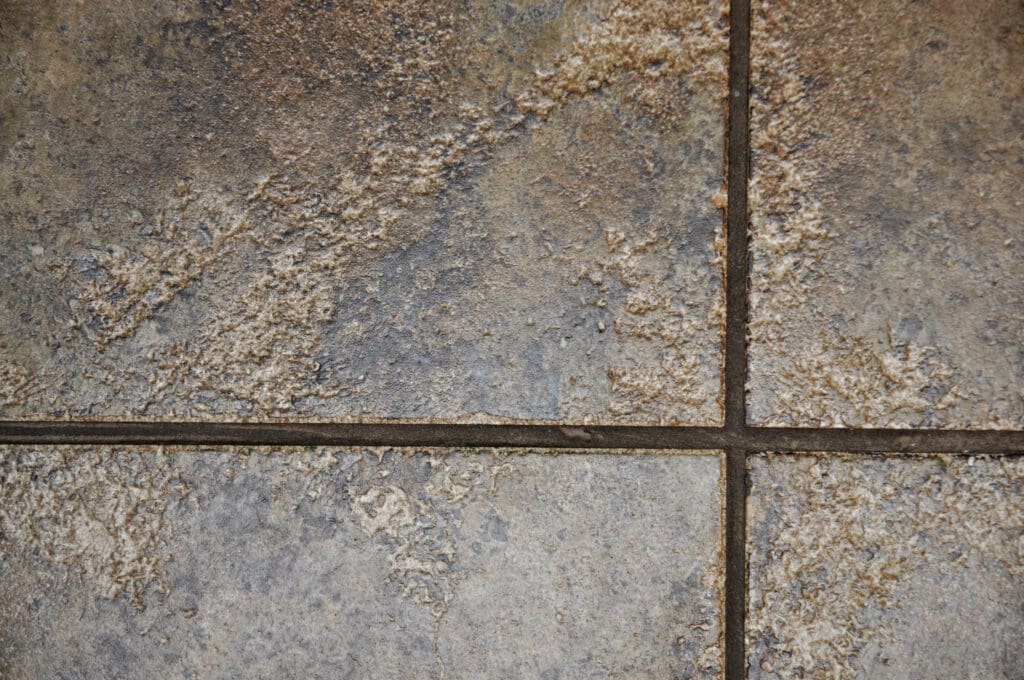
While Central Mississippi’s climate naturally exposes commercial grout to more moisture and debris, inconsistent maintenance often turns normal wear into permanent damage. Infrequent cleaning allows contaminant buildup that requires increasingly aggressive removal methods, creating a destructive cycle.
When soil layers accumulate for months, removal demands stronger chemicals and more abrasive techniques that damage grout faster than regular maintenance ever would. Businesses often clean grout only when discoloration becomes embarrassing to clients—exactly when damage is hardest to reverse.
Maintenance Frequency by Commercial Space Type:
| Facility Type | Recommended Cleaning | Risk of Damage From Neglect |
| Healthcare facilities | Weekly deep clean, daily maintenance | Bacterial growth, infection control failure |
| Restaurants and food service | Bi-weekly deep clean, nightly maintenance | Grease penetration, health code violations |
| Retail and office | Monthly deep clean, weekly maintenance | Permanent staining, unprofessional appearance |
| Industrial and warehouse | Quarterly deep clean, bi-weekly maintenance | Oil absorption, slip hazards |
A commercial cleaning company in Central Mississippi implements scheduled maintenance that prevents the buildup requiring aggressive intervention. At JAN-PRO, we work with several restaurant chains where consistent weekly attention keeps grout pristine, while comparable locations that call only when floors look terrible face replacement costs every few years.
How We Evaluate Commercial Grout Before Recommending Treatment
Every commercial floor is different, so we don’t recommend the same cleaning process for every facility. Before recommending deep cleaning, restoration, or grout replacement, our team performs an on-site assessment to identify the root cause of the problem—not just the visible stains.
During our walkthrough, we evaluate:
- Grout type: Cementitious, epoxy, or specialty grout
- Existing sealers: Whether the current sealer is still protecting the surface
- Traffic patterns: Areas with the highest foot traffic and wear
- Source of staining: Dirt buildup, grease, moisture, chemical exposure, or other contaminants
- Moisture intrusion: Signs of water penetration beneath the tile or failing grout
- Previous cleaning methods: Products, equipment, and techniques that may have contributed to grout deterioration
Based on our findings, we determine whether the floor needs:
- Routine maintenance cleaning
- Professional deep cleaning
- Grout restoration
- Resealing
- Localized grout repair
- Full grout replacement (only when necessary)
In many cases, identifying the problem early allows Ridgeland businesses to restore their existing grout instead of replacing it, helping extend the life of their commercial flooring.
How DIY Repairs and Untrained Staff Create Permanent Grout Damage
Attempting grout repair without proper surface preparation, product selection, or application technique results in cosmetic fixes that fail within weeks. New grout must bond at a molecular level with existing material, requiring specific moisture content, temperature ranges, and curing conditions.
Maintenance staff often apply new grout over contaminated surfaces or use incompatible products, resulting in poor adhesion.
Common DIY Grout Repair Failures:
- Applying grout over dirty lines: New material separates from old within days as contaminants prevent bonding
- Mismatched grout types: Epoxy over cement or sanded over unsanded creates expansion rate differences and cracking
- Insufficient depth removal: Surface application chips away immediately under foot traffic pressure
- Wrong water ratios: Too wet creates weak grout; too dry prevents proper tile adhesion
- Premature sealing: Trapping moisture before full cure causes permanent discoloration and weakness
Professional grout restoration requires removing compromised material to at least one-eighth inch depth, cleaning substrate to bare tile edges, and applying appropriate grout formulations matched to the specific installation.
One Ridgeland office complex attempted grout repair using retail products and in-house maintenance staff. The new grout showed obvious color mismatch and began crumbling within three weeks, ultimately requiring complete professional restoration at triple the cost of hiring experts initially.
Frequently Asked Questions
1. How often should commercial grout be professionally cleaned in Ridgeland, MS?
Most commercial facilities in Ridgeland benefit from professional grout cleaning every 6 to 12 months, depending on foot traffic, industry, and exposure to moisture. Restaurants, healthcare facilities, and other high-traffic businesses often require more frequent service to prevent staining, grease buildup, and premature grout deterioration.
2. Does Mississippi’s humid climate affect commercial grout?
Yes. Central Mississippi’s humidity can cause moisture to remain in porous grout longer, increasing the risk of staining, odor, and premature deterioration if grout is not properly sealed. Regular professional maintenance and resealing help protect grout from moisture-related damage.
3. Can I use a steam mop on commercial tile and grout?
Steam mops can damage unsealed grout by forcing moisture deep into porous material where it may not dry properly. Steam cleaning is generally recommended only for properly sealed grout using appropriate commercial equipment and cleaning procedures.
4. What’s the difference between grout cleaning and grout restoration?
Grout cleaning removes surface dirt, grease, and contaminants using specialized cleaning solutions and equipment. Grout restoration involves repairing or replacing damaged grout, addressing structural deterioration, and resealing the surface when cleaning alone can no longer restore its appearance or performance.
5. How long should professional grout sealer last in commercial spaces?
High-quality penetrating sealers typically last between 12 and 24 months in moderate-traffic commercial buildings. Facilities with heavier foot traffic, such as restaurants and healthcare offices, may need resealing every 6 to 12 months to maintain protection against moisture and staining.
Protect Your Investment With Expert Commercial Grout Care
Avoiding costly commercial grout cleaning mistakes requires expertise, proper equipment, and scheduled maintenance that most in-house teams cannot provide. The difference between pristine tile lines and expensive replacement often comes down to using professionals who understand grout chemistry, proper cleaning protocols, and preventive care.
JAN-PRO Cleaning & Disinfecting in Central Mississippi delivers detail-focused commercial cleaning backed by decades of proven methods. Our locally owned franchise combines hands-on experience with national training standards, ensuring your tile and grout receive care that extends rather than shortens their functional life.
We’ve helped businesses throughout Ridgeland, Madison, and the surrounding Central Mississippi communities reduce grout replacement costs through proactive maintenance programs tailored to their facility type. Our teams use pH-balanced solutions, controlled extraction technology, and proper sealing techniques that preserve your flooring investment.
Contact JAN-PRO Cleaning & Disinfecting today to schedule a grout assessment and protect your facility from preventable damage. Call (601)-900-3000 or visit us at 104 Business Park Drive, Suite HI, Ridgeland, MS 39157. Let our experienced team help extend the life of your commercial tile flooring while you focus on running your business.
About the Author
Chrystal Coleman
 Chrystal Coleman is a business owner at JAN-PRO of Mississippi, leading a dedicated team that has expanded the company across Central Mississippi and the Coast. Raised in a close-knit community, she combines a strong work ethic with a passion for entrepreneurship, building a reputation for excellence in commercial cleaning and customer satisfaction.